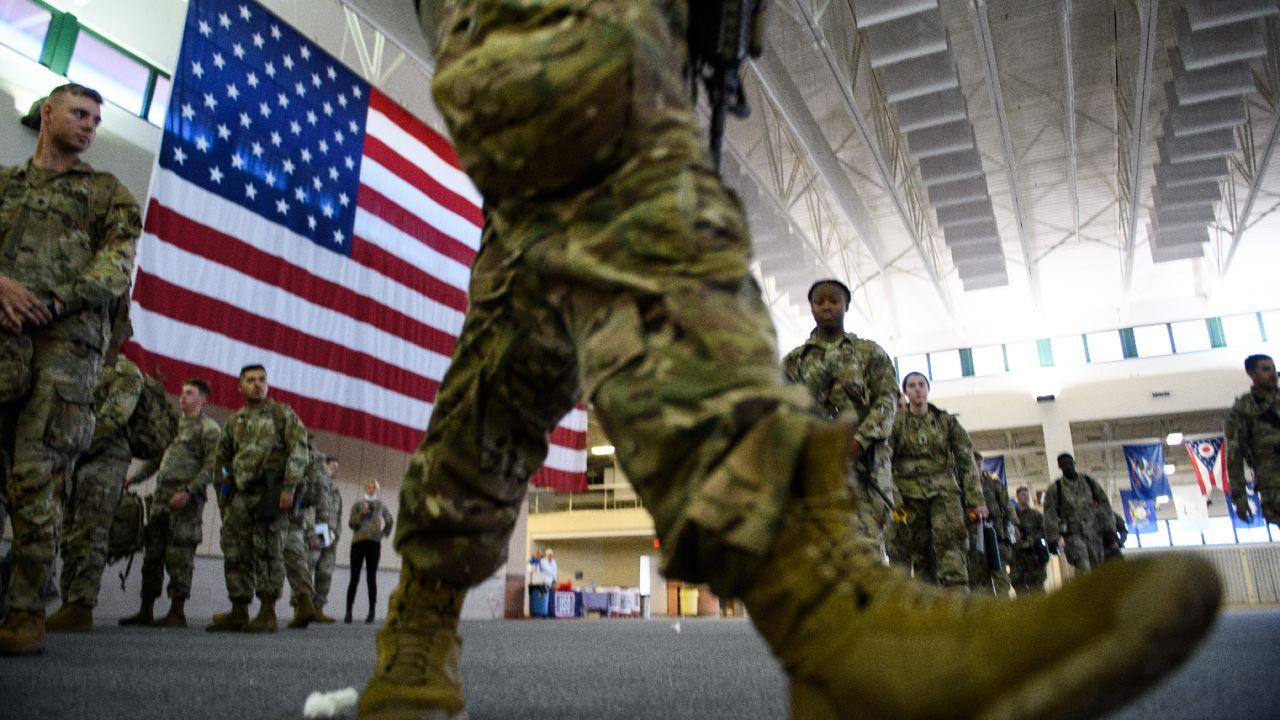
Donald Trump Threatens To Cut U.S. Troops In Germany, Citing Review
Key Takeaways
- Trump said the US is studying a possible reduction of troops in Germany.
- A determination will be made over the next short period.
- Remarks came amid a feud with Germany's chancellor over Iran policy and NATO relations.
Trump floats troop cut
President Donald Trump said the United States is “studying and reviewing the possible reduction of Troops in Germany,” adding that a determination would be made “over the next short period of time.”
“Trump says US reviewing possible reduction of its troops in Germany April 29 (Reuters) - President Donald Trump said on Wednesday that his administration was reviewing the possible reduction of U”
In a Truth Social post, Trump framed the move as a review rather than an immediate pullback, writing: “The United States is studying and reviewing the possible reduction of Troops in Germany, with a determination to be made over the next short period of time,” according to CBS News and the BBC.

The BBC reported that it reached out to the White House for comment, while noting that Trump’s announcement came just days after German Chancellor Friedrich Merz criticized Washington’s approach to the war in Iran.
TVP World similarly described Trump’s Wednesday remarks as a “reviewing” of a possible reduction, and said the decision would be made “over the next short period of time.”
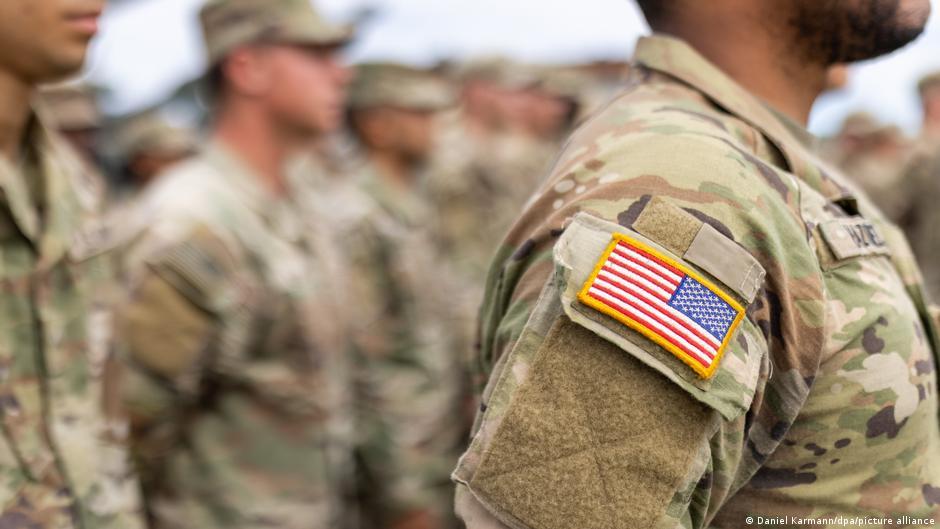
Multiple outlets tied the announcement to the scale of the U.S. footprint in Germany, with CBS News citing “More than 36,000 active duty troops” assigned to bases across Germany as of last December.
The BBC also said the U.S. has “more than 36,000 active duty troops” in Germany as of last December, while DW said that “As of December 2025, more than 36,000 active service members were stationed in Germany.”
Politico put the figure higher, saying there are “38,000 U.S. troops and personnel stationed in Germany,” and warned that any cut would face “opposition on Capitol Hill.”
Iran feud drives decision
The troop-review announcement landed amid a widening dispute between Trump and Germany’s chancellor over the U.S.-Iran war and negotiations around ending it.
CBS News said Trump’s remarks came “amid a spat with Germany's chancellor and the NATO alliance over Iran,” and described Merz as drawing Trump’s ire after he criticized Washington’s handling of the war earlier this week, saying “the Americans clearly have no strategy” on Iran and suggesting the U.S. is being “humiliated” by Iranian negotiators.

The BBC reported that Merz made his initial remarks on Monday telling university students that “the Americans clearly have no strategy,” and added that the “entire nation” was being “humiliated” by the Iranian leadership.
Trump responded the following day with a Truth Social post, writing that Merz “thinks it's OK for Iran to have a Nuclear Weapon” and “doesn't know what he's talking about,” a line repeated by CBS News, the BBC, and TVP World.
TVP World also quoted Merz’s Monday criticism that “the Americans clearly have no strategy” and said Merz described the “entire nation” as being “humiliated” by the Iranian leadership.
The dispute also intersected with Germany’s economic concerns about the Strait of Hormuz, which multiple outlets described as closed since the conflict began.
Hawaii Public Radio (AP) said Merz warned that “We are suffering considerably in Germany and in Europe from the consequences of, for example, the closure of the Strait of Hormuz,” and said Merz urged that “this conflict be resolved.”
Merz downplays, Rubio calls
While Trump’s post raised the prospect of reduced U.S. forces, Merz sought to limit the damage by emphasizing his personal relationship with Trump and focusing on the economic fallout from the Iran conflict.
“US 'studying' whether to reduce troops in Germany, Trump says The US is "studying" whether to reduce the thousands of troops it has stationed in Germany, Donald Trump has announced via social media”
The BBC said that when asked about the post in a press conference on Wednesday, Merz said the “personal relationship between the American president and myself remains just as good as before,” and noted that he had not yet responded to Trump’s suggestion.
Hawaii Public Radio (AP) similarly reported that Merz told reporters his personal relationship with Trump remained “as good as ever,” while also saying he had “had doubts from the very beginning about what was started there with the war in Iran.”
DW added that German Foreign Minister Johann Wadephul later clarified Merz’s comments to DW’s Berlin bureau chief Max Hoffmann in New York City, saying: “It was addressing the behavior of Iran,” and stressing: “They are, as I said, misunderstanding their position and overplaying their role, so this is what the chancellor said.”
In the diplomatic track, the South China Morning Post reported that “Hours before Trump’s post about troop numbers in Germany, US Secretary of State Marco Rubio spoke by telephone with German Foreign Minister Johann Wadephul.”
Anadolu Ajansı also said Rubio and Wadephul held a phone call to discuss Iran, the security situation in the region, and “freedom of navigation in the Strait of Hormuz.”
Against that backdrop, Trump’s own rhetoric remained pointed, with the BBC repeating his Truth Social line that Merz “doesn’t know what he’s talking about!” and CBS News quoting Trump’s broader jab that “No wonder Germany is doing so poorly, both Economically, and otherwise!”
Different numbers, different framing
Outlets diverged not only on the scale of U.S. forces in Germany but also on how the troop-review threat should be interpreted in the broader NATO dispute.
CBS News said “More than 36,000 active duty troops were assigned to bases throughout Germany as of last December,” while Politico said there are “38,000 U.S. troops and personnel stationed in Germany,” and Kyv Post reported that “the current number is believed to be higher, with German media putting it closer to 50,000.”

The Guardian also cited a split, saying “Germany houses the largest contingent, with more than 35,000 troops in 2024, according to the Congressional Research Service,” while adding that “German media puts the number higher, at about 50,000.”
DW anchored its figure to a specific date, stating “As of December 2025, more than 36,000 active service members were stationed in Germany,” and described Ramstein as “regarded as the US's largest overseas air force base.”
On the political framing, TVP World emphasized the NATO feud and described Trump’s remarks as part of a recurring theme, while the BBC focused on the immediate trigger—Merz’s “humiliated” comments and “no strategy” criticism.
The Guardian explicitly connected the threat to NATO tensions, saying it was “likely to cause concern in Berlin and across Europe,” and noted that Trump had stepped up threats to withdraw from NATO.
Politico, meanwhile, framed the move as a decision with “political and logistical challenges,” and said “cutting forces there would face opposition on Capitol Hill,” while also pointing to the possibility of disrupting “medium-term U.S. defense plans” including “long-range Tomahawk land attack missiles in Germany by next year.”
What happens next
The sources also laid out what could constrain or complicate any actual reduction, and what the decision would mean for U.S. planning and NATO politics.
“US President Donald Trump has said the United States will shortly decide whether to cut its forces in Germany, where it maintains a major military presence”
CBS News said Trump has threatened to leave NATO and called the alliance a “paper tiger,” and it referenced a 2023 law about withdrawing from NATO without approval from Congress.
The Guardian added that U.S. legislation passed in 2024 prevents a president from withdrawing from NATO without “a two-thirds Senate majority or an act of Congress,” and said experts have suggested the White House could instead take actions that undermine the alliance but fall short of outright withdrawal.
Politico warned that a “snap pullout” would be “riddled with political and logistical challenges,” and said the Pentagon has already wrapped up its global review of U.S. military posture.
It also said the move could disrupt “medium-term U.S. defense plans” because the U.S. aims to “place long-range Tomahawk land attack missiles in Germany by next year,” and noted that it “is also not likely to sit well on Capitol Hill.”
The Hill similarly reported that Trump’s review comes as relations between Washington and Berlin have gone astray, and quoted Trump’s Truth Social post ending with “Thank you for your attention to this matter!”
Finally, Anadolu Ajansı provided a timeline for the Iran-related diplomatic context, saying a ceasefire was announced on “April 8 through Pakistani mediation,” followed by talks in Islamabad on “April 11-12,” and that the sides did not reach an agreement.
More on USA
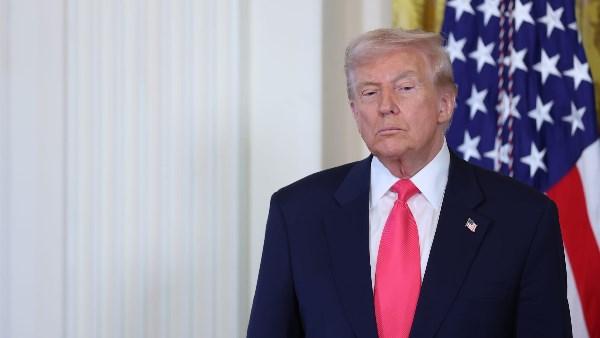
Trump Receives CENTCOM Briefing on Potential U.S. Military Action Against Iran Thursday
13 sources compared
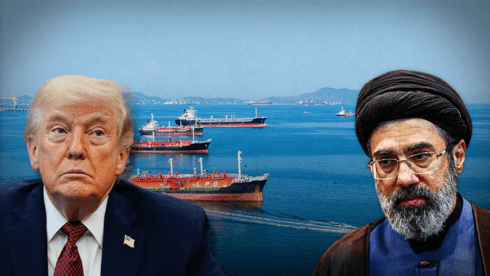
Donald Trump Vows To Keep Iran Naval Blockade Until Nuclear Deal Is Reached
18 sources compared

King Charles III Delivers Joint Address to Congress in Washington, Cites Bonds With United States
11 sources compared

U.S. Supreme Court Voids Louisiana’s Majority-Black District, Weakening Voting Rights Act
15 sources compared