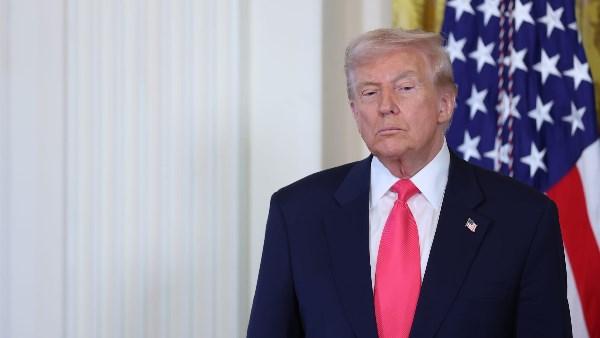
Trump Receives CENTCOM Briefing on Potential U.S. Military Action Against Iran Thursday
Key Takeaways
- CENTCOM Commander Brad Cooper to brief Trump on new Iran military options Thursday.
- Plan includes a short and powerful wave of strikes targeting Iranian infrastructure.
- Ceasefire deadlock and Hormuz blockade underpin the briefing on Iran options.
Briefing Set for Thursday
U.S. President Donald Trump is slated to receive a briefing on new plans for potential military action against Iran on Thursday, according to Axios, which said the briefing will be delivered by CENTCOM Commander Adm. Brad Cooper and that Joint Chiefs Chairman Gen. Dan Caine is also expected to attend.
“US military commanders to brief Trump on new options against Iran, Axios reports April 29 (Reuters) - U”
Axios reported that “CENTCOM has prepared a plan for a ‘short and powerful’ wave of strikes on Iran — likely including infrastructure targets,” with the aim of breaking the negotiating deadlock.

The same Axios report said another option expected to be shared with Trump focuses on taking over part of the Strait of Hormuz to reopen it to commercial shipping, and that such an operation could include ground forces.
Reuters, in a separate report, also said the briefing would come from the leader of U.S. Central Command, Brad Cooper, and that it would occur on Thursday, citing Axios.
BBC similarly tied the market reaction to the report that “US Central Command has prepared a plan for a wave of ‘short and powerful’ strikes on Iran to try to break the deadlock in negotiations with Tehran.”
The BBC added that Brent crude rose “to more than $126 (£94) a barrel at one point,” and that West Texas Intermediate rose “up by 2.3% at around $109 a barrel.”
Options and Legal Deadlines
The briefing is framed by multiple outlets as occurring while ceasefire negotiations remain deadlocked and while the U.S. maintains a naval blockade of Iranian ports.
Axios described a set of options that includes “a plan for a ‘short and powerful’ wave of strikes on Iran — likely including infrastructure targets,” alongside a plan to take over part of the Strait of Hormuz and a special forces operation to secure Iran’s stockpile of highly enriched uranium.

The Deep Dive, drawing on Axios, added that the “short and powerful” strikes are intended to pressure Tehran back to the negotiating table and that the Strait of Hormuz plan could “potentially involve ground forces.”
The Deep Dive also connected the current moment to the legal timeline of the war, saying Trump formally notified Congress of the strikes on March 2, triggering the 60-day clock under the 1973 War Powers Resolution, and that “That deadline expires May 1 — the day after Thursday’s briefing.”
It further reported that Congress has passed no authorization and that “Republicans have blocked four bipartisan Senate attempts to invoke the resolution.”
The Deep Dive said several GOP senators, including Susan Collins and Thom Tillis, signaled they will not support the war beyond May 1 without a vote, while Democrats are exploring a lawsuit with Rep. Ted Lieu arguing Congress would have standing once the deadline passes.
Trump’s Leverage and Threats
Trump’s approach to Iran is described in the sources as centering on the naval blockade as leverage while he signals openness to military action if Iran does not concede.
“Oil jumps to highest price since 2022 after report Trump to be briefed on new Iran options Oil prices have jumped to their highest since 2022 after a report that the US military is set to brief President Donald Trump on new plans for potential action in the Iran war”
Axios reported that Trump told Axios on Wednesday that he saw the naval blockade on Iran as “somewhat more effective than the bombing,” and that “Trump currently sees the blockade as his primary source of leverage.”
The same Axios report said U.S. military planners are considering the possibility Iran will take military action against U.S. forces in the region in retaliation for the blockade.
NBC News reported that Trump warned Iran “better get smart soon” as he weighed military options for the Strait of Hormuz with peace talks at an impasse, and it said the standoff and continued U.S. naval blockade means the key trade route has been effectively blocked for two months.
NBC News also described Trump’s post on Truth Social, quoting him: “Iran can’t get their act together. They don’t know how to sign a nonnuclear deal. They better get smart soon!” and it said the post included an AI-generated image with the message “NO MORE MR. NICE GUY!”
In the same NBC News account, White House spokesperson Anna Kelly said, “The president will only enter into an agreement that puts U.S. national security first, and he has been clear that Iran can never possess a nuclear weapon.”
Reactions, Markets, and Energy
The sources connect the prospect of new U.S. military options to immediate market moves and to concerns about disruption to global energy supplies.
BBC reported that oil prices jumped to their highest since 2022 after the report that the US military is set to brief President Donald Trump on new plans for potential action in the Iran war, and it said Brent crude rose “by almost 7% to more than $126 (£94) a barrel at one point.”

BBC also reported that WTI rose “up by 2.3% at around $109 a barrel,” and it described how energy prices have risen as peace talks appear to have stalled and the “key Strait of Hormuz waterway still effectively closed.”
The BBC included analysis from economics professor Yeow Hwee Chua of the Nanyang Technological University, who said even a small chance of escalation could have “outsized implications” on global energy supplies.
NBC News provided additional U.S. consumer context, saying gas price averages in the U.S. reached $4.23 a gallon, the highest level in nearly four years, and that Brent surged to $115 a barrel early Wednesday.
NBC News also reported that the U.S. naval blockade continued and that Tehran attacked three commercial ships and seized two of them in the maritime standoff.
Divergent Framing of the Same Moment
While Axios and Reuters focus on the briefing and the menu of military options, other outlets frame the same developments through different lenses—legal timing, diplomatic proposals, and broader geopolitical context.
The Deep Dive emphasizes the War Powers Resolution deadline, stating that “That deadline expires May 1 — the day after Thursday’s briefing,” and it adds that “Congress has passed no authorization” while “Republicans have blocked four bipartisan Senate attempts to invoke the resolution.”
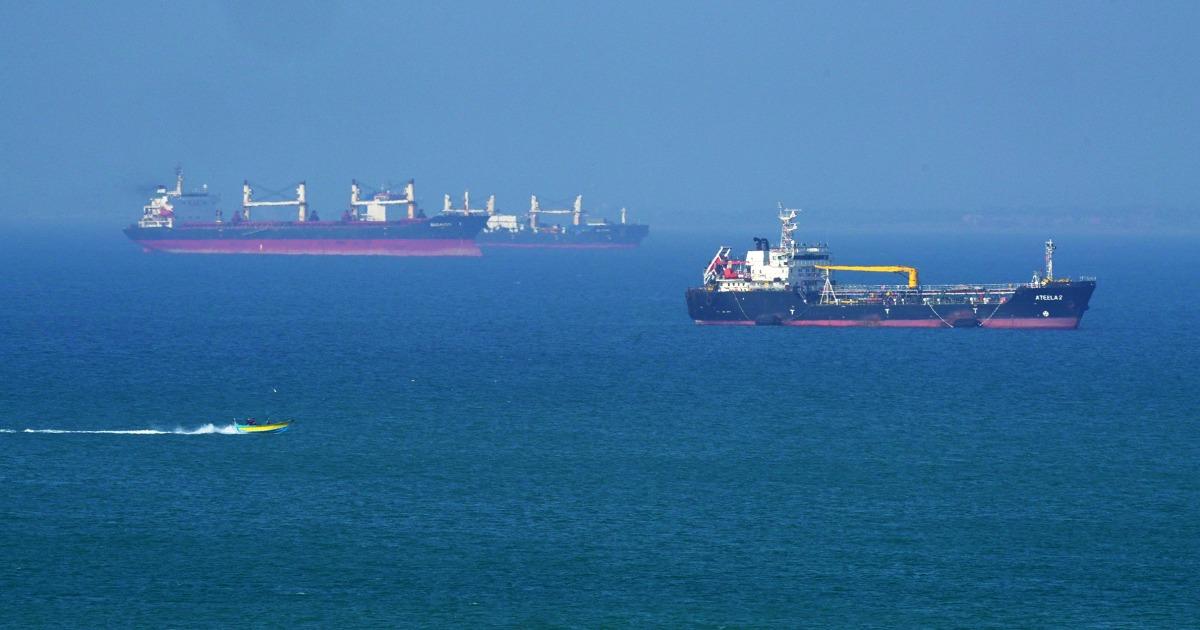
BBC foregrounds the energy and escalation angle, describing the “key Strait of Hormuz waterway still effectively closed” and quoting Naveen Das that “We might start seeing maybe more headlines of trying to de-escalate again.”
JNS.org, while also citing Axios, highlights Trump’s warning and the details of Iran’s proposal conveyed through Pakistan, saying the Islamic Republic’s plan would “reopen the Strait of Hormuz in exchange for a long-term ceasefire or permanent end to the war.”
In contrast, Iran International centers on the blockade as Trump’s stated policy and adds additional figures and context, saying the United States has spent “$25 billion on the war with Iran so far,” and that “The UN said at least 21 people had been executed and more than 4,000 arrested in Iran since the war began.”
The Deep Dive also reports that a ceasefire brokered by Pakistan took effect on April 8 and that Trump extended it on April 21, while keeping the U.S. naval blockade of Iranian ports in place, and it says Iran’s latest proposal offers to reopen the Strait in exchange for lifting the blockade while deferring nuclear negotiations until after the war formally ends.
What Comes Next
The sources describe the stakes as immediate—ranging from the possibility of retaliation and further attacks on shipping to the political and economic consequences of prolonged disruption.
Axios said U.S. military planners are considering the possibility Iran will take military action against U.S. forces in the region in retaliation for the blockade, and it also said Trump would consider military action if Iran still won’t cave.
NBC News reported that the key trade route has been effectively blocked for two months and that the standoff has sent energy prices soaring, while it also said Tehran attacked three commercial ships and seized two of them.
BBC added that Iran retaliated against U.S.-Israeli airstrikes by threatening to attack ships in the waterway, through which about a fifth of the world’s energy usually passes, and it described the U.S. blockade as a response to threats against vessels trying to use the Strait of Hormuz.
The Deep Dive said the Strait has been largely closed to commercial shipping since February 28 and that Iran has maintained a dual blockade alongside the U.S. Navy’s cordon of Iranian ports, while also reporting that Iran has attempted to involve Oman in a toll-collection scheme on Strait traffic.
It also reported that Iran has transferred at least 15 unexploded US weapons to technical research units for reverse engineering, including an intact GBU-57 bunker-busting bomb.
More on USA
Donald Trump Threatens To Cut U.S. Troops In Germany, Citing Review
14 sources compared
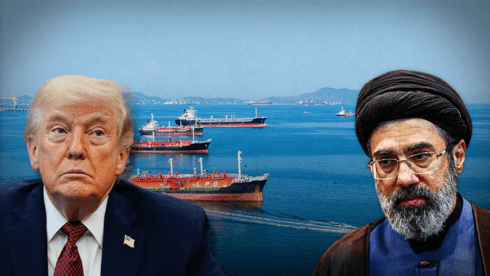
Donald Trump Vows To Keep Iran Naval Blockade Until Nuclear Deal Is Reached
18 sources compared

King Charles III Delivers Joint Address to Congress in Washington, Cites Bonds With United States
11 sources compared

U.S. Supreme Court Voids Louisiana’s Majority-Black District, Weakening Voting Rights Act
15 sources compared