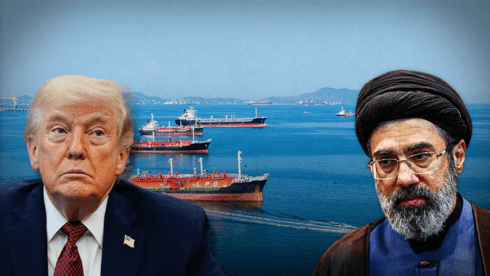
Donald Trump Vows To Keep Iran Naval Blockade Until Nuclear Deal Is Reached
Key Takeaways
- Trump vows to keep Iran blockade until a nuclear deal is reached, rejects reopening Hormuz.
- Oil prices near $120 as blockade persists and talks stall.
- U.S. officials weighing military options and preparing for extended blockade.
Trump keeps blockade
President Donald Trump told Axios on Wednesday that the United States will continue its naval blockade of Iran until a nuclear deal is reached with Tehran, rejecting an Iranian proposal to first reopen the Strait of Hormuz so that US-Iran talks could proceed.
“President Donald Trump says the United States will continue its naval blockade of Iran until a nuclear deal is reached with Tehran”
In the Axios interview, Trump said, “The blockade is somewhat more effective than bombing,” adding, “They are choking like a stuffed pig. And it is going to be worse for them. They can’t have a nuclear weapon.”

Trump also said, “They want to settle. They don’t want me to keep the blockade. I don’t want to [lift the blockade], because I don’t want them to have a nuclear weapon,” framing the blockade as leverage rather than a step toward ending the conflict.
The Jerusalem Post reported that US Central Command (CENTCOM) began preparing plans for a “short and powerful” wave of strikes on Iran, intended to break the negotiating deadlock, while also noting Trump declined to discuss any military plans during the Axios conversation.
Al Jazeera similarly reported that Trump does not want to end his blockade on Iranian ports, “apparently rejecting the reopening of the Strait of Hormuz so that US-Iran talks could proceed.”
Multiple outlets also tied the blockade to a broader standoff over Iran’s nuclear program, with NBC News describing the negotiations as at an impasse and noting that the key trade route has been effectively blocked for two months.
Escalation and deadlock
The blockade decision sits inside a wider escalation described across outlets, with the standoff centered on the Strait of Hormuz and the nuclear negotiations that have stalled.
Al Jazeera reported that Iran has set lifting the siege as a precondition for returning to the talks, and that “According to several media reports, Iran offered a limited deal this week that would end its own blockade on Hormuz in exchange for the end of the siege on its ports,” while Trump’s comments indicated he turned down that proposal.
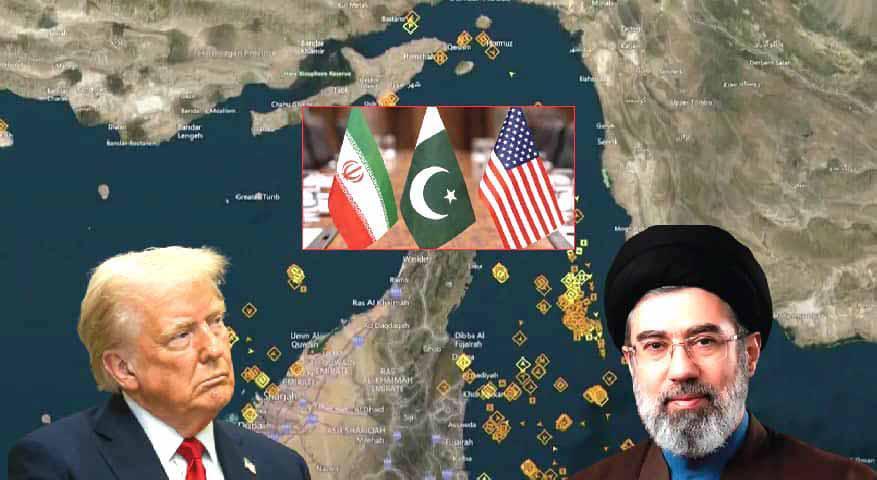
NBC News said the standoff means the key trade route has been effectively blocked for two months, and it described a continuing bottleneck after negotiations failed to reopen the waterway.
Al Jazeera also reported that at least two commercial ships linked to Iran have been captured by the US as part of the siege, and that the US military said on Monday it had redirected 39 vessels in the regional waters over the past weeks.
Iran responded by seizing vessels it accuses of violating maritime regulations, and the impasse sent oil prices soaring, with Al Jazeera reporting that the price of one gallon of petrol in the US “has surpassed $4.22 ($1.11 per litre) – up from less than $3 ($0.79 per litre) before the war.”
In parallel, NBC News described internal US deliberations in the Situation Room, saying members of Trump’s national security team presented him with multiple options for how to handle the bottleneck, including whether the military presence in the strait should change and whether operations should become more aggressive.
Threats and counter-threats
Alongside Trump’s statements, Iranian officials and security sources issued threats of “practical” action, while US officials discussed military options without announcing a decision.
“Asian markets rose on Wednesday, but the price of oil was up close to 6%, as neither side looks ready to budge from their positions and end their blockades in the Strait of Hormuz Oil prices shot up further on Wednesday over concerns of an extended blockade of the Strait of Hormuz, while Wall Street stocks mostly slid as investors awaited a US Fed rate decision and a slew of tech firm earnings”
Al Jazeera reported that an unidentified senior security source told Iran’s state-owned Press TV that the blockade will soon be met with “practical and unprecedented action,” and it also quoted Iranian Parliament Speaker Mohammad Bagher Ghalibaf saying the US is trying to “activate economic pressure and internal division” in the country “to weaken or even collapse us from within.”
The Jerusalem Post likewise cited a senior Iranian security source on Press TV saying the US naval blockade will “soon be met with practical and unprecedented action,” and it added that Iran’s military had shown restraint to give diplomacy a chance.
NBC News described Trump’s own public warning, reporting that he posted on Truth Social, “Iran can’t get their act together. They don’t know how to sign a nonnuclear deal. They better get smart soon!” and it noted the post included an apparently AI-generated image of Trump holding a gun with the message “NO MORE MR. NICE GUY!”
In the same NBC News report, the White House spokesperson Anna Kelly said, “The president will only enter into an agreement that puts U.S. national security first, and he has been clear that Iran can never possess a nuclear weapon.”
On the US side, the Jerusalem Post reported that CENTCOM was preparing a “short and powerful” wave of strikes, while ynetnews said Trump has not ordered military action and declined to discuss military plans in the interview.
How outlets frame it
The same core events—Trump’s blockade pledge, the stalled negotiations, and the threat of further action—are framed differently across outlets, with some emphasizing economic pressure and others emphasizing strike planning or diplomatic maneuvering.
Al Jazeera foregrounded Trump’s rejection of reopening the Strait of Hormuz and described the blockade as “somewhat more effective than the bombing,” while also linking the confrontation to oil prices and US inflation, including the claim that Brent crude futures jumped to “more than $119 per barrel on Wednesday.”

The Jerusalem Post, while quoting Trump’s “stuffed pig” line, placed additional weight on CENTCOM preparing a “short and powerful” wave of strikes and described the strikes as intended to “break the negotiating deadlock.”
ynetnews similarly centered on Trump rejecting the Iranian proposal to reopen the Strait of Hormuz and postpone nuclear negotiations, but it also added a specific claim that Iran’s oil storage facilities and pipelines “are getting close to exploding” because Tehran can no longer export oil due to the blockade.
NBC News, by contrast, emphasized the internal decision process and the operational options discussed in the Situation Room, saying Trump “has not made any decisions about the way forward” and that it was “not clear when he might make a decision.”
Even the local US-facing framing differs, with South China Morning Post warning that the blockade could last months and stating Brent crude neared US$120, while Northeast Mississippi Daily Journal echoed the same warning in a shorter local-style package.
Economic stakes and next steps
The sources describe immediate economic stakes tied to the blockade and the Strait of Hormuz bottleneck, alongside ongoing diplomatic and military planning.
NBC News said the standoff has effectively blocked the key trade route for two months and reported that gas price averages in the US reached $4.23 a gallon, the highest level in nearly four years, while Brent surged to $115 a barrel early Wednesday.
It also reported that Iran’s national rial hit a record low against the dollar and that the rial’s record low—trading at around 1.8 million to $1—could further fuel inflation in Iran.
NBC News added operational details, saying US Marines boarded another commercial vessel late Tuesday but ultimately allowed it to carry on its way, while Tehran attacked three commercial ships and seized two of them in the maritime standoff.
It also said traffic through the strait was “largely at a standstill,” with 11 ships transiting in the past 12 hours, while noting that the Japanese-owned Idemitsu Maru tanker successfully transited Wednesday morning.
Looking ahead, the Jerusalem Post reported that after a “short and powerful” wave of strikes, the US would press Tehran to return to the negotiating table and show more flexibility, while Al Jazeera reported Russia’s Kremlin said it has put forward “a number of proposals designed to resolve the disagreements surrounding the Iranian nuclear program”.
More on USA

King Charles III Delivers Joint Address to Congress in Washington, Cites Bonds With United States
11 sources compared

U.S. Supreme Court Voids Louisiana’s Majority-Black District, Weakening Voting Rights Act
15 sources compared

Trump Tells Aides to Prepare Extended Blockade of Iranian Ports as US-Iran Talks Stall
23 sources compared
Donald Trump Posts AI Image With Rifle, Threatens Iran With “No More Mr. Nice Guy”
13 sources compared