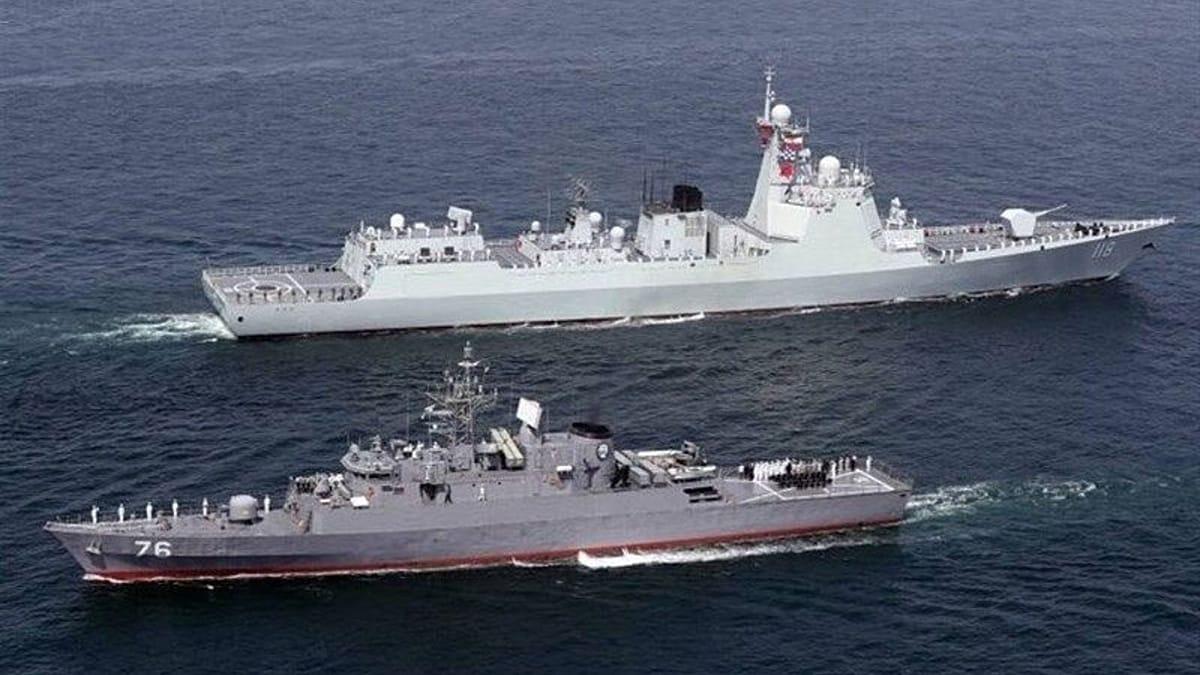
Donald Trump’s Tariffs and Iran War Pressure China’s Foshan Manufacturing Workforce
Key Takeaways
- Trump threatens 50% tariffs on nations supplying weapons to Iran.
- Tariffs and Iran conflict disrupt China's manufacturing and broader Asia-Pacific supply chains.
- Trump linked tariffs to Chinese military support for Iran, threatening 50% tariffs.
Tariffs, war, and factory jobs
China’s manufacturing workforce is feeling the combined pressure of Donald Trump’s tariffs and the Iran war, with BBC reporting “a sombre gathering in the backstreets of one of China's biggest manufacturing hubs” where workers plead for help from a foreign journalist.
In Foshan, in the southern industrial province of Guangdong, the BBC describes temporary work advertised at “18 to 20 yuan an hour,” which it says amounts to “just a few dollars or pounds,” as workers face uncertainty and “Most are well over 40 years old.”
The BBC frames the situation as a shift from earlier resilience—when China “report[ed] GDP growth of around 5%” after tariffs hit last year—to a new strain as “the Middle East conflict is starting to take a fresh toll, putting pressure on factory orders, costs and jobs.”
It also links the pain to shipping chokepoints, saying “the war is choking the Strait of Hormuz, a crucial shipping route,” and that this is causing “more pain to a sluggish Chinese economy that is heavily relying on exports.”
A trader quoted by the BBC says, “Costs have gone up around 20%,” while organizing workers to move cylinders of fabric for cutting and sewing into clothes for retailers “from Zara to Shein to Temu.”
The BBC adds that the fabric market in Guangzhou is “the world's largest fabric market,” and that “higher oil prices are now hitting them hard,” with one trader saying “It means fewer orders” and that “some customers are refusing to pay more and rolls of fabric are piling up in the warehouse.”
Forecasts and growth cuts
Beyond factory-floor accounts, international forecasts described by the South China Morning Post and the BBC connect the Iran war and tariff uncertainty to slower growth across Asia-Pacific.
The South China Morning Post says “Asia growth forecasts slashed as Iran war and tariffs threaten supply chains,” and quotes a report warning that “the global economy has, to date, withstood a series of shocks, yet another one – this time a military conflict engulfing the Middle East since the end of February – is testing this resilience.”

It reports that the Asian Development Bank forecast “the region would achieve 5.1 per cent growth in 2026, down from 5.4 per cent last year,” and describes economies “weighed down by the conflict in the Middle East and continuing trade uncertainty.”
The same article says the ADB forecast China’s economic growth at “4.6 per cent this year, down from 5 per cent in 2025,” and it adds that the World Bank expects “East Asia and Pacific regional economic growth to hit 4.2 per cent in 2026, down from 5 per cent last year.”
The World Bank language is quoted in the South China Morning Post as attributing the slowdown to “as the energy shock due to the Middle East conflict compounds the adverse impact of elevated trade barriers, global policy uncertainty and domestic economic difficulties.”
The BBC, meanwhile, describes how China’s earlier export-driven resilience is now being pressured by the same energy and shipping dynamics, stating that “the war is choking the Strait of Hormuz” and that this is “causing more pain” to an export-reliant economy.
China’s tariff stance
China’s response to the tariff pressure described across multiple outlets is framed as firm resistance to threats and a call for negotiation.
In a report attributed to Asr Iran and citing the Associated Press, China’s Ministry of Commerce said “China's position is firm,” adding, “We do not want a trade war, but we are not afraid of it.”
The same report quotes the ministry warning that “Repeated recourse to high tariff threats is not the right way to handle China,” and it says China would take “reciprocal measures to defend its rights and legitimate interests” if the United States persists.
It also describes a timeline in which Trump threatened to raise the import tariff on China to “100 percent starting November 1” in response to new Chinese restrictions on the export of rare earth elements.
Another outlet, عصر ایران, says the latest escalation “ends the temporary April ceasefire over Trump's tariff war between the two countries,” and it describes both sides accusing each other of violating April trade agreements.
The DW report adds a different tariff threat context—Trump’s “25 percent tariffs” on countries trading with Iran—and says China’s Foreign Ministry spokesperson told reporters, “There are no winners in a tariff war, and China will firmly safeguard its rights and legitimate interests.”
Tariffs tied to Iran war
Several reports link U.S. tariff threats directly to Iran-related actions and describe China opposing the coercive approach.
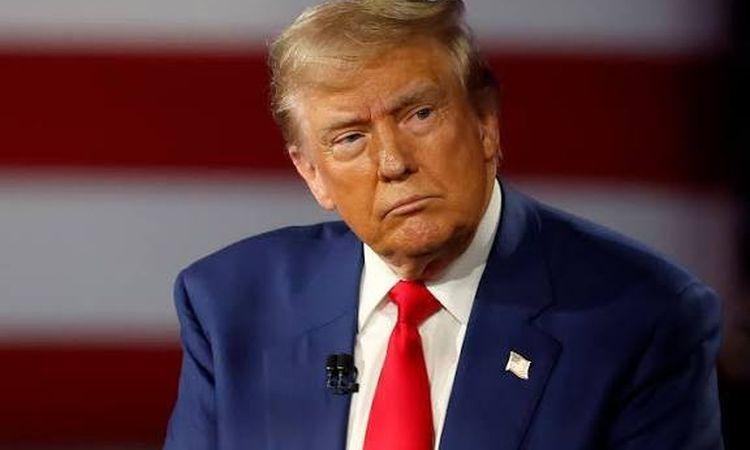
DW says Donald Trump announced that “any country that trades with the Islamic Republic of Iran must pay 25 percent tariffs on any trade with the United States,” quoting Trump’s Truth Social post: “From now on, any country that trades with the Islamic Republic of Iran will pay 25 percent tariffs on any trade with the United States. This executive order is final and binding.”
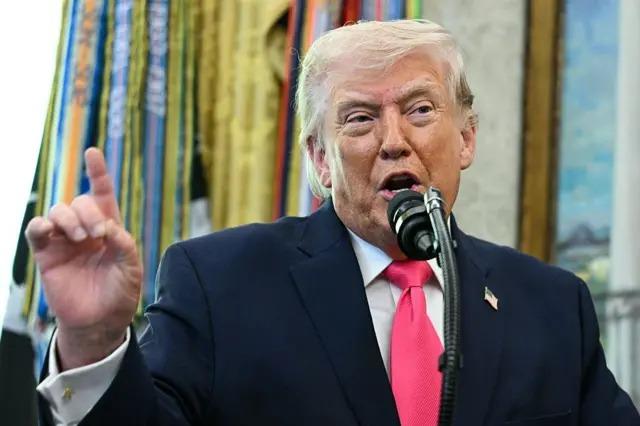
DW adds that China, after Trump’s warning about Iran tariffs, says it will “firmly” protect its interests, quoting the Chinese Foreign Ministry spokesperson: “There are no winners in a tariff war, and China will firmly safeguard its rights and legitimate interests.”
Tabnak similarly reports that Trump told NBC News that “any country doing business with Iran would pay a 25 percent customs tariff on every transaction,” and it says the Chinese Foreign Ministry expressed opposition, with Mao Ning saying at a press conference, “We are confident that Tehran will overcome its problems and the country’s stability will be preserved.”
The Chinese position is also stated in a separate report from اپک تایمز فارسی, which says China opposes “any unilateral illegal sanctions and extraterritorial jurisdiction,” and it quotes a spokesperson for the Chinese Embassy in Washington: “A tariff war and a trade war have no winners, and coercion and pressure cannot solve problems.”
The reporting also includes a warning from a Chinese expert in شبكه العالم, where World — Asia John Gong says tariff threats could lead to “a flare-up of a trade war between the United States and China,” and it adds that he warned of an “effective tax on Chinese imports has been 57%,” with total duties potentially reaching “70%.”
Trade war history and next moves
The China-U.S. tariff conflict is portrayed in اخبار الخليج as a long escalation with specific dates and tariff values, while other reporting describes immediate threats and diplomatic signals.
اخبار الخليج recounts that on “March 22, 2018, Trump signed a presidential memorandum imposing tariffs on Chinese goods worth $50 billion under Section 301 of the 1974 Trade Act,” and it says that “By July 6 of that year, tariffs of 25% had taken effect on Chinese imports worth $34 billion.”
It further states that “In September 2018, the United States imposed additional tariffs on Chinese goods worth $200 billion—initially at 10%, then raised to 25% in May 2019,” and it claims that “the Biden administration” tightened the tariff regime by imposing “comprehensive export controls targeting advanced semiconductors and equipment for manufacturing electronic chips destined for China” beginning in “October 2022.”
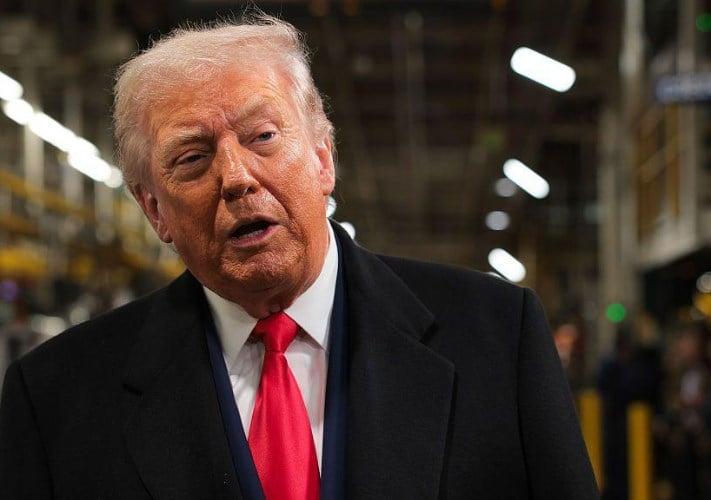
The same article says that in “May 2024,” the Biden administration followed with “further increases in tariffs on electric vehicles, batteries, and Chinese solar products,” and it adds that when Trump returned in “January 2025,” he proposed “tariffs of up to 60% on all Chinese imports.”
In CNN الاقتصادية, Trump’s threats are tied to Iran, with the report saying Trump threatened China with new tariffs if it provides military assistance to Iran, quoting Trump: “If we catch them doing that, they will be hit with a 50 percent tariff, and that is a huge, huge level.”
The same CNN report says Trump is scheduled to visit Beijing next month to meet Xi Jinping, and it states the summit had been postponed due to the war launched by the United States and Israel against Iran on “February 28.”
More on China
China Test-Launches Submarine Ballistic Missile in South Pacific, Prompting Protests and Regional Concerns
14 sources compared
Dmitry Medvedev Attends Ali Khamenei Funeral After U.S.-Israeli Air Strike Killed Him
15 sources compared
NATO Faces A Moment Of Truth As Trump Presidency Widens Transatlantic Fault Line
10 sources compared

EU Tightens Steel Safeguards And Parcel Rules Against China From July 1, 2026
10 sources compared