
Drones, AI reshaping war
Key Takeaways
- Drones and AI are reshaping modern warfare tactics and strategic impacts
- Multiple military conflicts over the past four years involved petroleum-producing states
- U.S.-Israeli war against Iran cut off roughly a fifth of global petroleum and LNG
Immediate strategic impact
Troy Stangarone argues that the current U.S.-Israeli war against Iran has removed roughly a fifth of the world’s petroleum and liquefied natural gas from global markets, spiking prices and raising concerns about an economic slowdown.
“Over the last four years, multiple military conflicts have involved petroleum producing states”
He says that while managing short-term fuel shortages is urgent, Korea faces a deeper strategic challenge because the rapid battlefield adoption of drones and artificial intelligence (AI) in these conflicts will reshape Korea’s security environment far beyond the present crisis.
Drone warfare evolution
Stangarone traces the evolution of drone warfare from limited uses in intelligence, surveillance and reconnaissance to a primary attack tool, citing the Second Nagorno-Karabakh War of 2020 as an important precursor and the Russia-Ukraine war as a major accelerator.
He notes that as artillery supplies dwindled in Ukraine, both sides turned to one-way attack drones first as a supplement and then as a primary means of striking positions, which drove rapid technological change, a push for cheaper drones and shifting battlefield tactics.
Defense cost implications
He warns that this shift forces a rethink of defensive systems: the Terminal High Altitude Area Defense missile system was not designed to handle waves of cheap drones, and the cost economics are stark — Iran’s Shahed drones cost no more than $50,000 while systems such as Korea’s Cheongung-II interceptors are estimated to cost $1.5 million.
“Over the last four years, multiple military conflicts have involved petroleum producing states”
He adds that cheap drones can be produced quickly, U.S. allies in the Middle East have already used more interceptors than were produced in 2025, and although the United States has noted Iran’s rate of ballistic missile launches declined by 90 percent, Iran’s pace of drone strikes has not declined as part of a strategy to wear down U.S. and allied defenses.
AI and infrastructure risks
Stangarone emphasizes that AI is becoming central to modern warfare — AI systems in Ukraine analyze battlefield data, speed targeting cycles and guide autonomous drones, and the United States is deploying similar capabilities in the current conflict with Iran — but these capabilities create strategic vulnerabilities because AI depends on massive data centers and large amounts of electricity.
He points out that the Nvidia chips Korea agreed to purchase last fall will require energy equivalent to what powers 126,000-260,000 homes, and that this demand means Korea will need more data center capacity and a far more resilient and expanded energy supply while defending data centers (which Iran has already targeted in the Middle East) and energy infrastructure (a hallmark of Russia’s war on Ukraine).
He concludes that even nominally nondefense AI centers will need protection, that companies like Coupang will be critical for supply chain logistics in a crisis, and that Korea must study the evolving use of drones and AI as they integrate more deeply into defense.
More on Iran
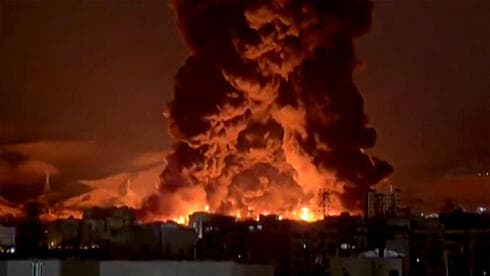
US obliterates military targets on Iran’s Kharg Island, Trump warns
13 sources compared
US Deploys About 2,500 Marines to Middle East After Iran Attacks Gulf Shipping
33 sources compared
FBI Warns of Iranian Drone Plot Based on Unverified Tip; California Says No Credible Threat
10 sources compared

White House Demands ABC Retract Report Claiming Iran Sought To Launch Drone Attacks On California
11 sources compared