Full Analysis Summary
Drone strike at border market
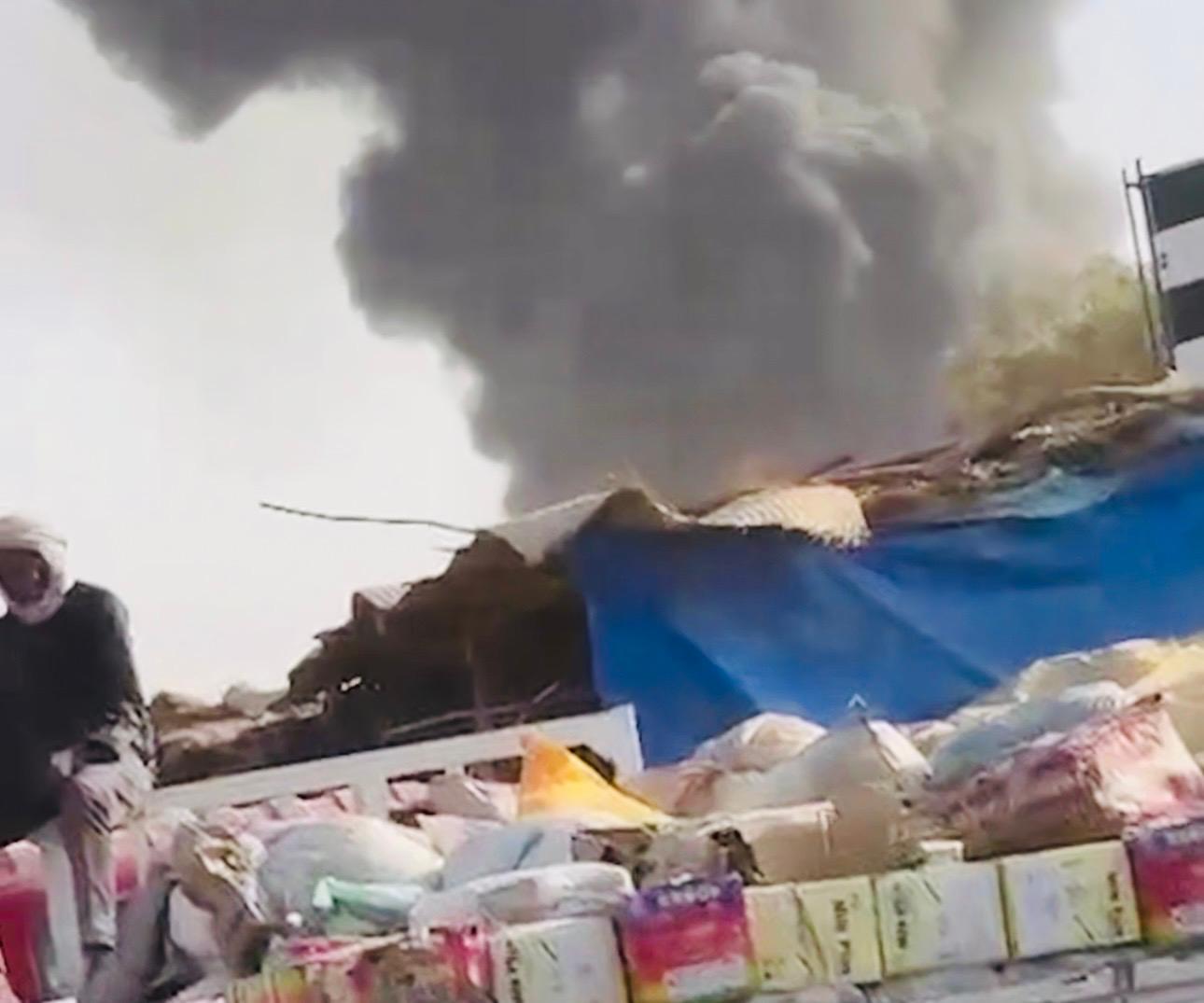
A drone strike struck the weekly market in Adikon, near the Adré crossing on the Sudan–Chad border, on Friday afternoon.
The attack hit both the market and humanitarian aid trucks bound for North Darfur and Kordofan.
Local reports and survivor video indicate shops were destroyed and charred bodies recovered.
Local official Badr El Din Dawoud said a Turkish-made Bayraktar drone fired two missiles.
He said the strike killed an estimated 18–20 people, mostly Chadian traders, and left many others wounded, some critically.
Dozens of people are unaccounted for.
Coverage Differences
Tone / Focus
Both sources report the core facts of the strike and casualties, but Dabanga Radio TV Online foregrounds survivor video and the local official's attribution to a "Turkish-made Bayraktar drone," while allAfrica repeats these claims and situates them alongside additional operational detail about aid trucks being hit and the burning of supplies. The reporting in Dabanga emphasizes immediate eyewitness details and a direct quote from the Isenga official; allAfrica repeats the official attribution and adds context on the aid impact and institutional responses.
Market strike aftermath
Witnesses and local authorities reported severe destruction: shops were demolished, charred bodies recovered from the market, and at least one humanitarian truck carrying supplies burned in the strike.
Both outlets note multiple wounded and that some casualties were aid workers, while survivors posted videos and screenshots showing aftermath damage.
Coverage Differences
Missed information / Emphasis
Dabanga emphasizes survivor video and on-the-ground descriptions of charred bodies and destroyed shops, while allAfrica includes the additional detail that "several aid workers were reported killed" and explicitly notes a burned truck carrying humanitarian supplies. allAfrica thus emphasizes the humanitarian operation losses more than the immediate eyewitness framing in Dabanga.
Aid disruptions in Darfur
Authorities and humanitarian agencies warned of immediate operational consequences.
West Darfur authorities set up committees to assess losses, protect civilians and reorganize the market.
The World Food Programme said convoys are stranded and that airdrops may be necessary after earlier attacks on aid vehicles.
The Rapid Support Forces (RSF) accused the Sudanese army of targeting the crossing to obstruct aid, underscoring the strike's political and military implications for an already volatile humanitarian corridor.
Coverage Differences
Narrative / Attribution
allAfrica reports institutional responses and competing accusations—RSF accusing the Sudanese army and the WFP warning of stranded convoys and potential airdrops—while Dabanga focuses more narrowly on the strike's immediate human toll and local official attribution (the Bayraktar claim). allAfrica therefore offers broader institutional and conflict-context reporting compared with Dabanga's more on-the-ground eyewitness emphasis.
Aid flow disruptions at Adré
The incident deepens the humanitarian crisis affecting eastern Chad and western Sudan.
allAfrica notes eastern Chad hosts about 1.2 million Sudanese refugees.
The attack on crossings and aid convoys is causing broader displacement and assistance shortages.
Both sources stress that the Adré crossing is a recognized humanitarian corridor.
The strike therefore has implications beyond local market damage and represents a serious obstruction to aid flows.
Coverage Differences
Scope / Context
allAfrica explicitly quantifies the refugee burden in Eastern Chad (about 1.2 million) and frames the attack within regional displacement and aid-access concerns; Dabanga concentrates on the immediate aftermath and casualty count without that broader regional refugee statistic. This reflects allAfrica's wider contextual emphasis versus Dabanga's local reporting focus.
Comparison of two sources
Both sources present a consistent factual outline: the market strike, hits on aid trucks, and heavy casualties.
They differ in emphasis.
Dabanga foregrounds eyewitness footage and the local official's explicit naming of a Bayraktar drone.
allAfrica supplements those facts with broader humanitarian, institutional, and political context, citing burned aid trucks, reported aid-worker deaths, RSF accusations against the Sudanese army, WFP warnings, and the refugee burden in eastern Chad.
Because only these two sources are available, comparative analysis is limited to their respective emphases rather than divergent factual accounts.
Coverage Differences
Tone / Narrative Emphasis
Dabanga (Other) presents more immediate eyewitness framing and direct local attribution to a Bayraktar, while allAfrica (African) incorporates institutional responses and regional humanitarian context—e.g., burned supplies, aid-worker deaths, RSF accusations and WFP warnings—expanding beyond the local eyewitness narrative into broader operational and political implications.