Africa07 December, 20252 min read
ECOWAS Deploys Troops to Benin After Mutinous Soldiers Attempt Coup
Soldiers seized state television, announced dissolving institutions and claimed to oust President Patrice Talon. Loyalist army forces quickly suppressed the mutiny, retook sites and arrested about a dozen soldiers.

54 outlets told this the same way.
Benin coup attempt
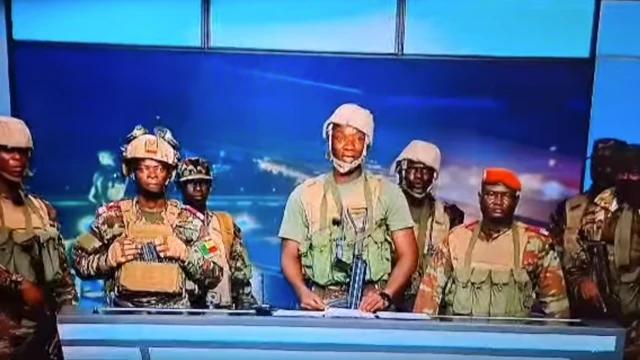
On Dec. 7, a small group of soldiers in Cotonou briefly seized state television and announced they had ousted President Patrice Talon, calling themselves the 'Military Committee for Refoundation' (CMR) and naming Pascal Tigri as their leader before broadcasts were cut.
“On Dec. 7 a group of soldiers in Benin announced on state television that they had ousted President Patrice Talon, calling themselves the ‘Military Committee for Refoundation’ (CMR).”
Benin's government and presidency described the episode as a short-lived coup attempt or mutiny that was quickly foiled by loyalist forces.
Multiple outlets said the signal was reclaimed and that normal life largely resumed in parts of the city.
The mutineers were reported to have declared the dissolution of institutions and the suspension of the constitution in their televised message.
Regional and international responses
ECOWAS condemned the action as unconstitutional and ordered immediate deployment of its standby force, while the African Union also denounced the move. Several reports said ECOWAS deployed or readied troops from Nigeria, Sierra Leone, Cote d'Ivoire (Ivory Coast) and Ghana to support Benin's authorities. Nigeria in particular reportedly provided rapid air and ground support after Benin formally requested assistance, with multiple outlets describing Nigerian jets or other air force involvement that helped loyalist forces retake seized sites.
Mutiny and response overview
Reporting varies on the incident’s human and material toll and on exactly how much territory or infrastructure the mutineers controlled. Authorities and several outlets said the regular armed forces quickly regained control and arrested a number of suspects, with figures reported variously as about a dozen, 13 or 14 people.
“Loyalist troops and the national guard quickly regained control and arrested about a dozen to 14 people, mostly active-duty soldiers.”
Some eyewitnesses described gunfire near Camp Guezo and around the presidential residence. State TV and public radio were briefly cut but restored, and most sources said the capital and major infrastructure such as the airport were largely secure after the government counter-operations.
Benin political and security
Analysts and many reports place the episode in a broader political and security context. They note that Benin has faced mounting criticism over recent constitutional changes, the sidelining of opposition figures, and a law extending presidential terms. Observers say the north has suffered spillover jihadist attacks from Mali and Burkina Faso.
Observers also note a regional pattern of coups and attempts across West Africa in recent years and point to factors such as economic strain, weakening state authority, and great-power competition as drivers. The mutineers themselves cited deteriorating security in the north and neglect of 'fallen brothers-in-arms' when justifying their action.
Regional response to mutiny
International bodies and neighbouring states have reiterated support for constitutional order and warned against further instability. ECOWAS and the AU condemned the attempted seizure and pledged to defend Benin's constitution. Nigeria said its intervention upheld ECOWAS protocols and aimed to protect regional stability.
“ECOWAS called the action a subversion of the people’s will and ordered troops from Nigeria, Sierra Leone, Ivory Coast and Ghana to support Benin.”
Some outlets reported pro-Russian online celebration of the mutiny and warned of wider geopolitical fallout if constitutional order is undermined. Capitals and regional militaries have been closely monitoring the episode as they weigh deployments and political measures to deter contagion.