
Egypt and Jordan back action against Iran as Sisi pledges support
Key Takeaways
- Egypt and Jordan back Arab measures against Iran.
- Sisi pledges support for Arab action against Iran.
- Talks occurred in Amman between Egypt and Jordan's foreign ministers.
Egypt's Regional Diplomacy
Egypt has intensified diplomatic efforts to galvanize a unified Arab response to mounting security threats.
“AMMAN Jordan’s Foreign Minister Ayman Safadi and his Egyptian counterpart Badr Abdelatty voiced on Monday full support for any steps taken by Arab states to confront what they described as “Iranian aggression,” signalling a potentially firmer regional stance even as questions linger over whether key players such as Egypt could move beyond diplomacy if escalation continues”
Foreign Minister Sameh Shoukry Abdelatty conducted a regional tour that has included Jordan, Qatar, the United Arab Emirates, and Oman.
The tour is set to conclude in Saudi Arabia, indicating Egypt's comprehensive approach to regional diplomacy.
This diplomatic initiative comes amid escalating tensions in the Middle East as Iran has launched missile and drone attacks.
Abdelatty's meetings with Jordanian Foreign Minister Ayman Safadi underscored Egypt's commitment to regional coordination.
Cairo seeks to mobilize Arab states in response to what they describe as growing security threats from Iranian actions.
The Egyptian foreign minister's regional tour reflects a strategic push to strengthen Arab unity.
Egypt is developing coordinated responses to the complex security challenges facing the Middle East.
Sisi's Support Pledge
President Abdel Fattah al-Sisi has pledged Egypt's full support to Gulf states and Jordan following Iranian strikes.
Sisi declared that Egypt was prepared to provide 'all forms of support' to regional partners affected by the attacks.
He emphasized that regional stability constitutes an 'extension' of Egypt's own national security.
Sisi framed the security of neighboring countries as directly linked to Egyptian national interests.
In recent calls with regional leaders, Sisi expressed 'categorical rejection' of the Iranian attacks.
He affirmed Cairo's complete solidarity with its regional partners.
The Egyptian president highlighted a 'common destiny' binding Arab states together.
Sisi suggested that security challenges require unified responses and collective action.
Arab Restraint Strategy
Despite growing anger over Iranian attacks, Arab states have opted for cautious restraint.
“AMMAN Jordan’s Foreign Minister Ayman Safadi and his Egyptian counterpart Badr Abdelatty voiced on Monday full support for any steps taken by Arab states to confront what they described as “Iranian aggression,” signalling a potentially firmer regional stance even as questions linger over whether key players such as Egypt could move beyond diplomacy if escalation continues”
Diplomats warn this restraint position may become increasingly difficult to maintain if hostilities persist.
Iranian missile and drone attacks have hit civilian and energy infrastructure across several Arab countries.
Egypt and Jordan condemned the strikes as 'unjustified escalation' and 'flagrant violation of international law'.
The ministers emphasized diplomatic solutions must be prioritized to contain the crisis.
They stressed coordinated Arab action remains essential to preventing further escalation.
This reflects concern that direct military retaliation could trigger broader conflict.
Regional powers are balancing solidarity with affected states while managing conflict expansion risks.
Arab Coordination Efforts
Egyptian and Jordanian diplomats push for enhanced Arab coordination on security challenges.
Discussions focus on reviving the long-dormant Arab mutual defence framework.
They're considering establishing joint forces as part of coordinated security arrangements.
These efforts reflect frustration with perceived insufficient US protection.
Regional actors are exploring more autonomous security arrangements.
Egyptian officials have engaged in intensive diplomatic efforts to halt the war.
Cairo is taking a lead role in coordinating Arab responses to the conflict.
The emphasis on Arab unity shows strategic reassessment amid expanding conflict.
Gaza and Lebanon Concerns
Egyptian and Jordanian ministers warn the Iran confrontation must not overshadow Gaza's humanitarian crisis.
“AMMAN Jordan’s Foreign Minister Ayman Safadi and his Egyptian counterpart Badr Abdelatty voiced on Monday full support for any steps taken by Arab states to confront what they described as “Iranian aggression,” signalling a potentially firmer regional stance even as questions linger over whether key players such as Egypt could move beyond diplomacy if escalation continues”
Israeli military operations continue to impose heavy civilian casualties in Gaza.
They called for full implementation of Donald Trump's proposals for the region.
The ministers urged an end to what they described as illegal Israeli measures in the West Bank.
They warned such actions undermine prospects for just and lasting peace.
Both nations condemned Israeli restrictions on Al-Aqsa Mosque access.
They described these as serious breaches of international law and status quo.
On Lebanon, they support government efforts while condemning Israeli military actions.
Regional Conflict Escalation
The broader conflict erupted February 28 with US and Israeli strikes on Iran.
It followed the killing of Iran's supreme leader Ali Khamenei.
The conflict has claimed hundreds of lives and spread across multiple fronts.
Arab states show increasingly assertive rhetoric despite no direct military involvement.
Egypt's pledge of support indicates narrowing margin for neutrality.
The Lebanese front intensified after Hezbollah attacks on Israeli positions.
These attacks followed Khamenei's killing, prompting Israeli strikes.
Regional diplomacy accelerates as leaders seek to contain the conflict.
More on Iran

Israel strikes Iran's Pars gas field as Tehran vows revenge
14 sources compared
Trump threatens to blow up South Pars gas field if Iran attacks Qatar again
10 sources compared
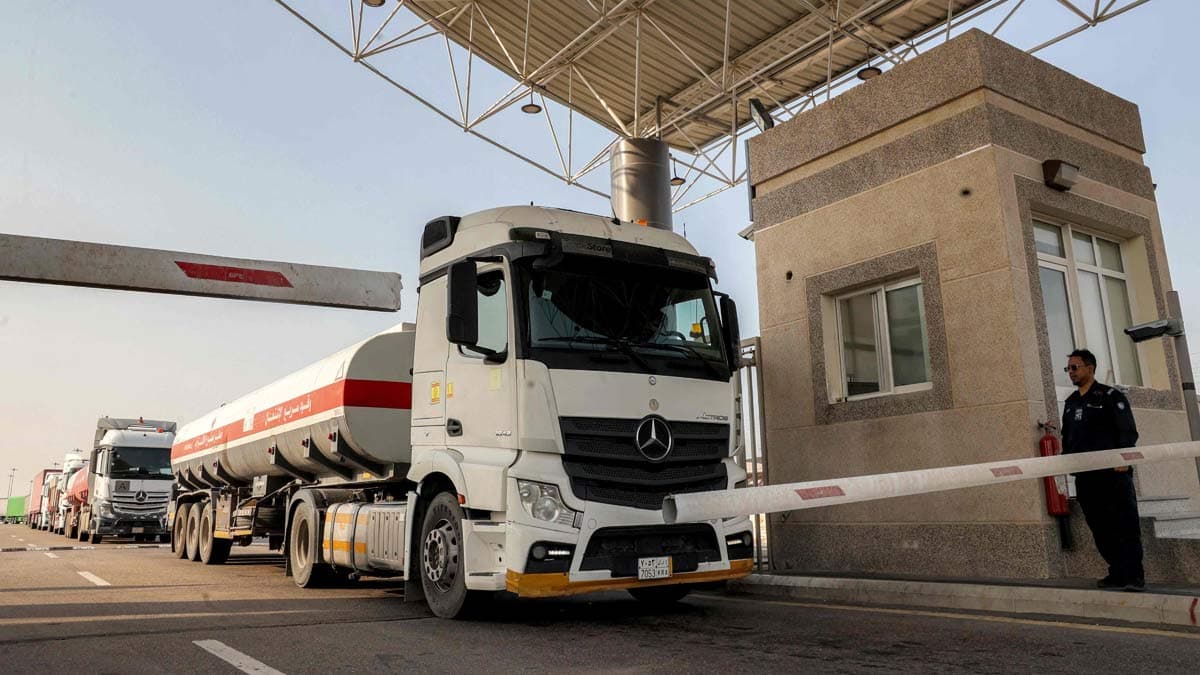
UAE Halts Habshan Gas Facility Operations After Debris From Intercepted Missiles
10 sources compared

Iran Threatens Gulf Energy Facilities After Israel Strikes South Pars Gas Field
11 sources compared