Full Analysis Summary
Egypt's stance on Sudan
Egypt has publicly identified preserving Sudan's territorial unity and preventing the country's fragmentation as its primary "red line."
Egypt argues that a collapsed Sudan would directly threaten Egyptian national security through risks such as terrorism, disputes over the Nile Basin, and security vacuums.
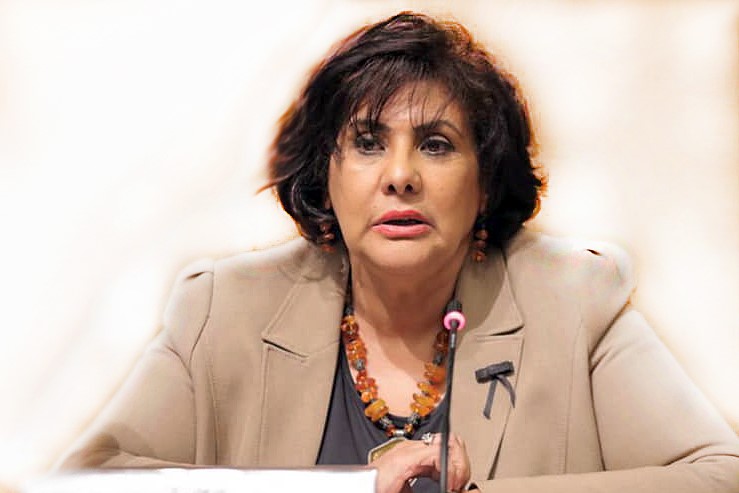
Dr Amani Al-Tawil, director of the African Programme at Cairo's Al-Ahram Centre, described this position as a security imperative.
She added that the "red line" is intended more as a diplomatic signal to convey the costs of dangerous trajectories than as a promise of imminent military intervention.
Coverage Differences
Consistency / Tone
Both Dabanga Radio TV Online (Other) and Radio Dabanga (Other) consistently report Al‑Tawil’s view that Egypt’s ‘red line’ is preserving Sudanese unity and that the ‘diplomacy of red lines’ is a signalling tool rather than a promise of immediate military action. There is no substantive contradiction between the two sources; they largely repeat the same quotes and framing from Al‑Tawil’s interview.
Sudan army and Islamic groups
Al‑Tawil told the interviewers that the political influence of Sudanese Islamic-oriented groups, including the Muslim Brotherhood, depends on their alliance with the Sudanese army.
She argued that without this partnership those groups are "weak and lack real influence," and the army could reposition itself politically, diminishing their leverage.
This assessment frames Egypt’s concern partly around the dynamics between Sudan’s military and Islamic-affiliated actors, suggesting Cairo sees leverage in a potential distancing of the army from those forces.
Coverage Differences
Reported claim vs. source perspective
Both sources attribute the claim about Islamist weakness to Al‑Tawil’s analysis rather than presenting it as the outlets’ own view. Dabanga Radio TV Online quotes Al‑Tawil saying the Islamists’ political influence depends on alliance with the army; Radio Dabanga repeats the same attribution. Neither outlet adds editorial endorsement or counter-evidence.
Sudan-Egypt engagement policy
Al-Tawil urged moving beyond popular anxieties in Sudan about Egypt's role and called for clearly defining shared interests, particularly after what she described as the failure of prior international initiatives.
Her remarks suggest a policy push for clearer, interest-based engagement between Sudanese actors and Egypt rather than open interference.
The analysis presents Egypt's posture as strategic signalling combined with diplomatic outreach to protect mutual security interests.
Coverage Differences
Narrative emphasis / omission
Both Dabanga Radio TV Online and Radio Dabanga report Al‑Tawil’s call to ‘move beyond Sudanese anxieties’ and to ‘clearly define shared interests’ after failed international initiatives. There is no additional coverage in either source about concrete diplomatic steps Egypt would take, meaning both sources omit operational detail and focus on the analytical framing given by Al‑Tawil.
Diaspora activism and peace
Al‑Tawil praised the Sudanese diaspora's 'No to war' slogan, saying it has given the December Revolution a renewed, influential voice pushing to end the conflict and support peace.
This highlights the role of civil society and expatriate activism in shaping political pressure for de‑escalation.
It also shows that Egyptian analysts view diaspora messaging as a positive force for peace.
Coverage Differences
Tone / positive framing
Both sources report Al‑Tawil’s praise for the diaspora slogan, framing it positively as renewing the December Revolution’s influence. Neither source presents dissenting voices that might contest the slogan’s effectiveness or broader political implications, so the coverage is uni‑directional and reliant on Al‑Tawil’s normative judgement.