Tourism05 November, 20253 min read
Egypt Opens $1 Billion Grand Egyptian Museum Showcasing King Tutankhamun’s Treasures
This article is an automated aggregation of coverage from news outlets. Our editorials offer in-depth analysis curated by the NewsCord team.
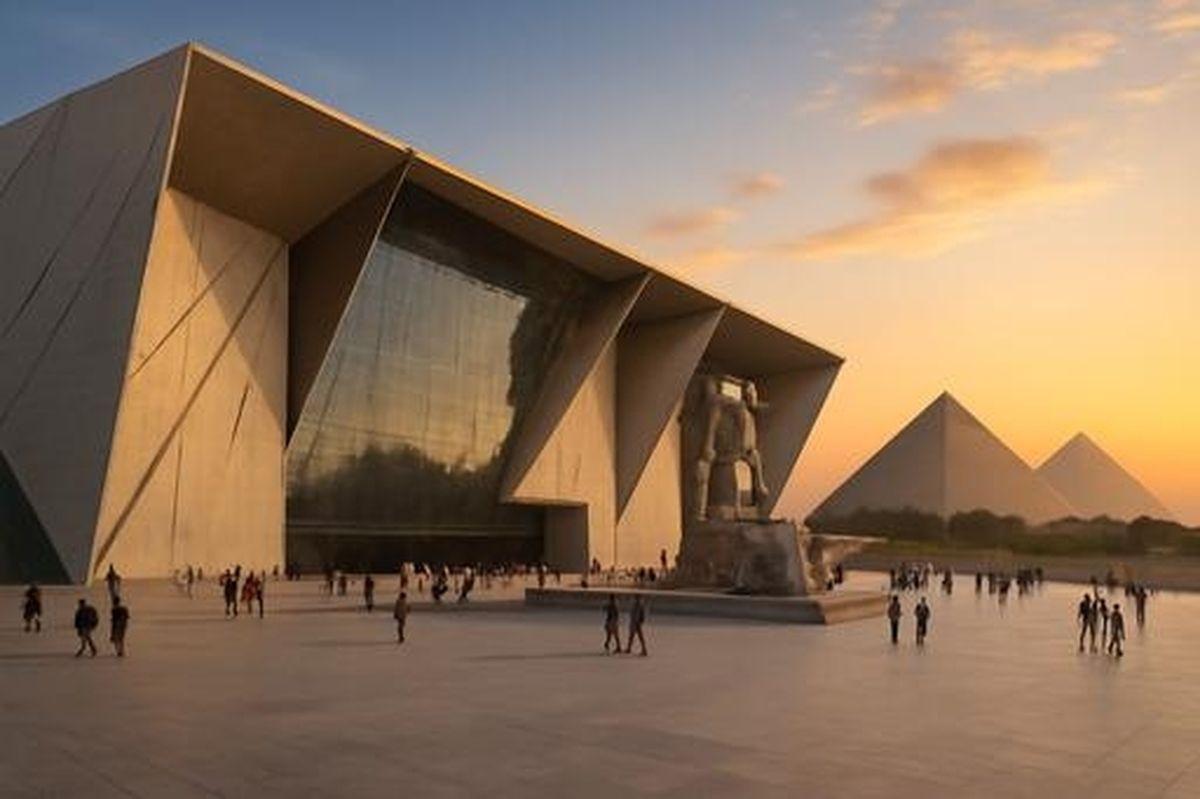
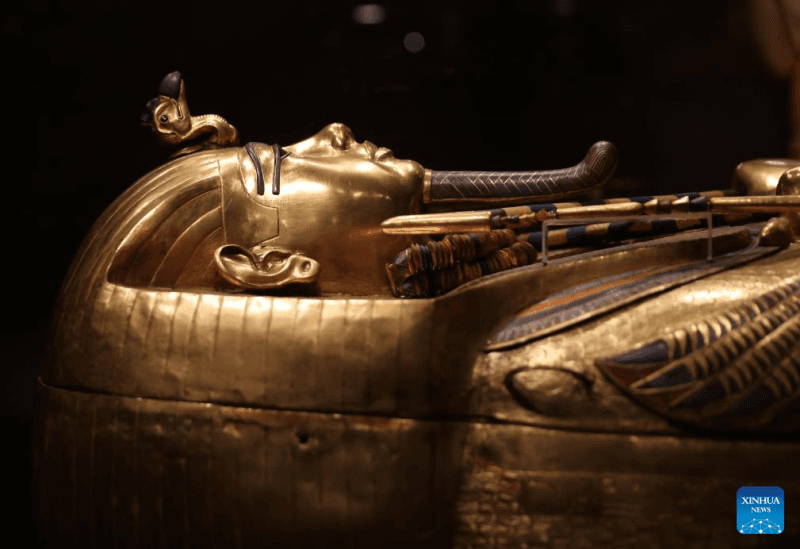
The Grand Egyptian Museum opened on November 4, 2025, near the Pyramids of Giza. The museum displays over 5,300 artifacts from King Tutankhamun’s tomb, including his golden mask.
7 outlets told this the same way.
Outlets did split on Houthis Strike Riyadh’s King Khalid International Airport, Injuring Terminal 3 and 4 →
Grand Egyptian Museum Opening
Egypt’s Grand Egyptian Museum (GEM) is described as a landmark opening near the pyramids. It is promoted as the largest museum dedicated to a single civilization and focuses on the historic unveiling of King Tutankhamun’s treasures. Western mainstream media reports that the museum officially opened to the public on November 4, 2025.
“The Grand Egyptian Museum in Giza, Egypt, officially opened to the public on November 4, 2025, following a lavish inauguration attended by royals and world leaders.”
The opening was marked by a lavish inauguration attended by royals and world leaders. West Asian sources also confirm the official opening on November 4, 2025, describing the event as an extravagant ceremony with global dignitaries present.

An Asian source highlights that the GEM opened near the Great Pyramids of Giza, emphasizing its goal to enhance heritage and tourism. Another Asian outlet previewed the event, stating that Egypt was set to open the Grand Egyptian Museum in Cairo on November 4, 2025.
Details on the GEM Museum
Sources agree on the GEM’s extraordinary scale but diverge on figures. Western Mainstream and West Asian reports put the budget at $1 billion and say the museum is the largest dedicated to a single civilization, with nearly 50,000 artifacts. An Asian outlet instead cites $1.2 billion, a 500,000-square-meter footprint, and around 100,000 artifacts.
Another Asian source underscores it is the world’s largest museum dedicated to a single civilization, without giving the overall artifact count in that sentence. Local Western coverage stresses scope through 12 main galleries spanning eras from pre-Egyptian history to the Greco-Roman period.

Tutankhamun Artifact Exhibitions
The Tutankhamun galleries anchor every account, but the reported numbers vary. Western Mainstream coverage highlights over 5,000 items such as jewelry, gilded chariots, and his iconic gold death mask, all brought together for the first time in one place. West Asian reporting similarly describes a comprehensive display of all treasures from King Tutankhamun’s tomb, exhibited together for the first time since their 1922 discovery.
“A major highlight is the comprehensive collection of treasures from King Tutankhamun’s tomb, including over 5,000 items such as jewelry, gilded chariots, and his iconic gold death mask, all brought together for the first time in one location.”
An Asian source goes further with a precise figure—all 5,992 artifacts from the tomb—while another Asian outlet also stresses the complete collection displayed together for the first time since their discovery. Local Western coverage reinforces the first-time consolidation theme without specifying counts, noting the unique opportunity to display many of these artifacts together for the first time.
Architectural and Exhibit Highlights
Architecture and exhibit presentation receive different emphases by source type. Asian and Local Western sources underline the role of Heneghan Peng Architects. Local Western coverage adds that the building’s geometry reflects the scale and mathematical precision of the pyramids.
An Asian outlet notes a pyramid-inspired glass façade. Another Asian source stresses advanced conservation technology, immersive lighting, and climate-controlled environments.

Exhibit callouts vary: one Asian outlet highlights a 36-foot-tall granite statue of Ramesses the Great. Another points to the colossal statue of Ramses II and King Khufu’s solar boat.
Global Perspectives on Museum Impact
Across narratives, the museum’s purpose and experience are framed in different ways. Western mainstream coverage foregrounds public reaction and curatorial strategy, noting that visitors expressed awe and the institution aims to enrich the display experience by consolidating artifacts previously scattered.
“Visitors expressed awe at the exhibits, particularly the famous burial mask.”
West Asian reporting stresses national uplift, describing the $1 billion project as aiming to boost Egypt’s cultural and economic profile and highlighting the presence of global dignitaries. Asian coverage highlights tourism and destination-building, asserting that the museum aims to boost Egypt’s archaeological heritage and tourism and is poised to become a major global cultural destination while promising a modern and immersive experience.