Africa03 June, 20262 min read
Egypt Sentences Activist Ahmed Douma To One Year In Prison With Labor
This article is an automated aggregation of coverage from news outlets. Our editorials offer in-depth analysis curated by the NewsCord team.
Ahmed Douma sentenced to one year in prison with hard labor for spreading fake news. Rights groups condemn it as an unjust, politically motivated crackdown on freedom of expression.
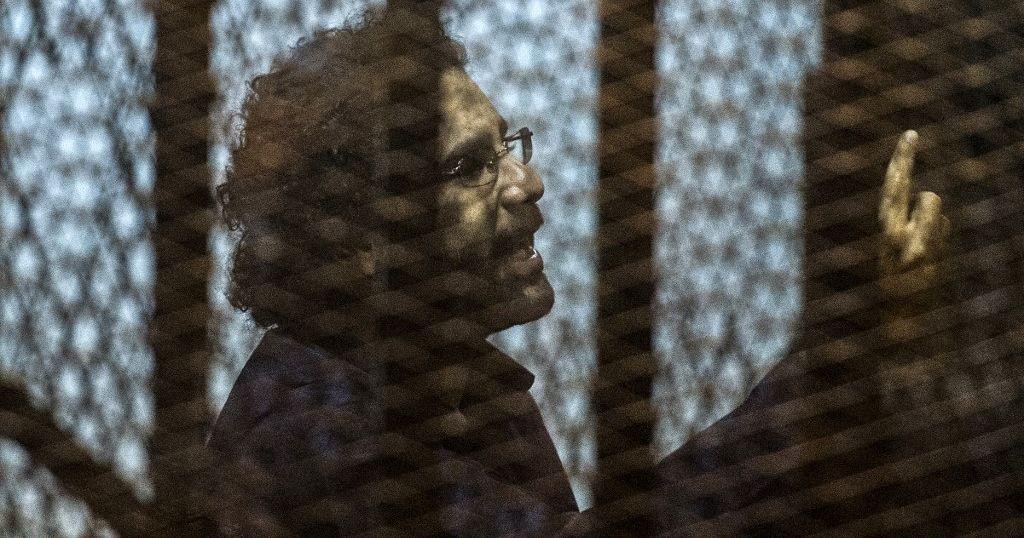
Douma jailed for prison critique
An Egyptian court sentenced activist and poet Ahmed Douma to one year in prison with labour after convicting him for “spreading fake news,” according to state media Akhbar al-Youm. The Committee to Protect Journalists said the sentencing of Douma for writing about prison conditions was “a stark violation of the right to free and safe expression.” CPJ reported that a Cairo court convicted Douma on charges of publishing “false news and rumors inside and outside the country that would disturb public order” over social media posts and an article he wrote for the London-based news website The New Arab.
“‘The sentencing of Ahmed Douma for writing about prison conditions is a stark violation of the right to free and safe expression.”
CPJ also said Douma was arrested on April 6, 2026, at the Supreme State Security Prosecution headquarters following a six-hour interrogation and held for nearly two months in pre-trial detention. Amnesty International said the renewed imprisonment followed an unfair trial and described it as “a devastating assault on the right to freedom of expression.”
Defense, appeal, and closed trial
Mada Masr reported that lawyer Nabih al-Genady, a member of Douma’s defense team, said Douma was sentenced on charges of “deliberately broadcasting false news, statements and rumors inside and outside the country, which could disturb public order and spread chaos,” based on his published article and social media posts. Mada Masr added that the defense team plans to appeal the verdict, and that the verdict was relayed to the defense team by the court secretary and not announced in the session, which Douma was not allowed to attend. Amnesty International said the court rejected defense requests for it to examine the prison conditions that Douma had written about and to hear testimony from defense witnesses and experts.
Amnesty International also said Douma’s trial was held behind closed doors and was inaccessible to the public, while Douma had been held in pretrial detention at the 10th of Ramadan prison under restrictive conditions. Amnesty International’s Mahmoud Shalaby said the sentence “exposes the hollow reality of the presidential pardons Ahmed Douma and others received in 2023 and signals that activists released from prolonged unjust detention are not safe from re-arrest.”

Crackdown on expression widens
Al Jazeera reported that Douma was most recently arrested in April after publishing an article in the London-based pan-Arab news outlet Al-Araby Al-Jadeed on Egypt’s prison conditions. PEN America called the sentence “disgraceful,” and PEN’s Asma Laouira said Douma’s case embodies “part of an escalating crackdown on writers in Egypt, where poems and articles are routinely weaponised as courtroom evidence.” CPJ said Egypt remains “one of the world’s leading jailers of journalists,” with 18 currently behind bars.
“Egypt remains one of the world’s leading jailers of journalists, with 18 currently behind bars.”
Amnesty International said Douma’s renewed detention is “emblematic of the Egyptian authorities’ ongoing misuse of the criminal justice system to punish and deter peaceful dissent,” and called for his immediate and unconditional release. The Committee to Protect Journalists said CPJ’s email requesting comment from Egypt’s Public Prosecutor’s Office did not receive an immediate response, as the case adds to a pattern of prosecutions tied to online activity and prison conditions.