Full Analysis Summary
Sudanese detainees in Cairo
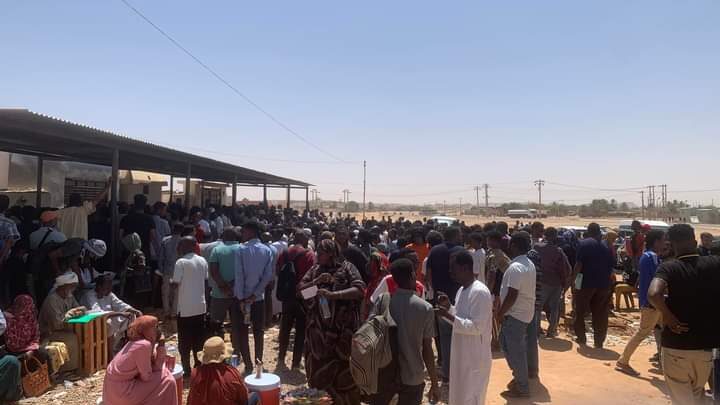
Egyptian authorities have reportedly detained dozens of Sudanese nationals in recent operations across Cairo.
Human-rights observers and legal experts warn that some detainees have been forcibly deported in ways that may breach international refugee protections.
Many of those picked up fled Sudan after the April 2023 outbreak of conflict and hold UNHCR Yellow Cards while awaiting asylum appointments.
The UN refugee agency has expressed concern and notified Egyptian authorities about the actions.
Coverage Differences
Tone and emphasis
Both Dabanga Radio TV Online (Other) and Radio Dabanga (Other) report the detentions and possible deportations and cite UNHCR concern, but Dabanga Radio TV Online frames the actions as a “surge” described as “breaches of international refugee protections,” while Radio Dabanga uses the term a “wave” and emphasizes that critics say the actions “violate international refugee protections.” Both sources are of the same source_type (‘Other’) and largely align in content and tone, though they use slightly different verbs and framings to describe the severity. Each source reports the UNHCR’s involvement rather than asserting an independent UN statement.
Sudanese refugees' residency issues
Several legal experts quoted in the coverage stress that many Sudanese refugees in Egypt rely on the UNHCR Yellow Card as a temporary residency substitute while awaiting lengthy asylum-regularisation appointments, some scheduled as late as September 2027.
Lawyer Ashraf Milad described the enforcement measures as arbitrary and highlighted practical consequences of lacking formal permits: refugees cannot open bank accounts, receive remittances, or register phone lines, leaving them more vulnerable to detention and deportation.
Coverage Differences
Detail and phrasing
Both sources quote lawyer Ashraf Milad calling the measures “arbitrary” and note the Yellow Card’s functioning as a temporary residency substitute, but Radio Dabanga explicitly lists the consequences—unable to open bank accounts, receive money transfers or register phone lines—while Dabanga Radio TV Online similarly lists inability to open bank accounts, receive remittances or register phones. The two outlets use nearly identical facts and both attribute them to Milad rather than presenting them as their own editorial conclusions.
Operational methods in Cairo
Coverage describes the methods used in the operations.
These include street stops and checkpoint searches in neighbourhoods such as Dahshur and Hadayek El Ahram, nighttime raids on private homes and on school or campus premises, and coordinated arrests across Cairo.
Reporters indicate arrests have occurred during routine enforcement, such as street and checkpoint stops, and during more planned round-ups like night raids and coordinated arrests.
This suggests a mix of ad-hoc policing and organised operations.
Coverage Differences
Specificity of locations and sites
Both Dabanga Radio TV Online and Radio Dabanga name the same Cairo neighbourhoods (Dahshur and Hadayek El Ahram) and similar arrest methods, but Dabanga Radio TV Online lists “campuses” alongside homes while Radio Dabanga says “schools,” a minor difference in wording but one that could reflect slightly different emphases in reporting. Both sources attribute the operational descriptions to legal experts and analysts rather than asserting direct eyewitness accounts themselves.
Concerns over forcible returns
Legal experts warn that forcible returns could violate the 1951 Refugee Convention's prohibition on refoulement, and both outlets report that the UNHCR has raised concerns with Egyptian authorities.
Observers cited in the reporting connect the crackdown to security concerns, including fears about individuals affiliated with Sudan's Rapid Support Forces (RSF), and to political calculations: analysts point to Egypt's historical backing of the Sudanese Armed Forces (SAF) and the possibility that the Sudanese government has requested tighter controls on its citizens abroad.
The reporting does not provide independent confirmation from Egyptian authorities about motive or orders, leaving those explanations as analyst attributions rather than proven facts.
Coverage Differences
Attribution and caution
Both sources relay analysts’ theories linking the crackdown to security fears (RSF) and political calculations (Egypt’s stance or requests from Sudanese authorities), and both emphasize these as analysts’ assessments rather than verified directives. Neither source contains direct confirmation from Egyptian officials in the provided excerpts, and both report UNHCR concern; thus the primary difference is limited to phrasing rather than substantive contradiction.
Sudanese refugees in Egypt
Both reports from Dabanga outlets present a consistent narrative: they report detentions and alleged forced deportations of Sudanese refugees in Egypt, relay legal experts' warnings about arbitrary enforcement and risks of refoulement, and quote UNHCR as having raised concerns with Egyptian authorities.
Differences between the two items are limited to minor wording choices (for example, 'campuses' versus 'schools,' or 'surge' versus 'wave') and slightly different enumerations of consequences; both attribute key claims to lawyers, analysts, or UNHCR rather than presenting new independent verification.
The reporting leaves unresolved questions — notably whether Egyptian authorities have officially authorised deportations, the scale of forced returns, or responses from Egyptian officials — and these gaps are explicit in the sources rather than filled here.
Coverage Differences
Coverage uniformity and omissions
Both Dabanga Radio TV Online (Other) and Radio Dabanga (Other) largely repeat the same core claims and attributions; neither provides independent confirmation from Egyptian authorities, and both omit direct official statements in the excerpts provided. The primary differences are small wording choices and emphasis, rather than substantive disagreement. Because both sources share source_type and similar reporting, there is limited cross-type perspective to contrast in the available material.