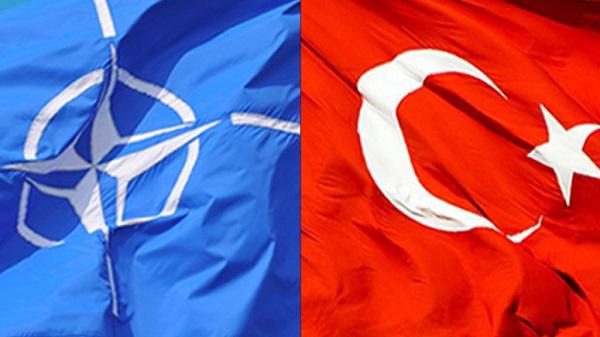
Erdogan Lifts Turkey’s Veto On Sweden And Finland’s NATO Accession After Arms Embargo Deal
Key Takeaways
- Erdoğan lifts Turkey's veto on Sweden and Finland's NATO accession
- Turkey secured concessions in exchange for lifting the veto
- Finland's accession approved; Sweden's entry advances toward ratification
NATO veto exchange
Turkish President Recep Tayyip Erdogan said on May 19 that welcoming Sweden and Finland into NATO was a "bad idea" because of their "leniency" toward the Kurdistan Workers’ Party (PKK) and FETÖ, and he said Turkey would "persist in this path" by saying no to Finland and Sweden.
“Finland and Sweden submitted their requests to join NATO on May 18”
The same source tied Turkey’s objections to Sweden and Finland’s arms embargo after Turkey’s October 2019 offensive against the YPG in northeastern Syria, with Mevlut Cavusoglu arguing the restrictions were "incompatible" with the spirit of NATO.

In Madrid, Erdogan ultimately lifted his veto on Sweden’s and Finland’s accession, and the joint declaration described pledges to reject and condemn terrorism and to condemn unambiguously all terrorist organizations carrying out attacks on Turkish soil.
The declaration also said Turkey obtained that arms sales and military equipment restrictions be lifted, stating that "In the future, Finland’s and Sweden’s military exports will be conducted in line with solidarity with the Alliance".
A senior American official told AFP that "There was no request from the Turks for the United States to make a particular concession," emphasizing that the agreement was "strictly between the three countries—Turkey, Finland Sweden."
Finland cool, Sweden blocked
Finland said on Monday that it does not wish to join NATO without Sweden, with Foreign Minister Pekka Haavisto telling a press conference that "Our great wish has been and remains to join with Sweden."
Haavisto said he still sees the NATO summit in Vilnius (July 11-12) as an important milestone, where he hopes to see "at the latest, both of our NATO member states," while Turkey continued to block Sweden’s bid.
The article described Erdogan hinting on Sunday that Turkey could approve Finland’s bid without doing the same for Sweden, saying "If necessary, we can deliver a different message regarding Finland," and that "Sweden will be shocked when we deliver a different message about Finland."
It also said Turkey had dealt a blow to the Sweden-Finland accession on January 24 by indefinitely delaying a tripartite meeting intended to lift Ankara’s objections.
The piece linked the diplomatic tensions to incidents including a Qur'an burned near the Turkish embassy in Stockholm, and it quoted Stockholm condemning the act as "deeply disrespectful" while noting the Swedish Constitution prevented banning such acts.
EU Turkey: chapters and dialogue
Turkey’s EU accession process has been shaped by tensions including the conflict with the Kurdish minority since the early 2010s and the purges and arbitrary imprisonments that followed the July 2016 attempted coup, while the EU Council said in June 2019 that accession negotiations were "at a standstill."
“Turkey approved on Thursday, after ten months of suspense, Finland's accession to NATO, the last country in the Alliance to grant its green light after Hungary”
The article said that out of a total of 35 chapters of the acquis communautaire, 16 have been opened, and it added that only the chapter on science and research has been closed.
It also reported that on 3 April 2025 the European Commission hosted a high-level economic dialogue between the European Union and Turkey, the first since 2019, and that in a joint statement both sides affirmed their intention to maintain regular, open, and honest dialogue.
On the political question of Turkey’s accession, it described the December 1999 European Council recognition of Turkey’s candidacy and said that on 3 October 2005 the accession negotiations officially began, marking a historic turning point for the European project.
The piece framed the debate over Turkey’s place in Europe by noting that "97% of Turkey's territory lies on the Asian continent, east of the Bosphorus," and it said these issues continue to generate recurring debates more than twenty years after the start of the process.
More on Europe
Trump Escalates Feud With Italy’s Giorgia Meloni Over Disputed G7 Photo Claim
13 sources compared

Donald Trump Claims Giorgia Meloni Begged for Photo; Antonio Tajani Cancels U.S. Trip
27 sources compared

Gideon Saar Cuts Ties With EU Diplomat Kaja Kallas Over Apartheid Comparison
20 sources compared

30-Year-Old Man Charged With Attempted Murder After 3-Year-Old Injured in Crocodile Enclosure
29 sources compared