Russia · 22 May, 2026 · 3 min read
Estonia, Latvia, Lithuania Sign Riga Deal To Build Anti-Invasion Bunkers On Russia And Belarus Borders
Estonia builds anti-invasion bunkers along its border with Russia. Baltic states respond to drone incidents with NATO jets and sheltering leaders.
Cause of drone incursions: Moscow blame vs diversion by Russia.
10 of 11 outlets skipped it: estonia’s bunkers are modular and meant for ten soldiers..
11outlets compared
Same story, two versions
tap a side to read it in full
EL PAÍS English
“‘[The Ukrainian drones] are there [in the Baltics] because of the reckless, illegal, full-scale attack of Russia”Read the original ↗
Dispute over attribution shapes whether incidents justify rearmament or are alarm politics.
Baltic bunkers signed
Estonia, Latvia and Lithuania, all NATO members, signed in Riga an agreement to build defensive structures described as «anti-mobilità» at the borders with Russia and Belarus to deter and, if necessary, defend against military threats from the armies of Mosca and Minsk. The plan, framed as a Baltic Defence Line, says the Estonia investment will be sessanta milioni di euro to build seicento bunker along the duecentonovantaquattro chilometri of border with Russia, with each modular bunker designed to host dieci soldati in un’area di trent35 metri quadrati. Linkiesta.it reports that the works will begin nel 2025, and that no new structures are currently planned on the coast to protect the maritime frontier, while agreements and compensation discussions will be needed because part of the line is on private land.
Err’s public broadcaster is cited saying the goal is not to concede nemmeno un centimetro di territorio nazionale in case of aggressione, and Estonia’s defense staff chief Tarmo Kundla said, «Le difese aumentano il costo dell’attacco e creano per noi un tempo di preavviso più lungo». The agreement is presented as tied to decisions at the NATO summit in Madrid and to the New strategic concept, with Estonia’s foreign minister Hanno Pevkur saying, «La guerra della Russia in Ucraina ha dimostrato che, oltre alle attrezzature, alle munizioni e alla manodopera, sono necessarie anche le difese fisiche».
Airspace alerts and blame
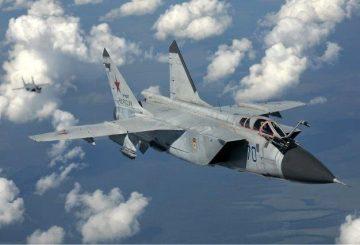
Estonia’s defense minister Hanno Pevkur said Estonia and its NATO allies have «molteplici» radar and visual identification systems confirming Russian jets entered the country’s airspace, while he suggested the violations could be a tactic to divert Western resources from Ukraine. In a separate account, the Latvian Armed Forces wrote online, «We confirm that there is at least one unmanned aircraft in Lativan airspace,» advising people to seek shelter indoors and close windows and doors. RaiNews reports that the Estonian army said the three Mig-31 entered Estonian airspace between 9:58 and 10:10 ora locale of Friday in the zone of Vaindloo, a small island in the Gulf of Finland in the Baltic Sea.
RaiNews also says Estonia responded by requesting consultations under NATO article 4, while it reiterated that it was not necessary to activate article 5, even with repeated violations by Russian jets and drones. DW adds that Latvia’s alert was lifted hours after it was issued, and that the armed forces warned that as long as Russia’s aggression in Ukraine continues, recurrences of such incidents are possible.

Escalation fears and spending
As drone incidents and electronic warfare allegations continue to rattle the Baltic flank, Le Monde describes two Ukrainian drones veering off course on Wednesday, March 25, entering Latvia and Estonia airspaces during a massive nocturnal attack against targets in Russia. Le Monde quotes Ukrainian military expert Oleksandr Kovalenko saying, «These stray drones are probably the result of Russian electronic warfare systems that disorient our drones.», and it adds that the drones ultimately ended their course before reaching their objective. Panorama reports that Lithuania is preparing to reach record levels of defense spending next year and is implementing plans to create a state defense holding company to coordinate weapons production, equipment, and ammunition.
“Lithuania's military spending has risen to almost 5.4% of GDP, corresponding to about 4.8 billion euros.”
Panorama says the holding company will acquire a 25.1% stake in Lithuania Defense Services, formed by Knds Deutschland and Rheinmetall Landsysteme for the assembly of 44 Leopard 2A8 tanks in Kaunas with an estimated investment of 50 million euros. It also says Lithuania’s military spending has risen to almost 5.4% of GDP, corresponding to about 4.8 billion euros, while the opposition argues that with neighboring Russia engaged in the war against Ukraine, the Baltic state has no time to waste developing its own defense industry and should further increase efforts.