
Ethereum Foundation unveils mandate to curb influence, fueling debate over its role
Key Takeaways
- Ethereum Foundation releases policy redefining its role within the ecosystem.
- Mandate sparked governance debate within the Ethereum community.
- Governance debate intensified, including Cardano-Ethereum discussions.
Mandate Document Overview
The Ethereum Foundation recently released a comprehensive 38-page mandate document that fundamentally redefines its role within the Ethereum ecosystem.
“The Protocol: Ethereum community debates foundation’s new mandate document Also: World’s AgentKit, Visa and Coinbase on AI agents, and prediction markets + AI”
The document establishes the foundation as a 'neutral steward' rather than a centralized authority.

It emphasizes the foundation's mission to maintain Ethereum as 'decentralized and resilient infrastructure' while supporting the protocol layer and public goods.
According to the foundation, it is 'not the parent, owner or ruler of Ethereum' but rather 'the original custodian' of the network.
The document states the foundation's main purpose is to protect Ethereum's original vision of an open system giving users 'full control over their digital identity and assets.'
The mandate arrives at a critical juncture as Ethereum has matured into one of the world's largest crypto ecosystems.
This comes amid ongoing leadership changes and debates about development direction within the foundation.
Community Criticism
The mandate has ignited significant criticism from segments of the Ethereum community who argue it fails to address practical concerns.
Critics contend the document is 'overly philosophical' and doesn't adequately meet Ethereum's needs as it seeks institutional adoption.

Former Ethereum Foundation researcher Dankrad Feist stated the document 'does little to address practical business development concerns about how the ecosystem serves real users.'
Other community members worry the mandate reinforces a status quo where the foundation maintains 'significant soft influence without clearly defined responsibilities.'
This potentially leaves the ecosystem without strong leadership needed during rapid institutional growth.
The criticism reflects broader tensions between Ethereum's decentralized ethos and practical governance needs.
Stakeholder Support
Despite the criticism, the mandate has garnered support from key stakeholders who view it as a reaffirmation of Ethereum's foundational principles.
“The Ethereum Foundation has published a new policy document redefining its role within the Ethereum ecosystem”
Chris Perkins, president and managing partner at CoinFund, praised the document as helping to 'clarify the foundation's purpose as a nonprofit steward of the ecosystem.'
Infrastructure firms within the Ethereum ecosystem have voiced strong support for the mandate.
Nethermind, a company developing core client software implementations, stated the document 'reflects many of the properties institutional buyers already look for when evaluating blockchain infrastructure.'
Supporters believe clearly defining the foundation's limited role as custodian rather than governing body is essential.
This maintains trust and ensures Ethereum's continued decentralization as it scales and attracts institutional interest.
Timing and Context
The timing of the mandate's release coincides with significant transitions within the Ethereum ecosystem.
This includes leadership changes and technical roadmap adjustments that have created uncertainty about the foundation's direction.
The document arrives at a 'pivotal moment for Ethereum' as the foundation has undergone leadership changes.
There have been ongoing debates about how actively the foundation should steer development.
Newslite.tv notes the mandate comes 'following adjustments to the technical roadmap and a recent leadership change.'
This transitional period makes the community particularly sensitive to governance structure questions.
Stakeholders seek clarity on balancing steward role with practical needs of a rapidly maturing ecosystem.
The ecosystem must compete for institutional adoption and real-world use cases.
Governance Debate
The mandate has reignited broader debates about blockchain governance models, particularly compared to other networks like Cardano.
“- Charles Hoskinson criticized the Ethereum Foundation EF Mandate, reigniting the Cardano vs Ethereum governance debate”
Cardano founder Charles Hoskinson publicly criticized the EF Mandate, declaring 'THE ADA-ETH GOVERNANCE WAR JUST ENTERED A NEW PHASE.'
Hoskinson likened Ethereum's document to a constitution that 'defines an institution's structure.'
He suggested Ethereum should 'acknowledge that the system operates as a governed organization' and convene a constitutional convention.
This highlights tension in blockchain governance between decentralized ethos and structured decision-making.
Cardano's Voltaire phase features 'decentralized governance and community voting' through a constitutional framework.
This allows 'ADA holders to participate in decision making through voting mechanisms.'
The 2024 Constitutional Convention was a key moment for Cardano's governance development.
More on Crypto
Mastercard to acquire BVNK for up to $1.8B to accelerate stablecoin strategy.
24 sources compared

Boris Johnson Calls Bitcoin a Ponzi Scheme; Saylor, Eric Trump Defend Crypto
12 sources compared

Bybit Pay Joins Mastercard Crypto Credential Network, Lets Users Send Digital Assets Using Verified Aliases
10 sources compared
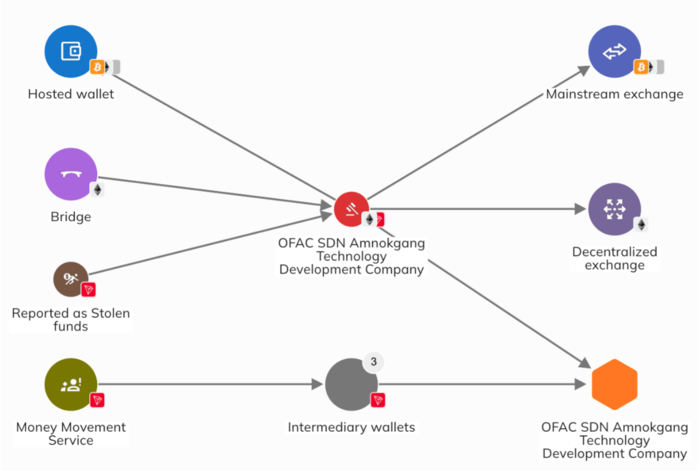
U.S. Treasury Freezes Crypto Network Feeding Nearly $800 Million To North Korea's Weapons Programs
10 sources compared