Europe18 December, 20252 min read
EU Agrees €90bn Loan to Fund Ukraine's War Effort
EU leaders approved a €90 billion interest‑free loan to fund Ukraine’s military and budget needs Plans to use roughly €200–€210 billion in frozen Russian assets were dropped; assets remain immobilized

55 outlets told this the same way.
Outlets did split on Marco Rubio Urges Europe To Awaken From Slumber In Athens Speech →
EU loan to Ukraine
EU leaders in Brussels agreed to a €90 billion, interest-free loan package to fund Ukraine’s military and budget needs over 2026–2027, raised on capital markets and guaranteed by the EU budget. The deal was presented as an urgent lifeline to cover Kyiv’s immediate cash shortfalls for the next two years and was described as a political signal of continued European support. Officials framed the loan as repayable only if and when Russia pays reparations, while reserving the right to use immobilised Russian assets later if reparations are not forthcoming.
“At a Brussels summit, EU leaders agreed to provide Ukraine a €90bn loan — backed by the EU budget and intended to cover Kyiv’s military and economic needs for the next two years — after talks failed to secure use of frozen Russian assets.”
Use of frozen Russian assets
The summit revealed a major dispute over whether to finance Kyiv by tapping roughly €185–€210 billion in Russian central-bank assets immobilised in the EU. Earlier Commission proposals to use those frozen reserves as collateral or direct funding collapsed amid legal, liquidity and political objections.
Belgium, where most of the assets are held, notably demanded liability guarantees. Russia's central bank has pursued legal action, raising the spectre of costly lawsuits and complicating any direct seizure plan.
EU joint borrowing agreement
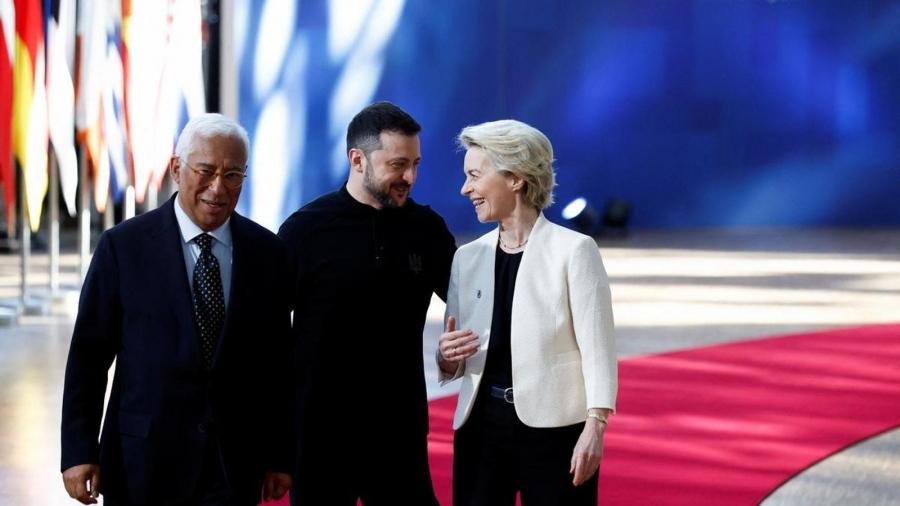
The final compromise was political and technical: 24 of 27 member states will jointly borrow on capital markets to raise the €90bn, while Hungary, Slovakia and the Czech Republic were exempted from taking on the new joint-debt liabilities to avoid a veto.
“After 15 hours of talks in Brussels, EU leaders agreed a €90 billion, interest-free support package for Ukraine for 2026–2027, financed by joint borrowing by 24 of the 27 member states (Czechia, Hungary and Slovakia excluded).”
The summit language also preserves the Commission’s right to pursue a reparations-style mechanism using immobilised Russian assets later, and leaders stressed safeguards and guarantees would be worked out by officials.
EU loan shortfall
The loan falls short of the EU's own estimate of Ukraine's two-year needs—roughly €135–137 billion. Leaders repeatedly warned that further funding will still be needed.
Kyiv has urged faster, larger action. President Volodymyr Zelensky praised the package as vital but warned of immediate shortfalls, saying funds are needed by spring to avoid cuts to drone production and other defence programs.

Reactions to EU loan deal
Several EU leaders and officials hailed the loan as evidence of resolve and a practical compromise. Hungary’s Viktor Orbán and other sceptics criticised elements of the deal or sought carve-outs. The Kremlin and Russian officials framed the outcome as a victory for legality after plans to use frozen assets stalled.
“German politician Friedrich Merz said the decision sends a message to Putin that ‘this war will not be worth it.’”
Russia’s envoy Kirill Dmitriev publicly praised the result. Some West Asian and alternative outlets highlighted the diplomatic strains and geopolitical risks rather than the technical financing fix.