Technology and Science05 November, 20253 min read
EU Governments Weaken 2040 Emissions Target in Last-Minute Deal Ahead of COP30 Summit
This article is an automated aggregation of coverage from news outlets. Our editorials offer in-depth analysis curated by the NewsCord team.
EU member states agreed on a weakened 2040 emissions reduction target of 85-90 percent. The deal allows up to 5 percent of emissions cuts to be offset through international carbon credits.

8 outlets told this the same way.
EU 2040 Emission Reduction Debate
EU governments hammered out a last-minute compromise that weakens the European Commission’s original 2040 plan. The headline 90% cut from 1990 levels remains, but the scope is expanded to rely on international carbon credits and looser domestic requirements. Accounts differ on whether a final deal actually exists.
“EU member states, led by Denmark, are close to reaching a political agreement on the bloc’s 2040 climate target, but the draft deal significantly weakens the European Commission’s original proposal.”
Politico.eu reports that countries are close to reaching a political agreement and says the draft significantly weakens the European Commission’s original proposal. By contrast, TRT World states that the EU’s 27 member states reached an agreement, committing to a 90% cut with up to 10% via credits. The Jakarta Post describes it as a tentative agreement allowing flexibility to weaken this goal.

However, African and Asian outlets Punch Newspapers and BSS report that talks ended without a deal, with member states yet to agree. These reports highlight unresolved splits going into COP30.
Details of Emission Reduction Deal
The mechanics of the compromise are also contested. Politico.eu says the draft lowers the domestic cut to 85% and lets the EU outsource up to 10% of reductions via foreign credits. TRT World likewise reports up to 10% can come from international credits.
However, The Jakarta Post describes a softer ceiling of up to 5% foreign credits with the domestic cut still at 85%, and notes that flexibility could be increased later. It also recalls the Commission’s stricter 3% credit idea.
BSS reports negotiators discussed external credits and periodic reassessments. Environmental groups criticized such flexibilities as loopholes.
EU 2035 Emissions Target Debate
The fate of the EU’s 2035 target, which is its nationally determined contribution (NDC) for COP30, is the clearest flashpoint. TRT World reports that governments agreed on a 2035 emissions reduction target between 66.25% and 72.5%. Politico.eu, however, states that agreement remains uncertain because Hungary has yet to approve that exact range.
“Additionally, they agreed on a 2035 emissions reduction target (Nationally Determined Contribution) between 66.25% and 72.5%.”
Punch Newspapers and BSS go further by stating that talks ended without a deal and emphasize that the NDC must be unanimous, conditions that have not yet been met. This split narrative explains why some outlets present a sealed agreement while others highlight ongoing brinkmanship.
EU Climate Policy Concessions
To secure wavering capitals, the package is studded with concessions. Politico.eu details maintenance of “zero- and low-carbon fuels” in road transport, potentially weakening the 2035 combustion-engine phaseout. The package also includes a one-year delay to a new carbon tax to satisfy Poland and extended free permits for heavy industry.
TRT World similarly cites a one-year delay to launching a new carbon market and a promise to reassess the 2040 target every two years to appease Italy, Poland, and Hungary. The Jakarta Post adds a date certain—delay “to 2028”—and stresses tensions over energy costs and competitiveness. It notes opposition from Poland, the Czech Republic, and Hungary even as they could not block the compromise.

Media Coverage of EU Climate Talks
Reaction and timing further highlight differing narratives among media outlets. TRT World and BSS report environmental groups’ frustration with “loopholes.” Punch emphasizes the EU’s leadership in climate finance despite political shifts toward defense and competitiveness.
“Environmental groups criticized the agreement for including loopholes that could weaken the bloc’s climate ambitions.”
The Jakarta Post states the EU aims to finalize the deal before the COP30 summit in Brazil. BSS and Punch both mention that another round of negotiations is necessary, with talks set to resume Wednesday and ministers expected to reconvene soon.
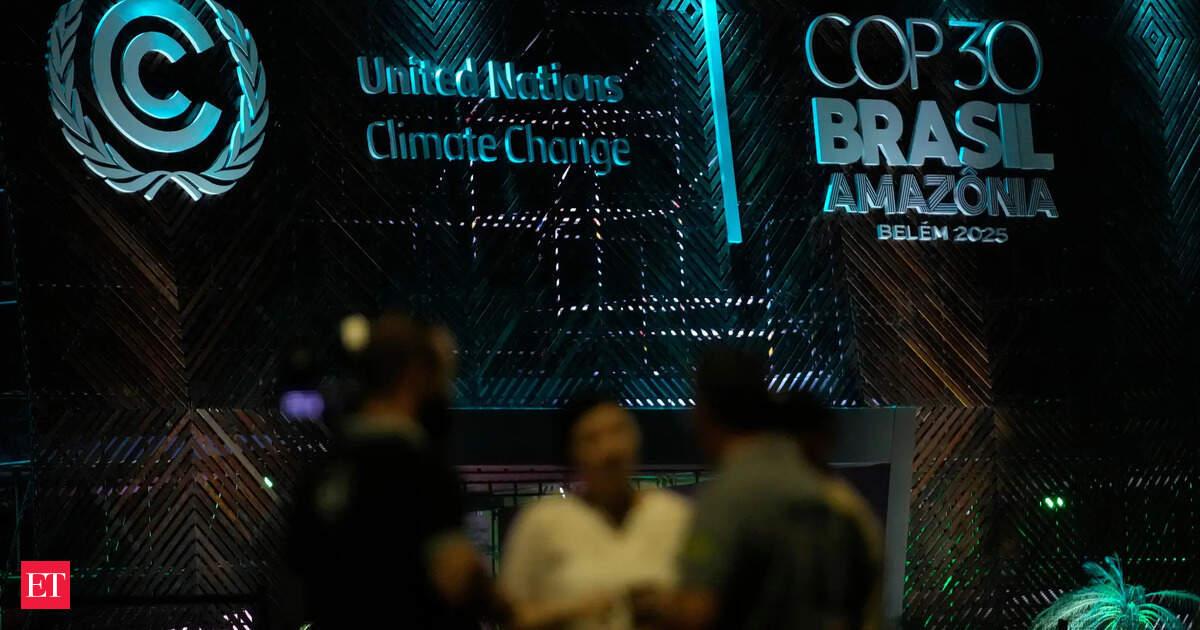
The Economic Times’ summary excludes the EU climate discussions entirely, focusing instead on unrelated controversies and events. This omission underscores the uneven attention given by global media to the EU climate negotiations.