Full Analysis Summary
Tougher EU migration rules
EU interior ministers approved a tougher migration regulation that introduces offshore deportation centers and broadens the definition of what counts as a 'third safe country'.
According to El Mundo, the new rules would create deportation facilities modeled on Italy’s centers in Albania.
The rules would also expand states' ability to return asylum-seekers to non-EU countries under the widened 'third safe country' concept.
The regulation was presented as a major shift in EU migration policy aimed at reducing arrivals by allowing returns to a list of countries beyond the EU.
Coverage Differences
insufficient sources for cross-source comparison
Only El Mundo (Western Mainstream) is provided for this assignment, so no direct comparisons with other outlets' reporting, tone, or omitted details are possible. Because no other articles were supplied, I cannot identify contradictions, differing emphases, or tone differences between source types. The paragraph therefore summarizes only what El Mundo reports.
Expanded EU return plan
The expanded 'third safe country' concept would allow EU states to return asylum-seekers to non-EU countries even when the migrants have no ties to those countries or did not transit through them, El Mundo reports.
The article lists potential destinations cited by ministers and negotiators, including Morocco, Colombia, Bangladesh, Egypt, India, Kosovo and Tunisia.
It also explicitly includes EU candidate countries such as Albania, Bosnia and Herzegovina, Georgia, Moldova, Serbia and Turkey.
These specifics indicate the proposal's broad geographic reach.
Coverage Differences
insufficient sources for cross-source comparison
With only El Mundo available, I cannot compare how other media frame the legality, humanitarian concerns, or political support for returning asylum-seekers to states where they have no ties. The description below reflects only the list and phrasing that El Mundo provides.
Spain's position in Council
Spain stood apart in the ministers' meeting.
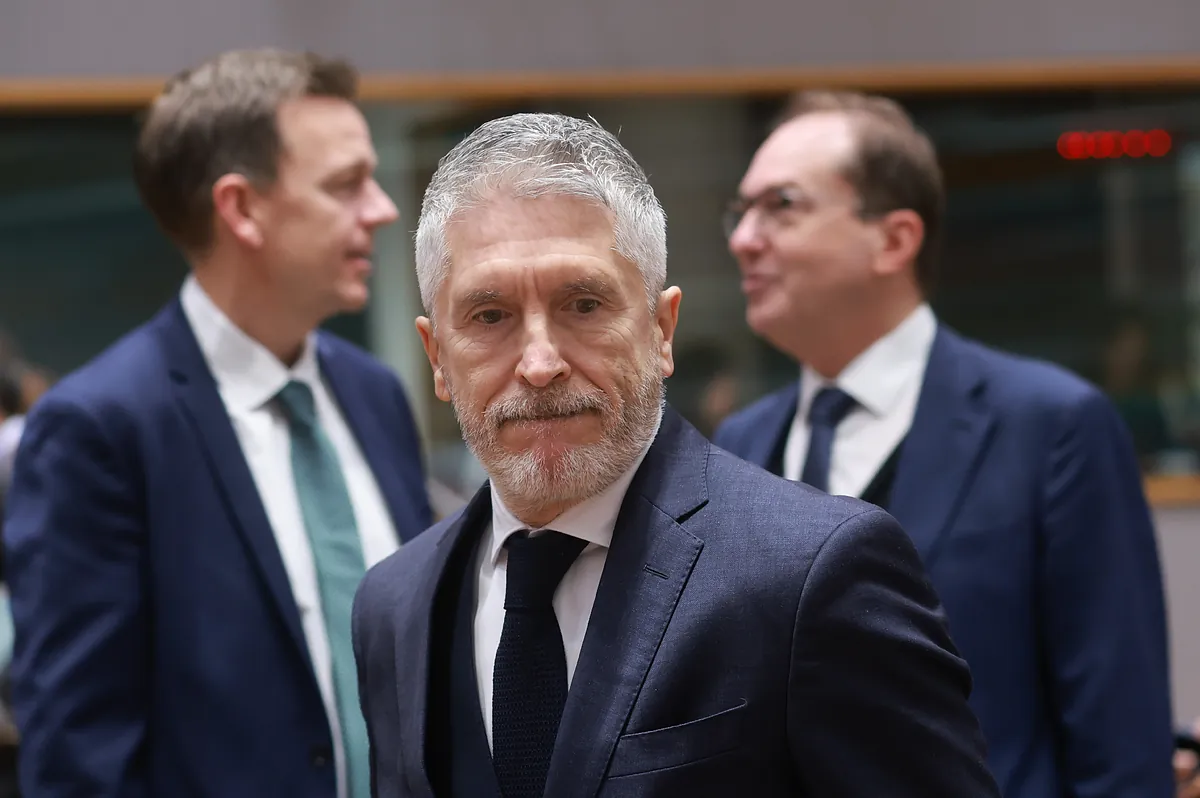
El Mundo notes that Spain's interior minister, Fernando Grande-Marlaska, was the only minister to publicly reject the measure.
The article reports that on the specific point about the 'third safe country' definition, Spain had backing from Portugal and France, indicating divisions within the Council both in overall approval and on specific elements of the regulation.
Coverage Differences
insufficient sources for cross-source comparison
Because only El Mundo is supplied, I cannot contrast how domestic Spanish outlets, other EU national media, or international outlets frame Grande‑Marlaska’s opposition or the political dynamics. The account here follows El Mundo’s reporting, which emphasizes Spain’s public rejection and the limited allied support on that point.
EU migration policy change
The proposal's inclusion of candidate countries and a sweeping list of non-EU states signals an EU-level approach that prioritizes externalizing migration management and follows precedents like Italy’s cooperation with Albania.
El Mundo frames this as part of a tougher regulatory shift, but because no other sources are provided, broader debates about legal, humanitarian and diplomatic consequences — which other outlets often cover — are not available here.
The article therefore documents the decision and lists the proposed countries, but cannot on its own supply broader perspectives or counterarguments.
Coverage Differences
insufficient sources for cross-source comparison
El Mundo provides policy details and naming of countries, but with no additional sources supplied I cannot identify how other outlets differ in tone (e.g., human-rights emphasis versus securitization framing), or whether some outlets call the move 'illegal' or 'necessary'. The paragraph notes this limitation and confines its summary to what El Mundo reports.