Technology and Science16 July, 20264 min read
EU Orders Google To Open Android AI Features And Share Search Data Under Digital Markets Act
This article is an automated aggregation of coverage from news outlets. Our editorials offer in-depth analysis curated by the NewsCord team.
EU DMA requires Google to open Android to rival AI assistants. EU DMA demands Google share Search data with competing engines.

EU orders Android, Search access
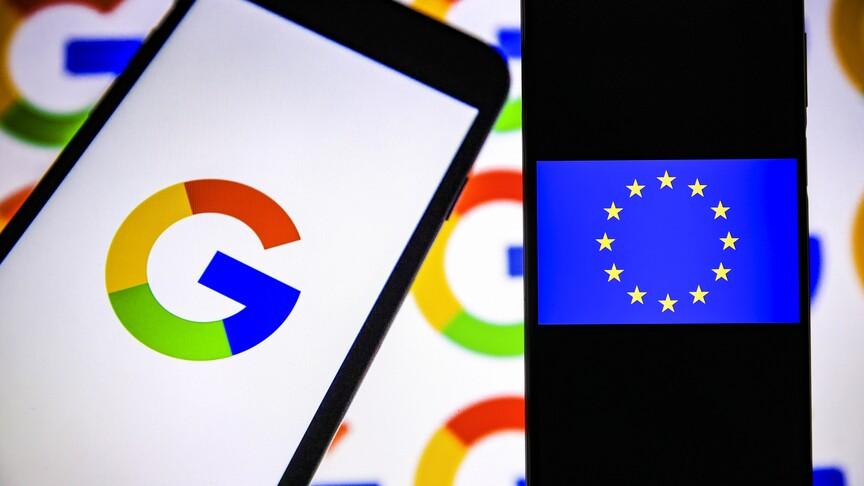
The European Union issued two new rules for Google on Thursday to force it to share search data and open up its Android operating system to rival AI companies under the Digital Markets Act. BRUSSELS, July 16, 2026 (AP) reported that the European Commission said it would support innovation and diversity by enabling fair access to AI features on Android devices and search engines, aiming to see emerging alternatives to Google Search and Google’s AI services such as Gemini. The European Commission adopted two legally binding decisions requiring Google to expand interoperability for rival artificial intelligence (AI) assistants on Android devices and share Google Search data with eligible third-party search providers, with the first decision requiring voice-activation of third-party AI assistants and the second setting rules for sharing anonymized Google Search data.
The compliance timeline in the AP report set January 2027 for sharing anonymized search data and July 2027 for Android changes, while the Anadolu Ajansı account said Android interoperability measures were expected to become available to users from July 2027 and sharing search data would begin from January 2027. The EU said the interoperability and data-sharing measures were intended to level the playing field because Google controls a vast trove of user data that no competitor can match, and the Commission said access to search data is essential for competitors to develop and improve search services and reduce Google’s competitive advantage.
Virkkunen vs Walker
Henna Virkkunen, an executive vice president at the European Commission overseeing tech, said, “Thanks to these measures, we hope to see emerging alternatives to Google Search and Google’s AI services, such as Gemini, and that users in the EU can enjoy greater choice of services,” as the EU framed the rules as a way to curb tech gatekeepers’ control. Google’s president of global affairs Kent Walker warned in a statement that “Europeans’ private searches would be exposed to unfamiliar companies, without adequate anonymization of the data and without user knowledge or consent,” arguing the measures would weaken citizens’ privacy, risk business trade secrets, and endanger national security. The AP report said the EU found that AI agents not made by Google were unable to function on Android phones at the same level as Google’s Gemini, and it required Google to allow voice-activation of alternative AI agents and enable them to run background tasks like booking restaurants via third-party apps.
The European Commission said Google must now allow third-party AI assistants to access Android system features through voice commands and perform tasks across applications, including actions such as booking taxis, generating suggested replies in messaging applications, or answering questions based on recently visited locations. The Register described the EU’s specification proceeding as focusing on what the European Commission wants Google to do to lessen its monopolistic hold on search and its control over the operating system on the majority of the world’s smartphones.

Deadlines, fines, and next steps
The Verge said Google has until January 2027 to begin sharing search data and July 2027 to implement changes to Android, and it warned that if Google does not comply the European Commission could impose fines of up to 10 percent of its annual worldwide turnover. France 24 reported that the EU demanded Thursday that Google share data with other search engines and open up Android to rival AI services, while Google warned the measures could jeopardise user privacy and national security. The AP account said the commission said it found AI agents not made by Google were unable to function on Android phones at the same level as Google’s Gemini, and it required Google to enable alternative AI agents to run background tasks like booking restaurants via third-party apps.
Anadolu Ajansı said Google would retain the ability to assess whether sharing data with specific recipients presents significant cybersecurity or data protection risks before providing access, and it said the bloc established a pricing methodology for access to the shared data and a transparent process for eligible companies to obtain it. The Register added that the Commission spelled out in its FAQ that the decision “allows Google to assess, before sharing any data, whether sharing such data with a specific third party poses serious cyber security and data protection risks,” tying the next phase of compliance to both interoperability and anonymized search-data sharing.