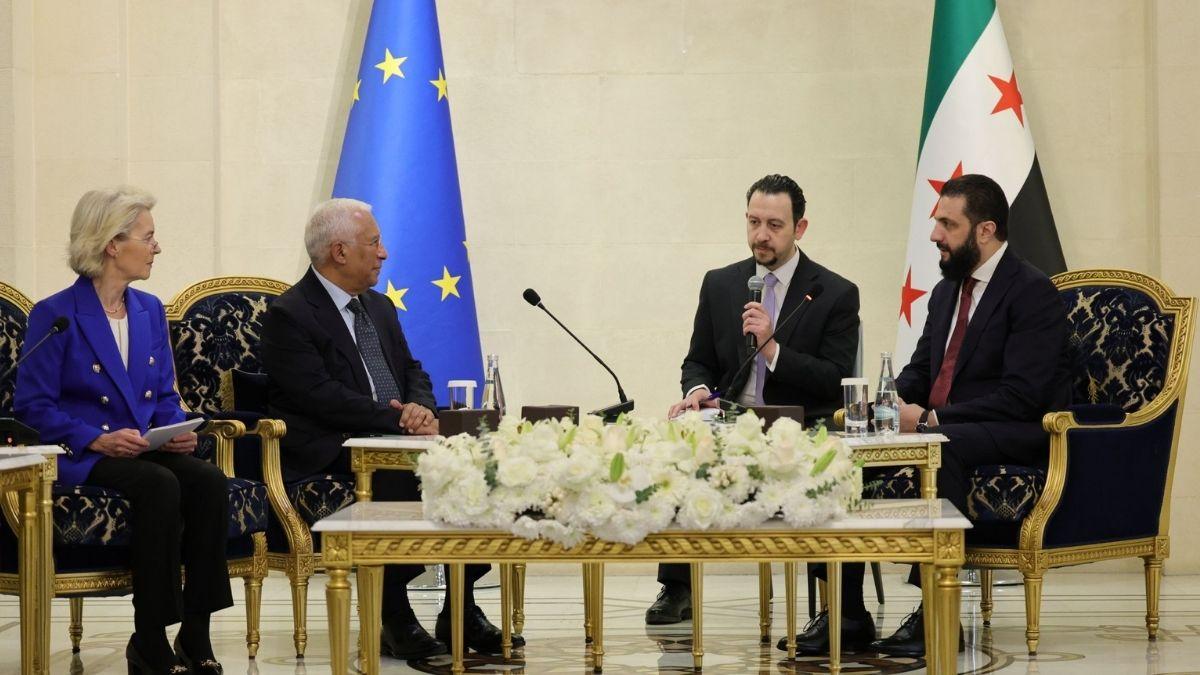
EU Plans May 11 Political Dialogue With Syria After Years of Stalemate
Key Takeaways
- EU aims to resume formal political contacts with Syria and deepen economic and security ties.
- Syrian Foreign Minister met EU delegation to discuss developing relations and refugee returns.
- EU plans to fully resume the 1978 cooperation agreement after years of stalemate.
EU plans a policy reset
A document seen by Reuters lays out a European shift toward strengthening relations with Syria after years of stalemate, including a plan to “resume full operation of the Cooperation Agreement signed with Syria in 1978” and to “launch a high-level political dialogue with the transitional Syrian authorities on May 11.”
“An EU document seen by Reuters shows the bloc's intention to deepen its ties with Syria by reactivating formal political contacts and laying the groundwork for stronger economic and security links, a move that reflects a clear shift in the bloc's policy toward Damascus after years of stalemate”
The document, prepared by the EU’s diplomatic service and circulated to member states, frames the move as a reactivation of formal political contacts and a pathway to “stronger economic and security links.”

It also says the European Union will “reshape and adjust the sanctions regime to maintain leverage,” while continuing to engage with the Syrian leadership and “targeting those who negatively affect the transitional process.”
The policy adjustment is described as reflecting a “clear shift in the bloc’s policy toward Damascus after years of stalemate,” and it is linked to Syria’s efforts to deepen its integration into the international community after “most Western sanctions were lifted by the end of last year.”
The Reuters-linked reporting also ties the diplomatic pivot to the leadership of الرئيس أحمد الشرع, who is described as leading the period after the ousting of the deposed President بشار الأسد.
In parallel, the document’s economic track includes establishing “a framework for trade and investment” and creating “a new center to provide technical assistance” to support reforms aimed at improving the business environment in Syria.
Migration and economic corridors
The same Reuters-seen EU document places refugee return and migration management at the center of the planned engagement, saying the EU will work with Syrian authorities to facilitate “safe, voluntary, and dignified returns for refugees and the displaced.”
The reporting specifies that Europe hosts “more than one million Syrian refugees and asylum seekers,” and it adds that “about half of whom reside in Germany,” making return a recurring topic between European capitals and Damascus.

The document also links the EU’s economic agenda to regional connectivity, describing ambitions to integrate Syria into the “India–Middle East–Europe Economic Corridor,” which it says would boost Syria’s position as a hub for “transport, energy and digital links.”
It further depicts Syria as gaining importance as a transit point during an energy crisis tied to the closure of the Hormuz Strait during the war with Iran, and it notes that “yesterday the first tanker carrying Iraqi oil was moved overland to the Syrian port of بانياس.”
A separate Reuters-based local Western account similarly says the EU intends to work with Syrian authorities to facilitate “the ‘safe, voluntary and dignified return’ of refugees and displaced people,” and it repeats that “Europe currently hosts more than one million Syrian refugees and asylum seekers, about half of them in Germany.”
The same account also reiterates the corridor concept, saying the paper envisions Syria playing a larger regional role through integration into connectivity initiatives such as the India–Middle East–Europe Economic Corridor.
In the German policy push described by بوابة الشروق, Germany is urging the European Commission and the External Affairs Service to start talks with the European Investment Bank on re-engagement with Syria and to study trade facilitation for “the agricultural sector and the textiles sector,” while framing the economic expansion as tied to reconstruction and the prospects for “future for its citizens.”
Security cooperation and Kurdish integration
On security, the EU document described by Reuters says the bloc “may support police training programs and institutional capacity-building in the Ministry of Interior,” while also outlining cooperation in “counter-terrorism, combating drug trafficking, and organized crime.”
“This European commitment is not altruistic”
The document also points to EU support for implementing an agreement reached in January between Damascus and the Kurdish-led authorities in northeast Syria, describing it as calling for “integrating local institutions into the state framework and expanding the rights of Syrian Kurds within a broader political transition.”
The reporting ties the implementation to a personnel change, saying Syrian authorities recently appointed سيبان حمو, “commander of the People’s Protection Units, the main component of قسد,” to the post of deputy minister of defense for the eastern region.
It adds that this appointment is occurring “in parallel with the handover by American forces of the last military base they were running in Syria to the Syrian army this week.”
The local Western account likewise says the EU is considering support for training Syrian police and strengthening institutional capacity within the interior ministry, and it repeats the focus on counterterrorism and efforts to combat drug trafficking and organized crime.
It also describes the Kurdish integration track as following an agreement reached earlier this year aimed at expanding rights for Syrian Kurds as part of the broader transition, and it states that Syria appointed “a commander of Kurdish forces as deputy defense minister for eastern territories,” coinciding with the handover of the last U.S. military base.
In the Reuters-based document details, the security section is also linked to political transition mechanics, with EU support for implementing the January agreement and with the broader goal of integrating local institutions into the state framework.
German push and reconstruction stakes
Germany is pressing for the EU to accelerate economic re-engagement with Syria, according to a position paper addressed to the European Commission and the External Affairs Service that بوابة الشروق says it has seen.
The German government urged “the start of talks with the European Investment Bank on re-engagement with Syria,” and it also called to “study trade facilitation for the agricultural sector and the textiles sector there.”

The paper frames the expansion of economic ties as a way to support reconstruction in a country “devastated by the civil war,” and it links that reconstruction to improving “the prospects for the future for its citizens.”
It also argues that even after Assad’s fall and the lifting of EU sanctions, Syria’s economic situation remains bleak, and it says that during the conflict and Bashar al-Assad’s rule “several millions of Syrians fled their homeland,” with many still living in Germany or other EU countries.
The German position paper cites World Bank analysis that Syria’s per capita income has “recently declined markedly to below the international threshold for low-income countries,” and it reports that “about a quarter of Syrians suffer from extreme poverty” while “two-thirds of the population live below the poverty line for lower-middle-income countries.”
It warns that weak development prospects could “threaten the path of political transition, and thus overall stability of the country,” and it stresses that EU policy should give special emphasis to supporting economic recovery and reconstruction.
Reconstruction costs are given as “no less than 216 billion U.S. dollars (187 billion euros),” according to the World Bank analysis cited in the position paper.
Diplomatic meetings and return discussions
Beyond the EU document itself, the sources also describe direct diplomatic engagement in Damascus focused on strengthening relations and the return of refugees.
“Germany, within the European Union, is pushing to accelerate the expansion of economic ties with Syria”
Qatar news agency reports that Asaad al-Shibani, the Syrian Foreign Minister, met in Damascus with a European Union delegation headed by Rosa Maria Gili, described as “Director of the Middle East and North Africa Directorate in the European External Action Service,” to discuss “prospects for developing relations between the two sides,” as well as “the issue of the return of Syrian refugees.”
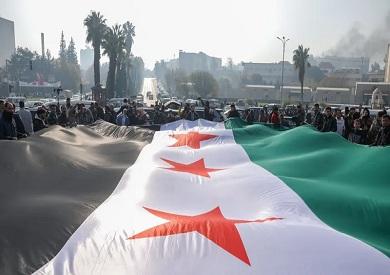
The EU delegation affirmed “the EU's continued support for the Syrian government's efforts,” and it expressed expectations of raising the level of diplomatic representation for its mission in Damascus “soon,” while working to “reactivate the previous agreements and gradually lift the freeze on some of their provisions.”
The two sides also discussed the refugees’ return file and proposed “to form a joint committee to follow up on it,” while also supporting reconstruction and encouraging “the involvement of European institutions and banks in these efforts.”
The same Qatar news agency report includes additional meetings involving Asaad al-Shibani, including a December 2 meeting with Thomas Barrack, the U.S. special envoy to Syria, and a December 30 meeting with Nathalie Fustier, the United Nations Resident Humanitarian Coordinator in Syria, focused on developments in the humanitarian situation and UN efforts.
It also notes a January 9 telephone call with Hakan Fidan, the Turkish counterpart, where the two sides stressed “the importance of respecting Syria's sovereignty and territorial integrity” in relation to the city of Aleppo.
While these Qatar news agency items do not quote the EU document’s May 11 dialogue language, they show the same return-of-refugees theme and the same emphasis on reactivating agreements and lifting freezes.
More on Syria
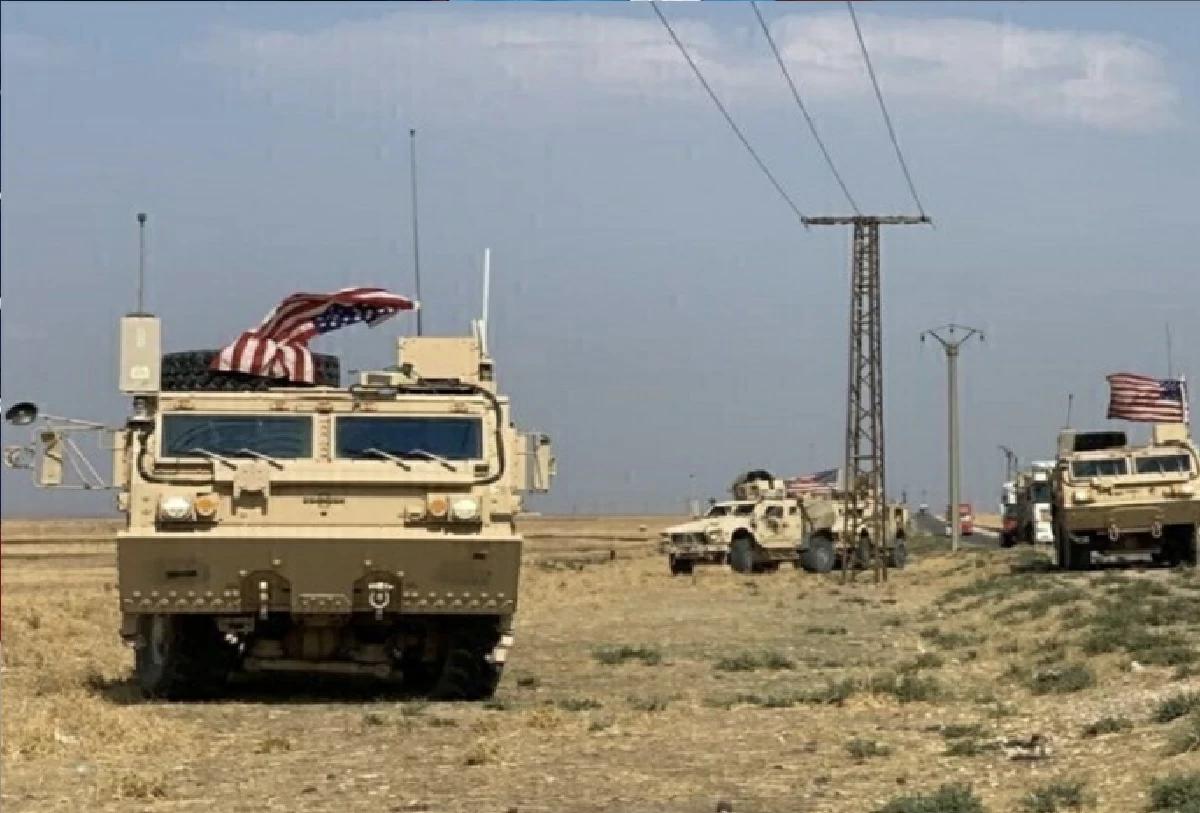
Syria Takes Full Control Of Qasrak Air Base After US Forces Withdraw From Hasakah
29 sources compared

International Court Rejects Sudan's Genocide Case Against United Arab Emirates
11 sources compared
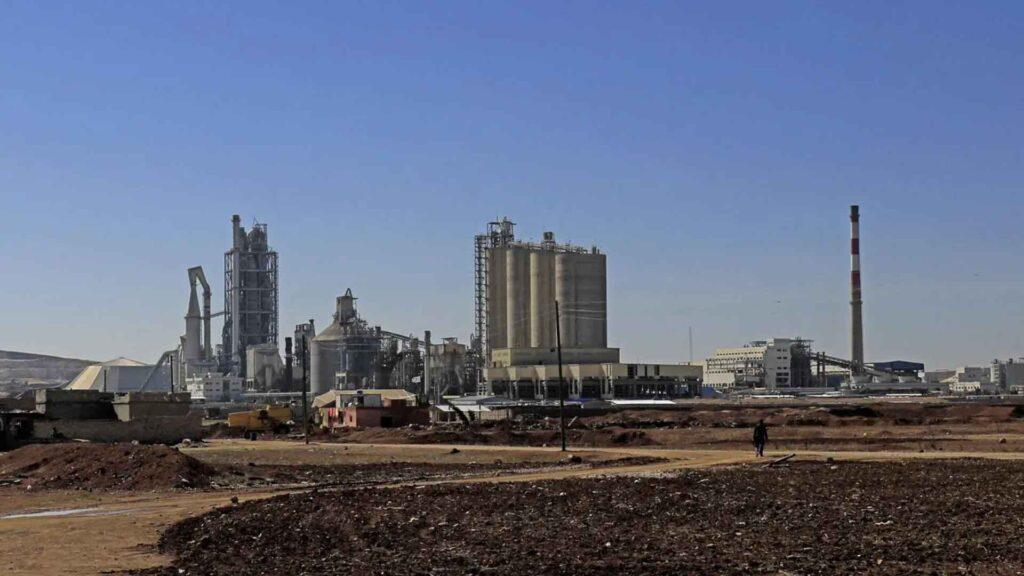
French Court Convicts Lafarge Of Financing ISIS To Keep Syrian Plant Operating
30 sources compared
Hezbollah Denies Syrian Interior Ministry's Accusations of Damascus Assassination Plot
20 sources compared