Europe04 May, 20267 min read
EU Tests Article 42.7 Mutual Assistance Clause in Simulated Attack Scenarios
This article is an automated aggregation of coverage from news outlets. Our editorials offer in-depth analysis curated by the NewsCord team.
EU diplomats staged Brussels crisis exercise testing activation of Article 42.7 mutual assistance clause. Prepared for a large-scale hybrid attack and to reduce reliance on the USA.

A clause built for crisis
Europe’s mutual-aid architecture is anchored in Article 42.7 of the Treaty on European Union, a provision designed to compel assistance if an EU member state is the victim of “armed aggression” on its territory. In a narrative that begins with the aftermath of the Bataclan massacre, La Sicilia describes how, in November 2015, French Defence Minister Jean‑Yves Le Drian “takes the floor” before colleagues in the European Union and triggers the clause rather than offering condolences. The outlet quotes the text as “obbligo di aiuto e assistenza con tutti i mezzi a propria disposizione” in case of “aggressione armata,” and says the ministers answered “sì” in unison, with the event presented as the first and only time the clause has been activated.
EU Today likewise frames the clause as an obligation that, under Article 42(7), requires other member states to provide aid and assistance “by all the means in their power” when a member state is the victim of armed aggression on its territory. The same EU Today account stresses that Article 42(7) must not prejudice the particular security and defence policies of certain member states and that “NATO remains the foundation of collective defence” for those EU countries that are members of the Alliance.
Epoch Times adds that the clause is “drafted even more strictly than Article 5 of the NATO treaty,” while also noting that it has been activated only once before, after the Paris terrorist attacks in 2015. Taken together, the sources portray Article 42.7 as a legal commitment that is clear in wording but operationally dependent on political coordination and national decisions rather than an EU-run military command.
From Paris to Brussels
The sources connect Article 42.7’s legal trigger to a specific activation history and then to a new round of preparedness work in Brussels. La Sicilia says the clause was invoked formally on 17 November 2015 “all’indomani delle stragi di Parigi,” with “l’unanimità dei ministri della Difesa” described as immediate, and it adds that subsequent bilateral negotiations produced “a geometria variabile” rather than a single EU military operation. EU Today echoes that the provision “has beenactivated only once,” specifying that France invoked Article 42(7) on 17 November 2015, following the terrorist attacks in Paris four days earlier.
Epoch Times similarly states that the clause “has been activated only once before, after the Paris terrorist attacks in 2015,” and it describes Germany’s later involvement in the fight against the Islamic State in Iraq and Syria, including that it “notably provided Tornado aircraft for reconnaissance missions.” In the present moment, EU Today reports that on Monday EU ambassadors held scenario-based discussions in Brussels within the Political and Security Committee of the Council of the EU, focused on possible responses under Article 42(7).
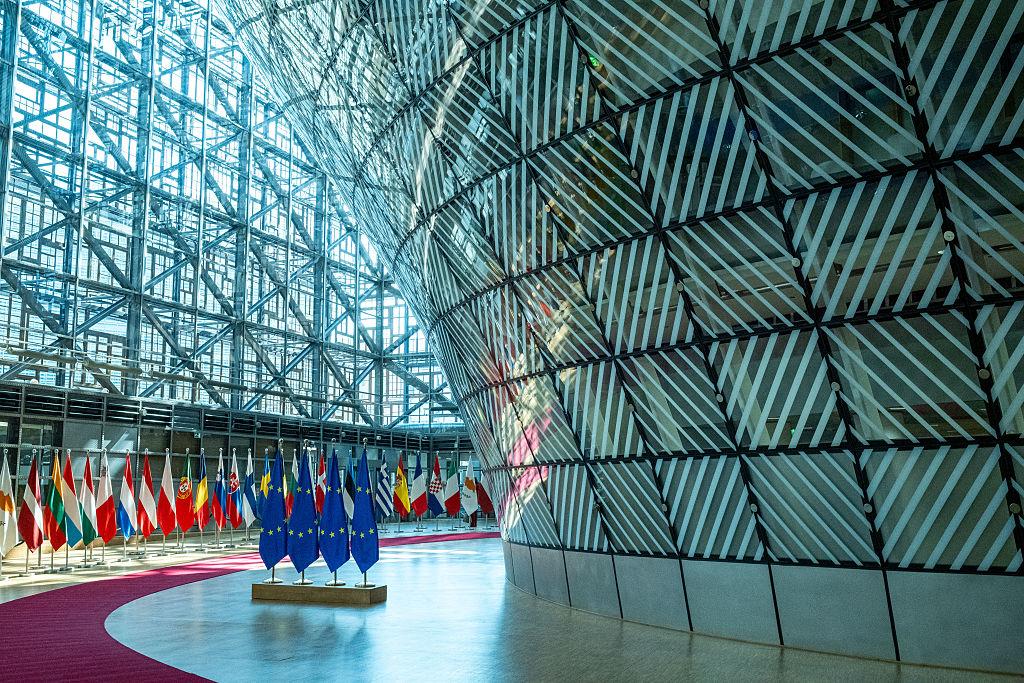
Dpa, as relayed by Epoch Times and DIE WELT, describes a crisis simulation exercise mobilizing ambassadors responsible for security policy and experts from European institutions, using “a fictional, but realistic, scenario” to test coordination and response in hybrid attacks. Both EU Today and DIE WELT emphasize that no public conclusions were released, and that the discussions were designed as scenario-based rather than a live military exercise.
Hybrid threats and political limits
The Brussels simulations described in the sources are explicitly tied to the possibility of hybrid attacks, and they also highlight the political and procedural limits of how Article 42.7 would operate. EU Today says the meeting was “designed as a scenario-based discussion rather than a military exercise,” and it reports that ambassadors were expected to examine how governments might respond politically and practically to simulated crisis situations involving aggression against a member state. It quotes Article 42(7) as requiring assistance “by all the means in their power,” while also stressing that the treaty text does not establish an automatic EU military response comparable to NATO’s command arrangements.
Epoch Times adds that the fictional scenario tested the effectiveness of response and coordination in the event of hybrid attacks, specifying that such attacks would include “cyberattacks against power networks, illegal drone flights, and acts of sabotage.” DIE WELT similarly lists hybrid attacks as including “cyberattacks on power grids, illegal drone flights, and acts of sabotage,” and it says the exercise tested whether crisis response and coordination in hybrid attacks would work.
Euractiv FR frames the broader political context as EU “shaken confidence in Washington’s commitment to NATO,” and it links renewed interest in Article 42.7 to the “Greenland incident” and the debate over NATO reliability. Euractiv FR also quotes Klaus Welle saying, “Europeans must say what would happen exactly if Article 42 were activated,” and it describes ambiguity about what the response would be if a country actually triggered the clause.
Neutrality, NATO, and the threshold debate
A recurring theme across the sources is how Article 42.7 interacts with NATO membership and with EU member states that maintain neutrality traditions. La Sicilia says the clause contains a caveat that assistance “non pregiudica il carattere specifico della politica di sicurezza e difesa di alcuni Stati” and that it must remain compatible with NATO commitments, adding that for NATO members “resta il fondamento della difesa collettiva.” It then lists EU countries that do not adhere to NATO as Austria, Ireland, Malta and Cipro, while noting that Finland entered in 2023 and Sweden in 2024, and it describes how for those neutral-tradition states Article 42.7 can be a “paracadute” politico‑giuridico primario.
EU Today likewise states that the obligation must not prejudice the particular security and defence policies of certain member states and that NATO remains the foundation of collective defence for those EU countries that are members of the Alliance. Euractiv FR adds a threshold comparison, saying Article 42.7 can be activated if an EU country faces armed aggression, such as a naval blockade, while NATO’s clause requires an armed attack.

Euractiv FR also notes that NATO’s Article 5 requires agreement by “the 32 member states,” while Article 42.7 requires support “by all means at their disposal,” and it quotes the ambiguity of what response would follow in practice. La Sicilia goes further in comparing legal language, stating that “Dal punto di vista giuridico il testo è, per certi versi, più stringente dell’articolo 5 della NATO,” because the EU speaks of “obbligo di aiuto e assistenza” rather than a discretionary “azione ritenuta necessaria.”
Europe’s brands, jurists, and stakes
Beyond the simulations, the sources show how Article 42.7 is being pulled into broader debates about European autonomy, legal clarity, and the credibility of deterrence. Euractiv FR ties the renewed push to the “Greenland incident,” describing how Donald Trump’s threat to buy Greenland back from Denmark’s NATO ally prompted calls in Europe to reactivate the EU’s defence clause, Article 42.7, and it quotes Klaus Welle saying, “The Greenland incident changed the way we think about NATO's Article 5 and the reliability of the United States.” It also reports that European defence commissioner Andrius Kubilius has advocated a clearer definition of Article 42.7, and it says members of the European Parliament began calling for more clarity in January following diplomatic fallout from the Greenland affair.
La Sicilia similarly argues that in an “Europa che reimpara la grammatica della potenza” the clause risks becoming a concrete political-military “paracadute,” while also emphasizing that the EU’s dependence on national forces means it cannot simply replicate NATO’s integrated command. Epoch Times adds that these efforts are aimed at preparing for situations where NATO could not intervene, “for example due to a veto by the U.S. government,” and it describes the logic of becoming more independent from the United States.

DIE WELT and EU Today both describe the exercise as part of a plan to strengthen the EU mutual assistance clause, with EU Today saying the latest discussions form part of a broader effort to strengthen common understanding among member states on how the clause would work in practice. Le Monde.fr frames the Greenland scenario as a “very hypothetical European mutual-aid clause,” arguing that if the United States were the actor, invoking Article 5 would be “illusory,” and it says an attack launched by the United States against Denmark would “ipso facto signify the rupture of the fundamental pact underpinning the Atlantic Alliance.”