
Europe Rebuffs Trump's Iran Demands
Key Takeaways
- NATO allies refuse to join patrols of the Strait of Hormuz.
- Europe seeks a multinational approach, rejects unilateral US action.
- Allied willingness to back Iran action fading; Trump's pressure ineffective.
Trump's Demands Rejected
President Trump's demands for European and Asian allies to deploy warships in the Strait of Hormuz have been met with strong resistance from America's closest international partners.
“"I'm looking forward to being with them”
When Trump requested that countries join a global effort against Iran and send naval forces to the critical shipping route, he was rebuffed by key allies who questioned both the rationale and feasibility of such an operation.

German Chancellor Friedrich Merz expressed doubts about the US-Israeli war strategy, stating there was 'no convincing plan for how this operation could succeed,' while other European nations outright rejected the American request.
The refusal comes as the Iran war enters its third week, with Israel planning for at least three more weeks of military operations, creating significant tension between Washington and its traditional allies.
European Rejection Stance
European leaders have articulated clear positions rejecting direct military involvement in the Strait of Hormuz, emphasizing that the conflict was not of their making.
German Defense Minister Boris Pistorius delivered a blunt assessment, stating 'It is not our war; we did not start it,' while emphasizing Europe's preference for diplomatic solutions.
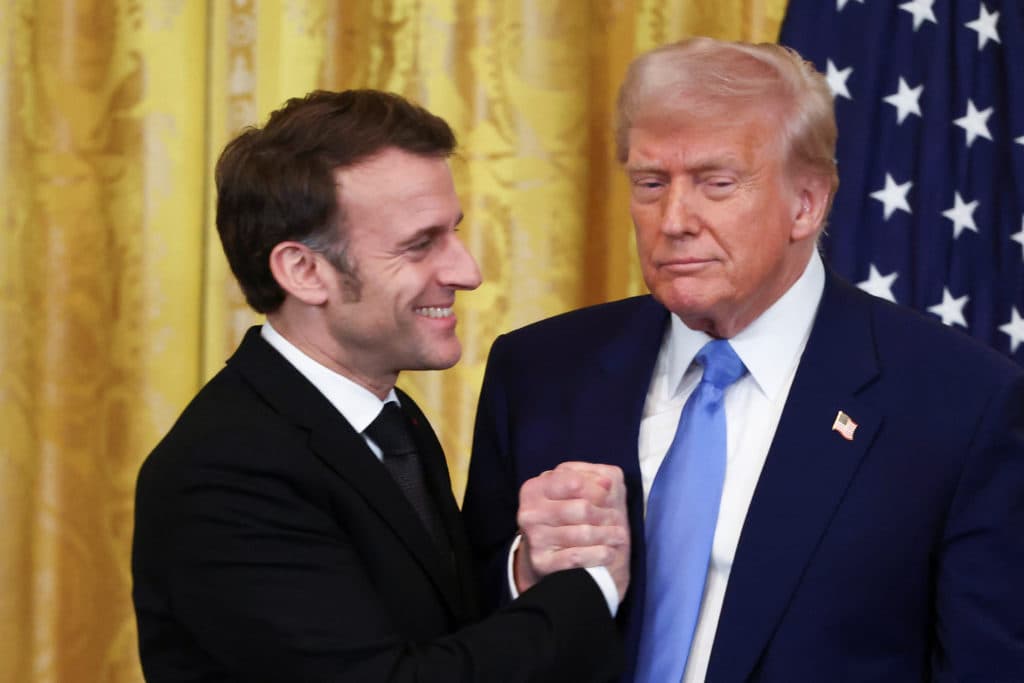
French President Emmanuel Macron took a more nuanced approach, envisioning possible naval escorts but only after fighting has subsided, insisting 'France didn't choose this war. We're not taking part.'
This coordinated European rejection reflects a broader skepticism about Trump's strategy and a determination to avoid being drawn into a conflict they believe lacks clear objectives and international legitimacy.
Trump's Confrontational Response
In response to European resistance, President Trump has adopted a confrontational stance, issuing warnings and threats of consequences for allies who refuse to comply.
“Europe says no to Trump’s Iran demands: ‘not our war’ Some of the closest US allies say they don’t want to enter a conflict on which they were given no say and where they cannot see the endgame When US President Donald Trump asked countries to join a global effort against Iran and deploy ships to prise open the Strait of Hormuz, whose near closure has held the global economy in a vice, he was rebuffed by some of America’s closest allies”
Speaking aboard Air Force One, Trump threatened that 'it will be very bad for the future of NATO' if countries fail to police the strait, while declaring 'We will remember' those who don't support American efforts.
The president's remarks reflect his 'America-first' outlook, as he stated 'My attitude is: We don't need anybody. We're the strongest nation in the world.'
However, this approach has been criticized by military experts who warn that failing to secure international mandate, as the US did before the 1990 Gulf War, is now boomeranging against American interests and credibility.
Strategic Alliance Implications
The growing rift between the US and its European allies has deeper strategic implications beyond the immediate Hormuz crisis, affecting transatlantic relations on multiple fronts.
The current tensions build upon previous strains from Trump's tariff battles with Europe and his renewed pressure for US control of Greenland, which included tariff threats against eight European nations.
This comes amid broader concerns about Trump's approach to alliances, as Sylvie Bermann, a French former ambassador to China, the U.K. and Russia, noted that allies 'aren't willing to be at the beck and call of a demand from Donald Trump.'
The timing is particularly sensitive, as European nations rely on US support for Ukraine and need American intelligence and weaponry to counter Russian influence, creating a complex web of interdependent relationships that are now being severely tested.
France's Nuanced Position
France has emerged as a somewhat more flexible player in the European response to Trump's demands, though still firmly rejecting direct military involvement in the ongoing conflict.
“"I'm looking forward to being with them”
French President Macron has maintained diplomatic channels with Iranian President Masoud Pezeshkian, with two calls in eight days, earning a positive assessment from Trump himself who rated him 'an eight' on a scale of zero to ten.
However, France's military spokesman Col. Guillaume Vernet clarified that any naval escorting would be 'conditional on talks with Iran,' and the Charles de Gaulle aircraft carrier has been rushed to the Mediterranean but only for potential deployment once the air war has subsided.
This nuanced French position represents an attempt to maintain transatlantic relations while upholding European diplomatic principles, though it still falls far short of Trump's immediate demands for active military participation in the Strait of Hormuz.
Geopolitical Context
The broader geopolitical context reveals that Trump's demand for allies to police the Strait of Hormuz comes with significant economic leverage and potential consequences.
The strait handles roughly 20% of the world's oil trade, and its closure has created a 'stranglehold' on the global economy, giving Trump leverage over European and Asian allies who depend on Middle Eastern energy supplies.
However, military experts warn that attempting to unblock the Strait of Hormuz with military escorts while the war rages and without Iran's consent would be dangerous.
Retired naval officers have specifically cautioned against such actions during active hostilities, highlighting the complex balancing act facing European nations as they navigate Trump's confrontational approach while trying to protect their economic interests and maintain diplomatic stability in the region.
More on Iran

Israel strikes Iran's Pars gas field as Tehran vows revenge
14 sources compared
Trump threatens to blow up South Pars gas field if Iran attacks Qatar again
10 sources compared
UAE Halts Habshan Gas Facility Operations After Debris From Intercepted Missiles
10 sources compared

Iran Threatens Gulf Energy Facilities After Israel Strikes South Pars Gas Field
11 sources compared