Europe10 March, 20262 min read
European Commission President Von der Leyen Says Europe 'Made Strategic Error' Shunning Nuclear, Mobilizes €200M
This article is an automated aggregation of coverage from news outlets. Our editorials offer in-depth analysis curated by the NewsCord team.
Europe made a strategic mistake by moving away from nuclear energy She will mobilize €200 million to spur private investment in innovative nuclear technologies
Announcement and framing
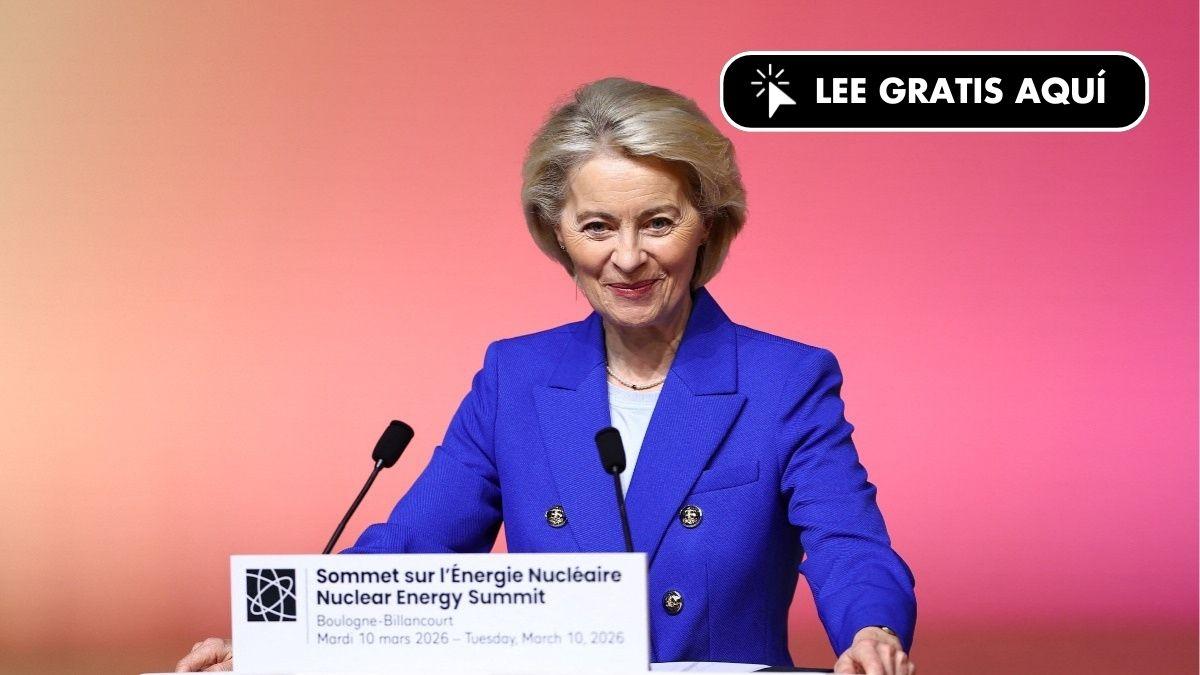
At the Nuclear Energy Summit in Paris, European Commission President Ursula von der Leyen declared that Europe had “made a strategic mistake” by turning away from nuclear power and announced that the European Commission will mobilize €200 million to boost private investment in innovative nuclear technologies as part of a strategy to accelerate small modular reactors (SMRs) that could be operational in the early 2030s.
“European Commission President Ursula von der Leyen said on Tuesday that Europe made a ‘strategic mistake’ by turning away from nuclear energy and announced she will mobilize €200 million to boost private investment in innovative nuclear technologies, as part of a European strategy to accelerate the development of small modular reactors (SMRs) that could be operational in the early 2030s.”
Her comments signalled a clearer break from previous ambiguity in EU messaging on nuclear energy and positioned SMRs as a central plank of the new push.

Funding and support measures
Von der Leyen said the €200 million will be used as a financial guarantee to lower investor risk in low‑carbon nuclear technologies and that those funds will come from the European Union Emissions Trading System (EU ETS). The broader strategy also includes creating regulatory testing environments to trial innovative technologies and cooperating with member states to harmonize rules and speed up authorization procedures. Together, these measures are intended to make investment in SMRs more attractive and cut the regulatory and financial barriers that have slowed development.
Complementarity and industry goals
Von der Leyen stressed that nuclear energy must work in combination with renewables and argued that Europe needs to regain leadership in next‑generation nuclear technologies. She recalled that about one third of Europe’s electricity came from nuclear in the 1990s and that the share has fallen to roughly 15 percent today, which she presented as a reason to rebuild capacity and industrial leadership. The Commission envisions SMRs not only as a decarbonisation tool but as a potential high‑tech export industry for Europe.
“Faced with the current dependence on imported fossil fuels, von der Leyen argued for developing Europe’s two local energy production assets: nuclear power and renewables, since together they could ensure energy independence, supply security, and industrial competitiveness for the continent.”
Timeline and context
The Commission set an explicit timeline, saying the goal is to have SMR technology operational in Europe in the early 2030s so it can ‘play a key role alongside traditional nuclear reactors in a flexible, safe and efficient way.’
Von der Leyen unveiled the plans at the Nuclear Energy Summit in Paris, an event organized by France and the IAEA that coincided with the 15th anniversary of the Fukushima accident, underscoring the political and symbolic context of the announcement.