Ukraine War07 January, 20262 min read
European Leaders Offer No Clear Security Pledge To Defend Ukraine If Russia Attacks, Zelensky Says
This article is an automated aggregation of coverage from news outlets. Our editorials offer in-depth analysis curated by the NewsCord team.
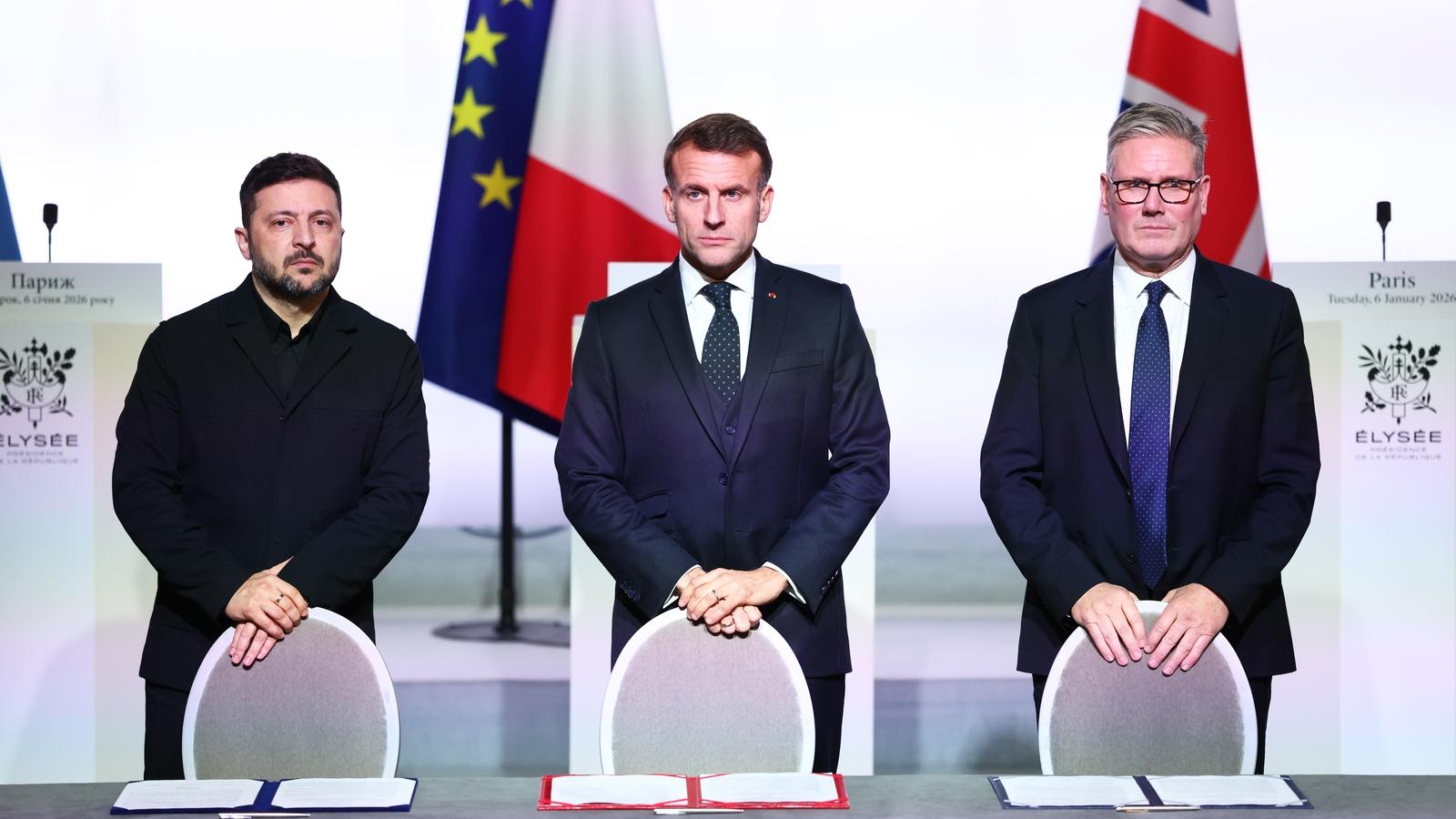
Zelensky received no clear security guarantees from European allies to defend Ukraine against Russia European leaders announced security guarantees including a US-led monitoring mechanism and multinational European force
7 outlets told this the same way.
Ukraine security assurances
Ukrainian President Volodymyr Zelensky said on Jan. 7 that he has not received a clear, unambiguous pledge from European partners that they would militarily defend Ukraine if Russia attacked again.
“President Volodymyr Zelensky says he has not received clear, unambiguous guarantees from European allies that they would protect Ukraine against any future Russian aggression.”
This is despite leaders in Paris announcing security measures that would take effect only after a ceasefire.

Several outlets reported Zelensky pressing for a simple 'yes' and legal guarantees before Kyiv can be confident allies would respond to renewed aggression.
The announced package in Paris included a US-led monitoring mechanism and a proposed European multinational force deployable after any ceasefire.
Zelensky said these measures fall short of the unequivocal pledge he wants.
Paris talks on Ukraine
The Paris talks, described variously as involving about 30 or 35 countries in different reports, produced a declaration of intent by the UK and France to be able to deploy troops if a peace deal is reached. They also included proposals for military hubs and protected facilities inside Ukraine and discussion of France possibly sending "several thousand" troops. Outlets note that these measures are framed to operate post-ceasefire and do not yet amount to formal, legally binding defence guarantees that would compel allies to fight in the event of renewed Russian attacks.
US role in truce guarantees
A key point of divergence among reports is the role and explicit commitment of the United States. Several sources say the US would be expected to lead truce monitoring.
“Full security guarantees have not been agreed, and the US — which has been leading efforts to end the invasion and would be expected to lead truce monitoring — reportedly did not sign the troop-deployment pledge.”
Some note the US did not sign the troop-deployment pledge and that an explicit US commitment to back a European force in case of renewed attack was absent from the final communiqués. Zelensky and others say that without legal guarantees — backed by national parliaments and the US Congress — Kyiv cannot be sure allies would act if Russia returns to the offensive.
UK troop commitments, risks
Domestically, coverage highlights that allied troop commitments could require parliamentary approval and carry political risks. The Guardian reports UK prime minister Keir Starmer saying MPs will vote on the final number of British troops for deployment after a deal.
It also notes Conservative concerns that boots on the ground could be used by Moscow to undermine a peace agreement. That political caveat is presented alongside accounts of Russian strikes continuing to affect Ukrainian regions, underscoring the stakes for Kyiv in securing robust pledges.
Paris security proposals debate
Reporting shows that Paris produced proposed post‑ceasefire security measures. Sources disagree or are ambiguous on whether those measures amount to an unequivocal defence pledge. Some outlets highlight the lack of formal US backing for troop deployments and stress the need for legal guarantees.
“Full security guarantees have not been agreed, and the US ... reportedly did not sign the troop-deployment pledge.”
Others foreground President Zelensky's personal call for a plain "yes" from key European capitals. Reports also differ on the scale and makeup of the Paris grouping.

The result, several reports state, is continued diplomacy and unresolved issues. These unresolved issues — territory, legal guarantees and parliamentary approval — leave Kyiv seeking clearer, binding commitments.