China02 June, 20263 min read
European Union Reshapes Trade Strategy, Investigates Sandoz Claims on Amoxicillin Imports From China
This article is an automated aggregation of coverage from news outlets. Our editorials offer in-depth analysis curated by the NewsCord team.
EU debates policy tools to address China trade imbalance and overcapacity. Brussels agrees on tougher China trade policy, with potential retaliation.
EU turns to China
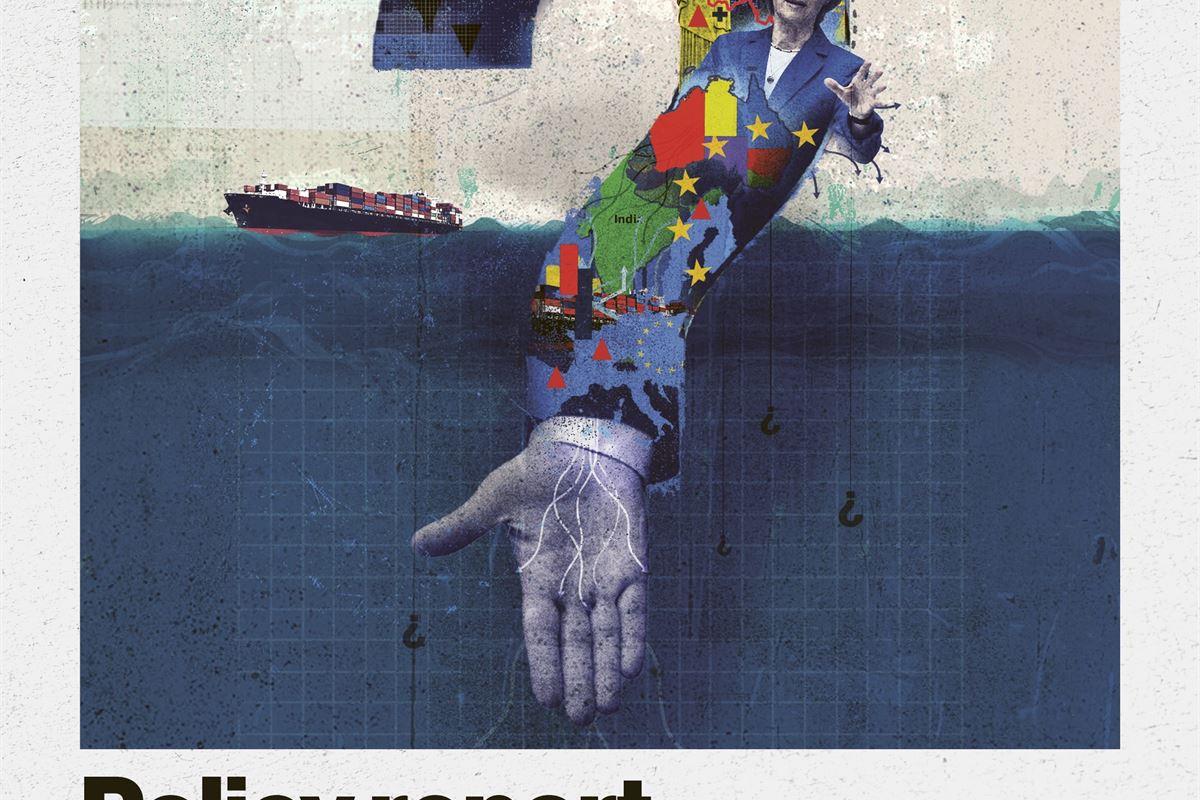
The European Union is reshaping its trade strategy amid ongoing tensions with the U.S. and China, with a policy report saying the bloc could no longer rely on its closest commercial partner and was forced to diversify its trade strategy more rapidly. The same report says Brussels is exploring how to shield its economy from Chinese pressure, while Chemistry World frames the shift as the EU moving closer to strengthening EU stockpiles and production of key medicines under its Critical Medicines Act (CMA). Chemistry World says the new rules were agreed by the European Parliament and ministers from member states in May, and that generic drugs are now made mainly outside of Europe, especially in China and India, which is viewed as a supply risk.
In that context, Swiss drugmaker Sandoz called on the European Commission to investigate imports of amoxicillin trihydrate from China, alleging unfair state subsidies and below-market pricing hampering production in Europe. Chemistry World also says the commission spokesperson stated that once Parliament and the EU Council of ministers have given their approval to the act, the text will go through legal checks before adoption likely in the autumn of 2026.
Trade tools and pushback
Chemistry World describes a broader EU response to Chinese trading dependencies, saying the commission launched a record 33 investigations in 2024, including 12 in the chemical sector, and that Ineos alone recently sent a list of ten chemicals in an antidumping complaint. It adds that in February the commission introduced massive antidumping duties to 1,4-butanediol on imports from China, Saudi Arabia and the US, and in May it imposed defensive antidumping duties of around 30 to 40% on imports from China for adipic acid. The same article quotes Bocconi University trade policy expert Stefano Riela saying the EU faces "a deeper dependence on highly concentrated upstream production networks" and quotes Kiel Institute economist Holger Görg saying "The EU has not implemented very strong policies" because it had not felt the need.
In a separate account, chinadailyhk says the European Commission held an orientation debate on Friday to explore policy tools aimed at addressing the European Union's trade "imbalance" with China, citing the country's so-called "overcapacity". chinadailyhk also quotes a commission statement saying, "The current state of the trade and investment relationship is not sustainable," and argues the commission is attempting to make China a scapegoat.

Beijing, Moscow, and Iran
China’s diplomacy is also playing out alongside Sino-Russian engagement, with QUB radio saying Russian president Vladimir Putin arrived Tuesday evening in China to meet his "long-time good friend" Xi Jinping and reaffirm the robustness of Sino-Russian ties. The same QUB radio report says the two leaders will discuss ways to 'strengthen' the bilateral strategic partnership and 'exchange their views on major international and regional issues', according to the Russian presidency, and it notes that Putin has traveled to Beijing every year since 2022. In parallel, La Tribune reports that Russian Foreign Minister Sergei Lavrov, currently in Beijing for two days, confirmed a visit to China by Putin during the first half of 2026 and said Russia can "compensate" the resource deficit for China tied to the war in the Middle East.
La Tribune adds that Iran shipped to China more than 80% of its crude exports before the war, according to analytics firm Kpler, and that more than half of China’s oil imports carried by sea originated from the region, according to Kpler. Le Grand Continent says Xi Jinping denounced an international order that 'is collapsing into chaos' and said Beijing would continue to play a 'constructive role' in bringing the war in Iran to an end, while also noting that Russia and China vetoed a United Nations Security Council resolution urging countries to coordinate defense efforts to reopen the Strait of Hormuz.