Full Analysis Summary
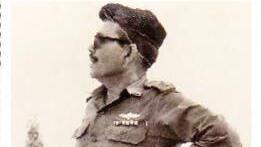
Honoring Amos Yarkoni
Ex-IDF commandos gathered at Kiryat Shaul cemetery to honor Amos Yarkoni.
His modest grave there has become an annual meeting point for his comrades.
Comrades return each year to the military section where they had to fight to secure his burial spot.
That return underscores the personal loyalty his fellow soldiers maintain toward him.
The ceremony is rooted in memory and respect for a commander whose burial remained modest despite his impact.
Coverage Differences
Tone
Both Ynetnews (Israeli) and ynetglobal (Other) present the gathering and burial as solemn, personal remembrances; neither article provides alternative narratives (e.g., Palestinian perspectives or critical external commentary). The sources largely mirror each other in describing the annual gatherings and the modest grave, so the primary difference is the outlets' labels rather than divergent content.
Missed Information
Both sources omit external perspectives: neither includes Palestinian accounts, independent historians beyond Gruner's comments, nor voices critical of the military legacy described. That omission narrows the narrative to the commandos’ viewpoint.
Tactics and border enforcement
The articles emphasize Amos’s tactical innovations, saying he 'pioneered airborne pursuit with helicopters'.
They report he insisted on strict enforcement of borders around Gaza and Be’er Sheva and taught soldiers and local Bedouin that state lines must be respected.
That portrayal frames him as a hands-on commander who shaped local counterinsurgency and border enforcement methods within the units he led.
Coverage Differences
Narrative Framing
Ynetnews and ynetglobal both frame Amos as a pioneering military innovator—using identical phrasing—rather than placing his actions in a broader critical or regional context; neither source juxtaposes his enforcement approach with independent assessments of its consequences on local communities.
Missed Information
Both sources report Amos’s instruction to teach 'local Bedouin that state lines must be respected' but do not include Bedouin voices confirming or contesting that depiction; this is a gap in coverage across both outlets.
Burial struggle and remembrance
Comrades led by Gruner fought to have Amos buried inside the military section at Kiryat Shaul.
Their struggle indicated institutional reluctance at the time and is highlighted as part of the ceremony’s backstory.
The reporting presents this struggle to show that Yarkoni’s place in official military memory was contested.
It also shows how his peers have maintained that memory through annual gatherings at his modest grave.
Coverage Differences
Unique Coverage
Both Ynetnews and ynetglobal focus on the internal struggle by comrades to secure his burial spot (a detail likely preserved in veteran accounts). This shared focus is unique in that it centers on comrades’ memory work rather than formal military honors; there is no divergent portrayal between the two outlets.
Missed Information
Neither source presents archival military statements explaining why the burial spot was initially denied, leaving readers without institutional context for the struggle the comrades describe.
Assessment of Bedouin policy
Gruner argues that if authorities had followed Amos’s understanding of local mentalities and his approach to Bedouin relations, the situation today would be very different.
Instead, he says, officials continued punitive measures such as demolitions and conflict rather than pursuing the 'covenant of life' Amos advocated.
The sources attribute this interpretation to Gruner as his assessment of policy choices after Amos’s death, rather than presenting it as an established causal conclusion.
Coverage Differences
Attribution
Both pieces report Gruner’s claims—that authorities chose punitive measures including demolitions and conflict rather than Amos’s approach—using identical wording. The articles clearly attribute this assessment to Gruner rather than asserting it as an uncontested fact.
Missed Information
Neither source includes responses from the authorities Gruner criticizes or independent analysis confirming the causal link he asserts, so readers see Gruner’s interpretation without official rebuttal or external verification.