Full Analysis Summary
Wexner's Epstein testimony
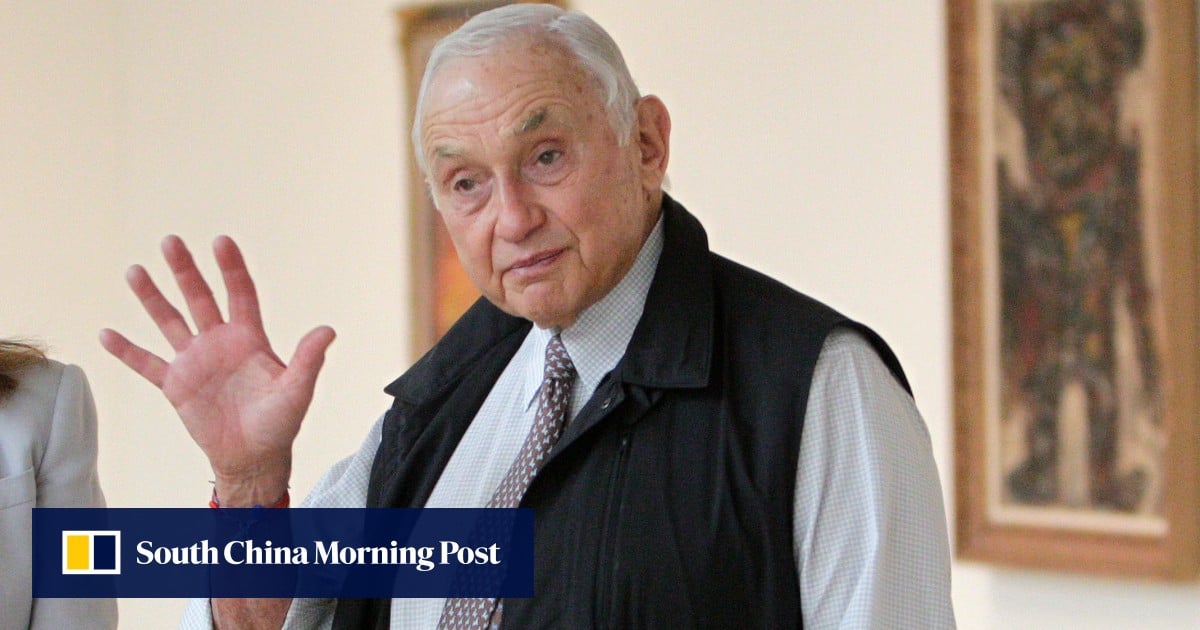
Billionaire retailer Les Wexner testified in a closed-door session that he was "conned" by Jeffrey Epstein and denied any knowledge of Epstein's crimes, telling lawmakers he had been "naive, foolish and gullible" to trust him.
The testimony came after Wexner was subpoenaed by the House Oversight Committee and was given from his home in New Albany, Ohio; the session focused on Democrats' questions about his decades-long relationship with Epstein as part of a wider congressional probe.
This account frames Wexner as apologetic about his own judgment while maintaining he did not know of Epstein's illegal conduct.
Coverage Differences
Unique Coverage
Only the South China Morning Post (Asian) article is available for this summary. It reports Wexner saying he was “conned,” denies knowledge of Epstein’s crimes, and calls himself “naive, foolish and gullible.” Because no other source articles are provided, I cannot identify contrasts in how other outlet types framed Wexner’s testimony or Democrats’ reactions; any comparative claims would be speculative.
House probe into Epstein ties
The House Oversight Committee’s subpoena and the closed-door setting underline the formal and sensitive nature of the inquiry into Epstein’s network.
According to the available report, Democrats pressed Wexner about his long-standing ties to Epstein, indicating investigators sought details about the scope and duration of their relationship.
The choice to hear testimony in private and to subpoena a high-profile figure like Wexner suggests lawmakers are pursuing thorough documentation and possibly further steps in their wider investigation.
Coverage Differences
Missing Comparisons
With only the South China Morning Post article provided, there is no way to show how other outlets (Western Mainstream, Western Alternative, West Asian, etc.) described the committee’s tactics, the choice of closed-door testimony, or whether they characterized Democrats’ skepticism differently. The SCMP notes the subpoena and closed-door setting but does not show other perspectives to compare tone or framing.
Media framing of Wexner
Wexner’s age and corporate background are foregrounded in the available coverage: the report identifies him as the 88-year-old founder of L Brands, the former parent company of Victoria’s Secret.
That context situates him as a longstanding figure in American retail and helps explain why his relationship with Epstein attracted sustained scrutiny in Congress and the media.
The mention of his corporate role underscores both public interest in potential corporate ties and the reputational stakes for brands connected to the parties involved.
Coverage Differences
Tone
The single available source frames Wexner neutrally as a prominent businessman who says he was deceived, emphasising his age and corporate status. Without alternative sources, it is not possible to show whether other outlets emphasised victimhood, culpability, legal exposure, or media fallout differently; the SCMP's presentation focuses on identity and the congressional process.
Single-source Wexner reporting
The available reporting is single-sourced (South China Morning Post) and therefore cannot meet the request to contrast coverage across diverse source types.
It therefore cannot show how Western mainstream, Western alternative, or West Asian outlets might have differed in tone, emphasis, or omitted details.
Based strictly on the provided material, the narrative is that Wexner said he was "conned" and denied knowledge of crimes.
He described himself as "naive, foolish and gullible," while Democrats remained unconvinced and had subpoenaed him for closed-door testimony.
Coverage Differences
Missing Information
No other source articles were supplied, so I cannot identify contradictions, alternative framings, or additional facts reported elsewhere. The single-source material constrains the ability to show cross-source differences.