Other22 January, 20262 min read
Extreme Rainfall Triggers Landslide, Buries Campers and Kills Two at Mount Maunganui Holiday Park
This article is an automated aggregation of coverage from news outlets. Our editorials offer in-depth analysis curated by the NewsCord team.
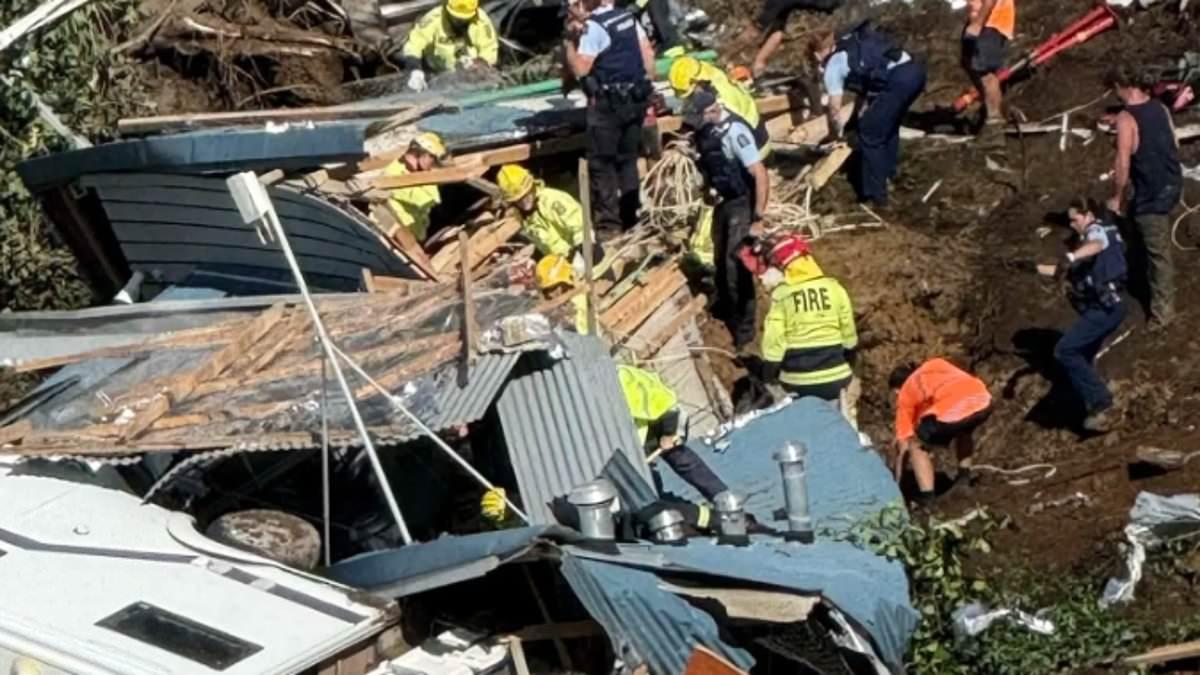
Heavy rain triggered a landslide at Mount Maunganui campground, burying a shower block and campervans. At least two people died and several others, including children, are missing or feared buried.

19 outlets told this the same way.
New Zealand landslide tragedy
A major landslide struck the Mount Maunganui Beachside Holiday Park on New Zealand's North Island after days of extreme rainfall, burying a toilet and shower block and sweeping caravans, tents and vehicles into mud and debris. Authorities said two people died in a separate slide at Welcome Bay, while a major high-risk search continued at the campground where several people are feared buried. Prime Minister Christopher Luxon said the nation is "heavy with grief."
“Two people have died and several others are feared buried after landslides on New Zealand’s North Island, authorities said.”
Search and rescue update
Rescue teams — including Fire and Emergency New Zealand crews, urban search-and-rescue units, sniffer dogs and heavy machinery — conducted complex overnight searches but repeatedly paused operations because of unstable ground and the risk of further slips. Witnesses and rescuers reported hearing voices under the rubble at times, though officials cautioned that no confirmed signs of life had been found. Police described the number missing as in the 'single figures,' and helicopters, CCTV and tracking tools were being used to locate people and alert families.
Extreme rainfall and flooding
Meteorological services and multiple outlets linked the disaster to extreme rainfall. Reports described record or near-record totals, from roughly 300 mm in 30 hours to about two-and-a-half months' worth of rain in 12 hours.
“After roughly 300 mm of rain in about 30 hours, a large landslide devastated part of Mount Maunganui Beachside Holiday Park...”
MetService red warnings for flooding and slips were in force. A state of emergency was declared in parts of the North Island as rivers and roads flooded and power outages left thousands without electricity.
Survivor accounts and evacuations
Survivor accounts and local response added human detail. Witnesses described people screaming as earth and trees collapsed while bystanders and campers attempted rescues, including pulling people from a toilet-block roof.
A woman who woke fellow campers and helped evacuate others before becoming trapped herself was widely described as a hero. Officials said most guests were evacuated but some remained unaccounted for, including children and foreign tourists, and government agencies signalled support and inquiries about possible overseas nationals.

Mount Maunganui landslip reports
Authorities warned the site remains hazardous, rescue work is complex, and more unstable weather was expected. The event sits against a history of slope instability at Mount Maunganui, with sources noting previous closures and repeated slides at the extinct-volcano site. Coverage differed in scope: regional outlets linked the event to broader storm impacts in the Pacific and to other landslips and infrastructure damage across the North Island.
“Mount Maunganui has a known history of instability and was closed in 2012 due to landslide risk.”
A few sources included unrelated regional disaster reports, for example a separate Malacca Strait cyclone mentioned by the-star.co.ke. This variation illustrates differences in local versus international editorial focus.