FAA Shuts El Paso Airspace After Pentagon Permits CBP to Deploy Anti-Drone Laser

FAA Shuts El Paso Airspace After Pentagon Permits CBP to Deploy Anti-Drone Laser

12 February, 202624 sources compared
USA

Key Points from 24 News Sources

  1. 1

    FAA issued a 10-day flight restriction over El Paso, then lifted it hours later

  2. 2

    U.S. officials blamed Mexican cartel drone incursions for triggering the airspace shutdown

  3. 3

    Pentagon authorized Customs and Border Protection to deploy an anti-drone laser in El Paso

Full Analysis Summary

El Paso airport security incident

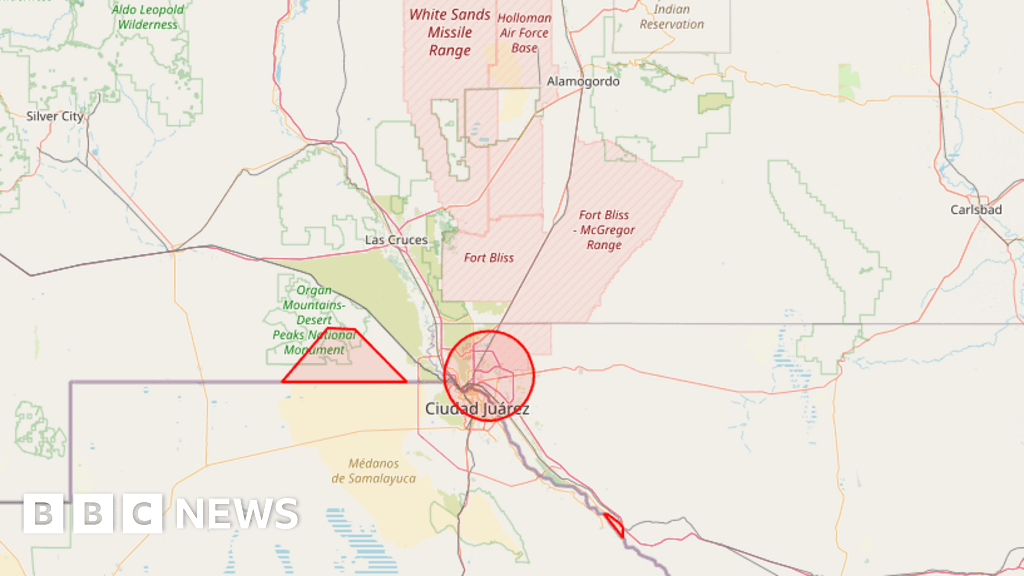
Late on Feb. 10 the Federal Aviation Administration (FAA) issued an unusual notice ordering a temporary 10-day ground stop over El Paso International Airport for "special security reasons," grounding commercial, cargo and general aviation.

Officials lifted the restriction less than eight hours later, saying there was no continuing threat to commercial aviation.
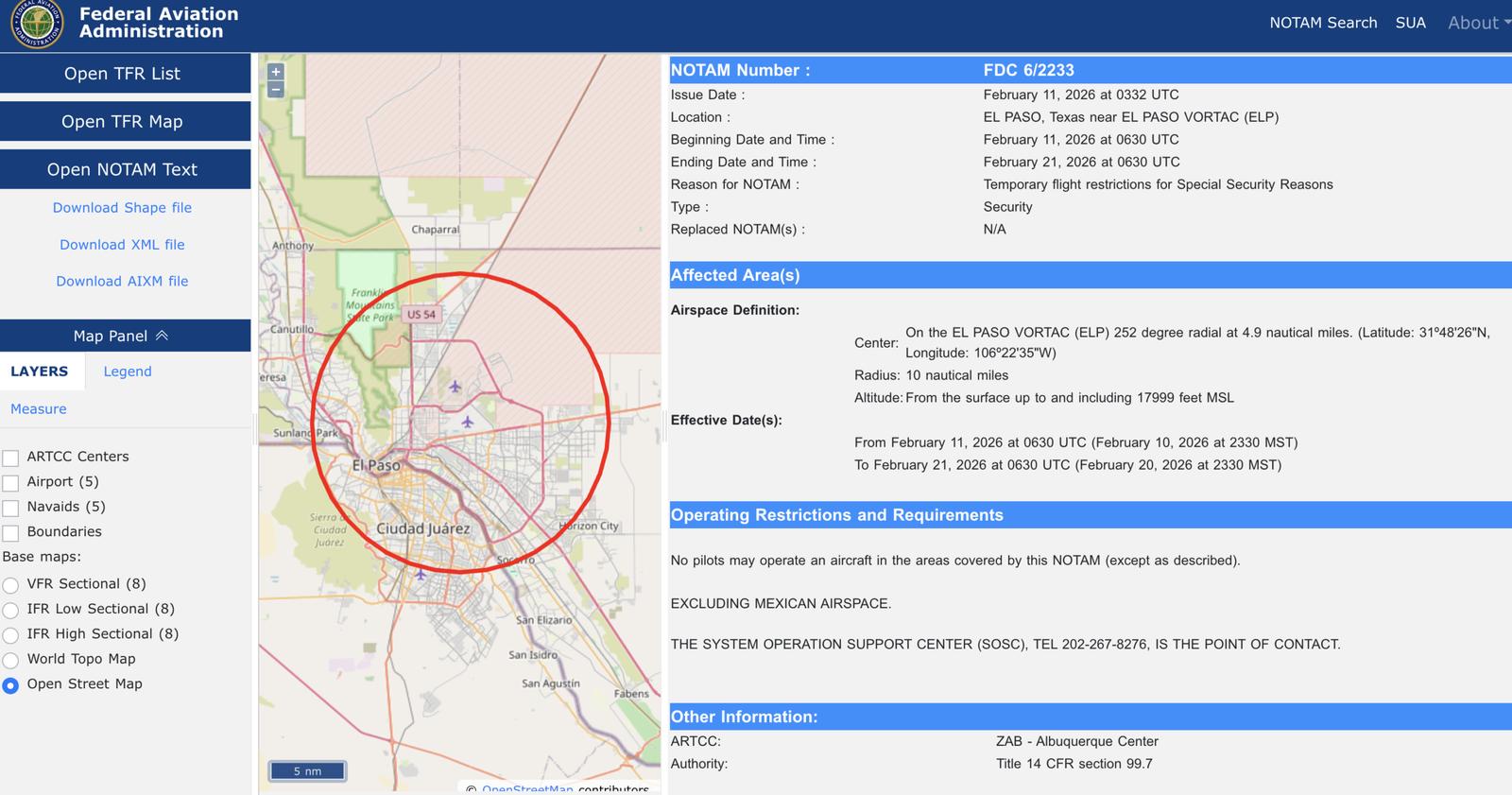
Transportation Secretary Sean Duffy and Pentagon officials described the closure as a response to a "cartel drone incursion" that had been "neutralized."

Airport officials and airlines scrambled to adjust flights and passengers.

Multiple outlets reported the Pentagon had authorized U.S. Customs and Border Protection or other federal units to deploy high-energy laser countermeasures near Fort Bliss as part of the response.

Coverage Differences

Narrative Framing

Al Jazeera (West Asian) frames the event as a miscommunication between the Pentagon and FAA about the military’s use of a new high‑energy laser anti‑drone system, while Washington Examiner (Western Alternative) emphasizes that the Pentagon authorized CBP to deploy an anti‑drone laser and stresses the cartel attribution; New York Post (Western Mainstream) reports both the closure and later details about a laser strike that may have hit a mylar balloon and notes an apparent lack of coordination. This shows differences in emphasis: Al Jazeera on interagency miscommunication, Washington Examiner on the laser deployment to counter cartel drones, and New York Post on the operational details and coordination failures.

Tone

Some outlets present the administration’s description as definitive (e.g., Forbes and PBS echoing Transport Secretary Duffy’s claim the threat was neutralized), while other outlets highlight uncertainty or skepticism from local officials and lawmakers (e.g., El Paso Matters and CBC). That contrast reflects mainstream acceptance of the official line in some reporting versus local and investigative skepticism in others.

Counter-drone test reports

Accounts diverge on what triggered the shutdown and on exactly what federal forces did.

Several outlets reported the Defense Department or DHS units tested or used counter‑drone capabilities, including high‑energy lasers.

At least one federal source described the objects targeted as cartel drones, while other reports say some objects hit may have been non‑threatening, such as mylar balloons.

Bloomberg and multiple reporters indicated the Pentagon also flew drones as part of tests near civilian paths, and some U.S. officials told reporters the activity occurred without full FAA coordination.

Coverage Differences

Contradiction

New York Post (Western Mainstream) and Washington Examiner (Western Alternative) report that a laser was fired and that objects struck included at least one mylar balloon, while Al Jazeera (West Asian) and The Daily Beast (Western Alternative) emphasize miscommunication and Pentagon testing near civilian flight paths; these are not mutually exclusive but represent different emphases — one on what was struck and one on testing/coordination problems.

Missed Information

Some outlets note the Pentagon or DHS did not provide specifics (number of drones, how they were disabled); PBS (Western Mainstream) and CBC (Western Mainstream) explicitly flag the absence of details, whereas New York Post and Forbes convey operational claims more directly. That difference affects how definitive each report sounds.

Flight restriction backlash

The action drew immediate local and congressional pushback over coordination and safety.

Lawmakers and city leaders said they were not alerted in advance.

Rep. Veronica Escobar said the federal account 'does not add up,' and El Paso's mayor described the shutdown as unnecessary and disruptive.

The order also carried unusually stark language for a local temporary flight restriction.

It warned that pilots could be detained or met with deadly force if judged an imminent threat.

The restriction disrupted flights, including medevac diversions.

Coverage Differences

Tone

Local sources and regional outlets (El Paso Matters, CBC, New York Magazine) emphasize disruption, local anger and concrete impacts—such as medevacs being diverted—whereas national outlets (Forbes, Washington Examiner) tended to foreground federal claims of neutralization and the security rationale. This shows a contrast between local impact reporting and national security framing.

Narrative Framing

Some outlets highlight the FAA’s warning that deadly force could be used (Straight Arrow News - SAN, Country Rebel), while others focus on the coordination failure between FAA and DoD (Al Jazeera, sanangelolive). Those emphases change whether the story is read as a public‑safety measure or a procedural breakdown.

Attribution and drone response

Questions about attribution and accountability followed.

The administration publicly attributed the incident to Mexican drug-cartel drones.

Transportation Secretary Duffy and Pentagon accounts described the threat as neutralized.

Mexico's president, Claudia Sheinbaum, denied knowledge of drone use at the border and said Mexico would investigate.

Several lawmakers demanded more detailed briefings and evidence linking the objects to cartels.

At the same time, experts and multiple outlets noted that cross-border drone detections are common in the region, leaving unclear why this episode triggered an extraordinary local shutdown.
Coverage Differences

Contradiction

The U.S. administration’s attribution to 'cartel drones' (as quoted by PBS, Forbes, and others) contrasts with Mexico’s president denying knowledge (Al Jazeera), and local critics expressing skepticism (El Paso Matters). That creates a direct tension between official U.S. claims and Mexican and local statements.

Missed Information

Multiple mainstream outlets (PBS, BBC, CBC) emphasize that officials provided few specifics — number of drones, how they were disabled, or forensic attribution — while alternative outlets (Washington Examiner, New York Post) reported operational claims like laser use; the lack of public detail fuels divergent reporting.

Operational and oversight context

Several outlets placed the episode in a broader operational and interagency context, reporting that the FAA had scheduled discussions with the Defense Department for Feb. 20 and that the Army or Pentagon proceeded with activity before final FAA sign‑off; other reports noted the Department of Defense had recently made laser countermeasure systems available to Customs and Border Protection.

The incident prompted calls for greater transparency and clearer coordination protocols for any military or counter‑drone activity near civilian airspace.

Coverage Differences

Narrative Framing

Al Jazeera (West Asian) and New York Magazine (Local Western) frame the story as an interagency coordination failure — highlighting a planned Feb. 20 FAA‑DoD meeting that the military apparently pre‑empted — while New York Post (Western Mainstream) and Washington Examiner (Western Alternative) focus more on operational claims about laser use. That difference makes one version read like a procedural breakdown and the other like a tactical action report.

Unique Coverage

Some outlets (Washington Examiner, New York Post) report specific equipment transfers or rentals (e.g., a high‑energy laser rented to CBP), while other outlets (PBS, BBC) focus less on equipment details and more on the broader security implications. This introduces unique technical detail into certain reports that others omit or de‑emphasize.

All 24 Sources Compared

Air Cargo Week

Update: FAA reopens El Paso airspace after cartel drone incident

Read Original

Al Jazeera

Why was El Paso airspace shut down? Drones, security fears and confusion

Read Original

Australian Broadcasting Corporation

US officials say cartel drones behind sudden closure of Texas airport

Read Original

BBC

El Paso airspace closed for 10 days, Federal Aviation Administration says

Read Original

CBC

FAA lifts closure of airspace over El Paso that had been enacted for 'special security reasons'

Read Original

Country Rebel

FAA Reopens El Paso Airspace After Department Of War Says It "Disabled" Mexican Cartel Drones That Crossed Border

Read Original

El Paso Matters

FAA lifts unprecedented El Paso airspace restrictions after seven hours; 14 flights canceled

Read Original

Forbes

FAA Suddenly Shut — Then Quickly Reopened — El Paso Airspace

Read Original

France 24

Mexican cartel drones forced brief closure of El Paso airspace, US says

Read Original

Latest news from Azerbaijan

FAA reopens El Paso airspace after cartel drone incident

Read Original

Mathrubhumi English

FAA grounds El Paso for 10 days; reopens hours later ‘no threat’

Read Original

New York Magazine

Why Did the FAA Suddenly Close El Paso’s Airspace?

Read Original

New York Post

Confusion abounds over anti-cartel drone laser that caused surprise El Paso airspace closure

Read Original

NewsOne

Questions Arise After FAA Abruptly Closes Then Reopens El Paso Airport

Read Original

PBS

FAA lifts airspace shutdown over El Paso after announcing 10-day closure hours earlier

Read Original

sanangelolive

El Paso Airspace Reopened After FAA Quickly Rescinds 10-day Flight Restrictions

Read Original

South China Morning Post

Trump administration blames Mexican cartel drones for triggering El Paso airspace shutdown

Read Original

Straight Arrow News - SAN

FAA reopens El Paso airspace after closure due to Mexican cartel drones

Read Original

The Daily Beast

FAA Dramatically Ends Airspace Closure After Hours of Chaos

Read Original

the-star.co.ke

US reopens airspace over Texas border town after 'drone incursion'

Read Original

the-sun

Stoppage lifted after 'drones' forced FAA to threaten closure of US airport

Read Original

townhall

Report: The FAA Closed El Paso Airspace After Mexican Cartel Drone Incursion; Airspace Now Reopened

Read Original

vomnews.in

FAA Reopens El Paso Airspace After Brief Closure Over Mexican Cartel Drones Incursion

Read Original

Washington Examiner

Pentagon allowed CBP to use anti-drone laser before FAA closed El Paso airspace

Read Original