Protests22 February, 20262 min read
Far-Right British Group's Anti-Islam March in Manchester Sparks Counter-Protests
This article is an automated aggregation of coverage from news outlets. Our editorials offer in-depth analysis curated by the NewsCord team.
Hundreds of Britain First supporters staged an anti-Islam march in Manchester. Larger antifascist counter-demonstrators confronted and clashed with Britain First protesters.
5 outlets told this the same way.
Britain First Manchester clash
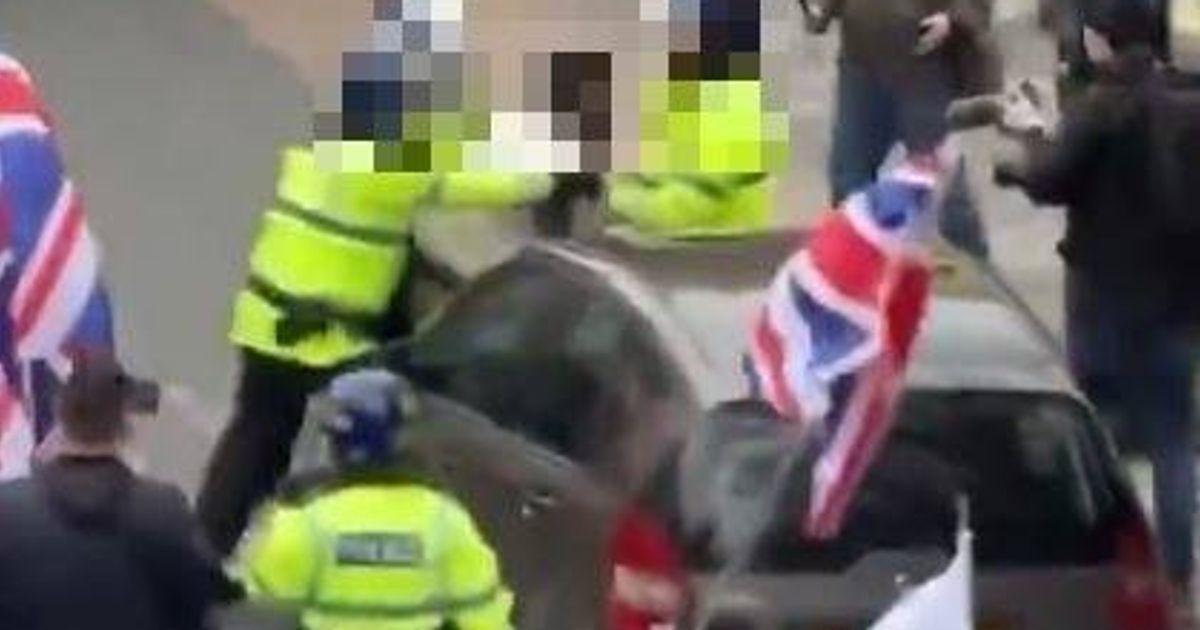
A Britain First march led by Paul Golding in Manchester sparked confrontations with counter-protesters after the far-right group moved through the city centre. Reports describe aggressive contact and a tense standoff that drew a heavy police presence. Al Jazeera says the march "descended into aggressive clashes with counter-protesters in the city centre" and reports Britain First members were "harassed and shoved opponents, prodding some with flagpoles, shouting anti-immigration and anti-Palestine slogans."
“A Britain First march led by Paul Golding — a far-right activist previously jailed for religiously aggravated harassment — descended into aggressive clashes with counter-protesters in the city centre.”
PressTV reports the rally "was met by a much larger antifascist counter-protest, producing a tense standoff in the city centre and several scuffles." The two outlets differ in emphasis: Al Jazeera highlights clashes and actions by Britain First, while PressTV emphasises the size of the counter-protest and a tense standoff.

Police response and enforcement
Both accounts emphasized police response and public-order measures. Al Jazeera says protesters were "flanked by police" and that "riot officers [were forced] to protect sit-down demonstrators." Al Jazeera also relayed a police source saying the operation was "especially difficult because both groups kept changing routes and the force was stretched by other events, including a pro-Ukraine rally and large football crowds."
PressTV reports Greater Manchester Police formed a line between the groups and issued a 10-hour dispersal order giving officers extra powers. PressTV adds that six people had been arrested by 3pm on suspicion of public order offences, breach of the peace, assault on an emergency worker and breach of the dispersal notice.

Protest conduct reports
Al Jazeera records Britain First members "harassed and shoved opponents, prodding some with flagpoles, shouting anti-immigration and anti-Palestine slogans." Al Jazeera highlights criticism from groups such as Jewish Action for Palestine that accused police of protecting the far right.
“Flanked by police, Britain First members harassed and shoved opponents, prodding some with flagpoles, shouting anti-immigration and anti-Palestine slogans, and forcing riot officers to protect sit-down demonstrators.”
PressTV similarly reports Britain First supporters were "waving Union Jacks, chanted 'send them back' and other anti-immigration slogans and hurled insults." PressTV adds that some passers-by joined in defending anti-racism, indicating a spontaneous defensive reaction by bystanders.
Policing operational context
Both reports give operational context that helps explain policing pressures and planned follow-up actions. Al Jazeera relays a police source saying the operation was "especially difficult" because both groups kept changing routes and the force was "stretched by other events, including a pro-Ukraine rally and large football crowds."
PressTV notes a "larger counter-demonstration was also planned for midday Saturday." PressTV records the dispersal order that gave officers additional powers during the incident.

Two reports compared
The two accounts present a consistent core story: a Britain First mobilisation met by strong local opposition and a significant police operation. They differ in emphasis, with Al Jazeera foregrounding allegations of harassment and criticism of police decisions. PressTV foregrounds the size of the counter-protest, formal police measures and arrests.
“Counter-protesters and groups such as Jewish Action for Palestine criticized police for allowing the march and accused officers of protecting the far right.”
The available excerpts do not conflict on the basic facts reported but highlight different aspects and sources of concern. Because the excerpts are limited, some details (for example, numbers involved and broader political reactions) remain unclear from these reports alone.