Technology and Science24 June, 20263 min read
FCC Chairman Brendan Carr Seeks Comment On Narrowing Or Sunseting E-Rate Program
This article is an automated aggregation of coverage from news outlets. Our editorials offer in-depth analysis curated by the NewsCord team.
FCC seeks public comment on narrowing or sunsetting E-Rate. Carr cites rising screen time and declining test scores to justify review.

E-Rate on the table
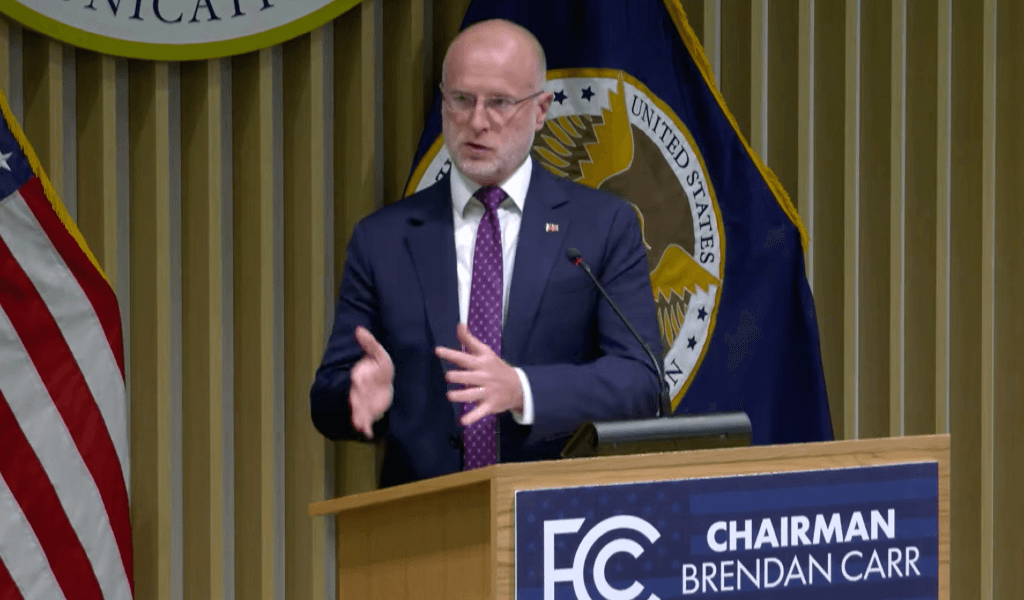
The Federal Communications Commission voted on Thursday to seek public comment on whether the federal E-rate program “should be narrowed or reoriented” to meet the goals Congress established 30 years ago for the discount program that helps connect nearly every school district in the U.S. to affordable internet. FCC Chairman Brendan Carr said the inquiry is a response to rising screen time and falling test scores in U.S. schools, and he argued that “Over the last decade, school districts across the country experimented with a massive increase in screen time for students.” The FCC’s notice of proposed rulemaking will ask how E-rate-funded networks are being used for educational purposes and what safeguards are in place to protect against waste, fraud and abuse.
“Should the E-Rate program be limited or sunset to reflect today’s extensive connectivity rates?”
The FCC also signaled that ending E-rate could be on the table, asking in its notice: “Should the E-Rate program be limited or sunset to reflect today’s extensive connectivity rates?” Ars Technica reported that Carr led a 2-1 vote to issue the NPRM that proposes changes and asks the public to comment on them, with Commissioner Anna Gomez asking Carr’s office to remove language seeking comment on whether to sunset the program.
Pushback over authority
E-rate advocates urged the FCC to reconsider and revise the NPRM, warning that language suggesting the Commission may try to cut or terminate the program entirely would exceed its authority. Nicole Ferraro, editor and host of “The Divide” podcast, reported that the FCC is scheduled to vote on the proposal at its monthly meeting on Thursday (June 25), and that the NPRM asks whether E-rate should be terminated or limited to specific areas. In an ex parte filing dated June 16, the Schools, Health & Libraries Broadband (SHLB) Coalition said, “There is nothing in the text of the statute empowering the Commission to terminate the program,” including “after a certain period of time or after certain benchmarks are met.”
SHLB Executive Director Joey Wender argued that the connectivity exists because E-rate supports it year after year, writing, “That connectivity exists because E-Rate supports it year after year,” in a blog published earlier this month. Paul Lekas of the Software & Information Industry Association also pushed back, saying the FCC notice “conflates two very different things: screen time and connectivity,” and urging the FCC to target concerns with precision rather than risk severing connectivity.
Parallel broadband rules
Alongside the E-rate review, the FCC also moved to cut local red tape around broadband deployments, with Broadband Communities reporting a 3-0 vote to kick off a formal rulemaking process. Under the proposal described in a June 25 release, local authorities would have a 120-day deadline to process wireline applications or face a presumption that they are unlawfully blocking service, and the rules would cap local fees “limiting them strictly to the actual, direct costs of managing public rights-of-way.” Broadband Breakfast reported that the FCC unanimously adopted a proposal to preempt local permitting policies ISPs say are barriers to broadband deployments, including a 120-day shot clock and fee limits tied to a locality’s direct cost of maintaining a given right-of-way.
“Those barriers raise the costs of deployment or discourage it altogether.”
FCC Chairman Brendan Carr said, “Those barriers raise the costs of deployment or discourage it altogether,” while Commissioner Anna Gomez said that because the item was at the proposal stage she supported it but questioned whether blanket preemptions would survive judicial scrutiny under Loper Bright. Broadband Breakfast also reported that the FCC unanimously adopted an order allowing subsea cable operators to avoid rigorous application reviews as long as they certify they can meet stringent cybersecurity requirements, with Carr saying, “Adopt strong national security standards, and get a glidepath to application approval.”