
Fed Holds Rates, Bitcoin Dips Below $71,000 as Powell Notes Oil Shock
Key Takeaways
- Fed holds policy steady, keeping rate at 3.50%-3.75% amid inflation risks.
- Bitcoin dips below $71,000 as rate-cut hopes fade amid Fed hold.
- Oil surges toward $100 per barrel due to Iran conflict, elevating inflation concerns.
Fed Policy Decision
The Federal Reserve maintained its benchmark interest rate in a range of 3.5% to 3.75% at its March meeting, a decision that aligned with market expectations.
“central bank must balance what appears to be a slowing employment market with inflation that remains well above its 2% target”
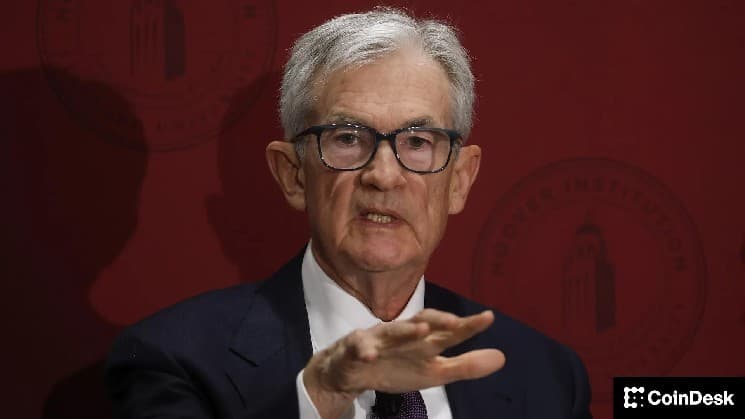
Federal Reserve Chair Jerome Powell acknowledged during his post-meeting press conference that rising energy prices are already influencing the central bank's inflation outlook.

The Fed's decision marked the second consecutive time it has opted to maintain interest rates at current levels since early 2026, following a series of rate cuts that began the year.
The 12-member Federal Open Market Committee voted 11-1 to maintain the current rate, with Stephen Miran casting the lone dissenting vote in favor of a rate cut.
Market Reaction
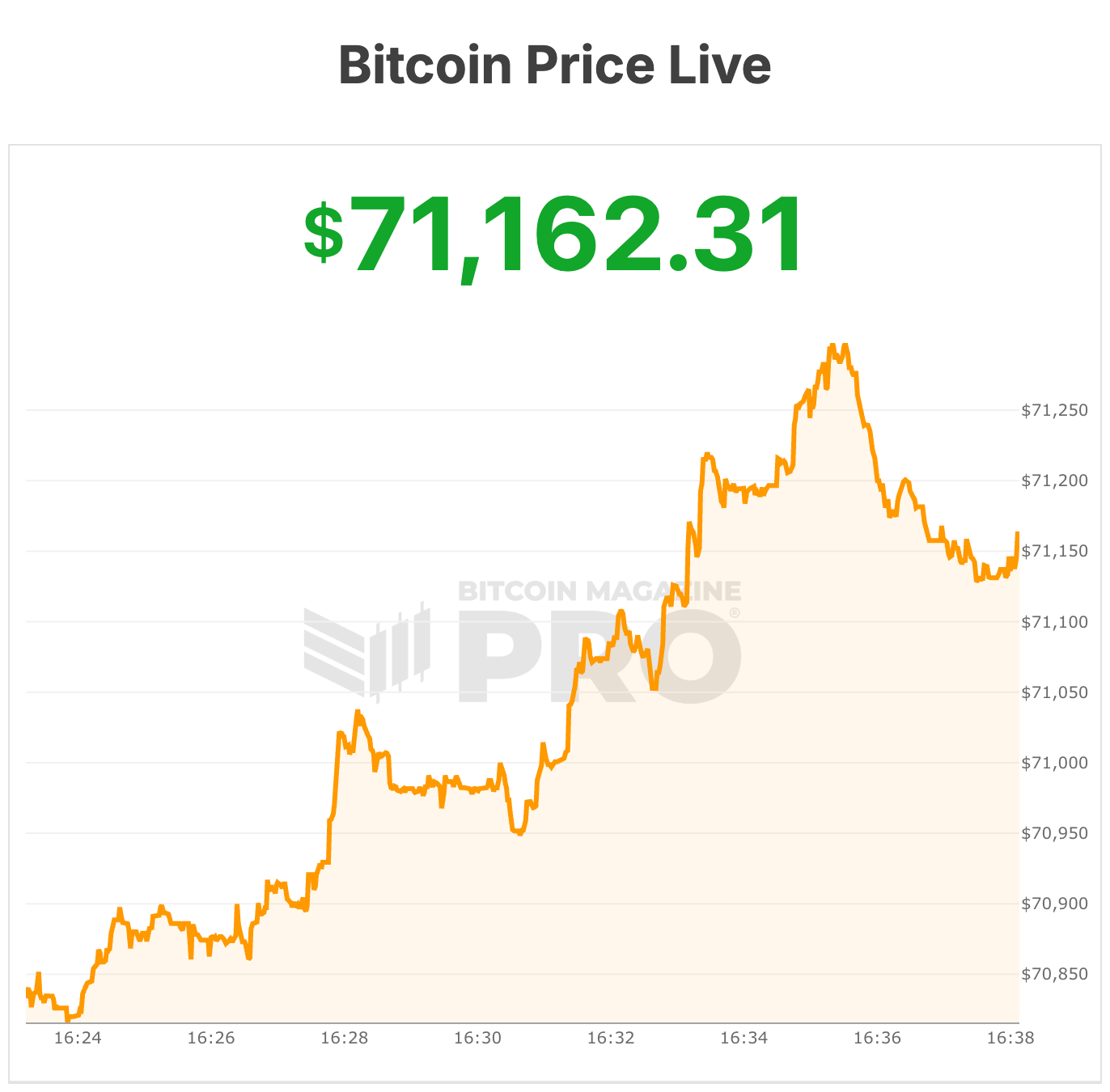
Bitcoin and broader cryptocurrency markets experienced significant declines following the Fed announcement, with the leading cryptocurrency dropping below $71,000 to $70,900, representing nearly a 5% drop over 24 hours.
Ether fell even more sharply, declining by 6.5%, while major stock indexes closed at session lows, with the S&P 500 dropping 1.4% and the Nasdaq falling 1.5%.

Digital asset-related stocks were particularly hard hit, with MicroStrategy (MSTR) and Bitmine (BMNR) down 5-6%, Galaxy (GLXY) declining almost 7%, and crypto exchange Gemini (GEMI) tumbling 15% to near its lowest level since going public.
Gold also extended its decline, falling below $4,850 an ounce to reach a more than one-month low, as investors reacted to the Fed's cautious stance on inflation and the ongoing geopolitical tensions in the Middle East.
Inflation Outlook
The Federal Reserve raised its 2026 inflation forecast to 2.7% from 2.4%, reflecting growing concerns that price pressures could remain elevated longer than anticipated due to the impact of rising energy costs.
Powell explicitly addressed the oil price surge, noting that 'the oil shock for sure shows up' in higher inflation projections while cautioning that 'nobody knows' yet how persistent the impact will be.
The central bank chairman dismissed comparisons to 1970s-style stagflation, arguing that unemployment remains near long-run norms and inflation is only modestly above target.
'That's not the case right now,' Powell stated, emphasizing that 'I would reserve the term stagflation for a much more serious set of circumstances.'
Instead, he characterized the current economic situation as involving 'some tension between the goals, and we're trying to manage our way through it.'
Economic Context
The Federal Reserve's policy decision came amid challenging economic conditions, including a recent jobs report showing the U.S. economy lost 92,000 jobs in February - a reversal of fortunes for the labor market that erased most of the job gains recorded in 2026.
The unemployment rate ticked up from 4.3% in January to 4.4% in February, though it remains low by historical standards.
GDP growth also showed weakness, with the economy growing at a sluggish annualized pace of 0.7% over the final three months of 2025.
Powell described the current federal funds rate range as within neutral territory and emphasized the importance of central bank independence, stating that 'Independence is what allows us to do our jobs, and stable prices is half of our mandate.'
Economists note that high oil prices create a complex situation, with Christian Hoffmann pointing out that 'Energy is clearly an inflation risk, but it is also a meaningful economic headwind' that could have disinflationary impacts through weaker demand.
Geopolitical Impact
The ongoing conflict involving Iran emerged as a significant factor influencing both the Federal Reserve's policy outlook and market sentiment, with oil prices continuing to climb amid supply disruptions in the Middle East.
Brent crude rose 3.8% to $107.38 per barrel following the attack on the South Pars field, reflecting the geopolitical tensions that are creating uncertainty for the U.S. economy.
The Fed acknowledged these uncertainties, stating that 'the implications of developments in the Middle East for the U.S. economy are uncertain' while warning about the potential for 'an energy shock of some size and duration.'
The conflict has complicated the Fed's delicate balancing act of managing inflation while supporting economic growth, with Powell noting that it is 'too soon to know' the full economic impact of the conflict and that policymakers would continue to monitor data closely.
Bitcoin markets, which have historically been sensitive to interest rate expectations and geopolitical uncertainty, have shown particular sensitivity to these developments, with analysts suggesting that the combination of higher energy costs, persistent inflation, and geopolitical uncertainty has prompted investors to reduce exposure to riskier assets.
More on Crypto

Mastercard to acquire BVNK for up to $1.8B to accelerate stablecoin strategy.
24 sources compared

Boris Johnson Calls Bitcoin a Ponzi Scheme; Saylor, Eric Trump Defend Crypto
12 sources compared

Bybit Pay Joins Mastercard Crypto Credential Network, Lets Users Send Digital Assets Using Verified Aliases
10 sources compared
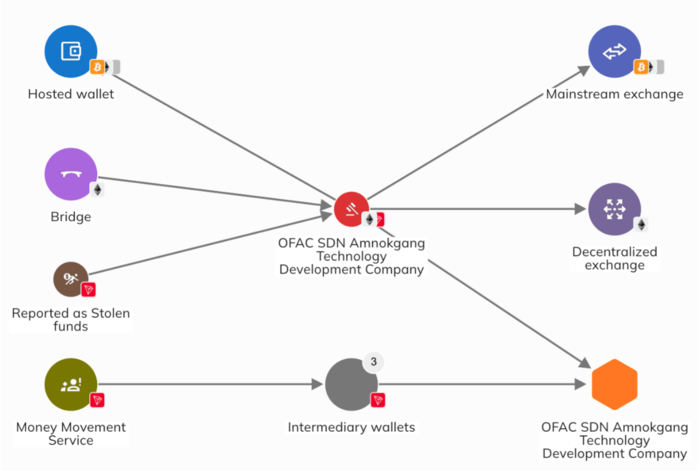
U.S. Treasury Freezes Crypto Network Feeding Nearly $800 Million To North Korea's Weapons Programs
10 sources compared