
Federal Judge Orders Trump Administration To Unpause Green Card Applications For 83 Immigrants
Key Takeaways
- Judge orders USCIS to resume green card processing for immigrants affected by travel ban
- Ruling deems the pause unlawful and prohibits indefinite non-adjudication of cases
- Decision affects dozens of immigrant applications nationwide linked to the travel ban
Court Orders USCIS Restart
A federal judge in Maryland ruled that the Trump administration must unpause green card applications for dozens of immigrants originally from countries on the current travel ban list, ordering U.S. Citizenship and Immigration Services (USCIS) to continue adjudicating.
The case, representing 83 immigrants already in the U.S., is described as one of a handful brought by people affected by a USCIS policy pausing applications from all immigrants from the 39 countries that have total travel bans or restrictions on new visas issued by the State Department.

Newsweek reported that “USCIS does not have discretion to decide not to adjudicate at all,” quoting Maryland District Judge George L. Russell III as writing in a 39-page ruling issued Friday and published Monday.
The judge ordered USCIS to restart work on the plaintiffs’ green card applications, while declining to require decisions within 30 days because the cases were at “very different stages.”
Newsweek also reported that a campaign tracking the pause, called Project Press Unpause, estimates USCIS had collected over $1 billion in fees from over 2 million applications it was not processing.
In a separate report, Geo News said the judge declared the visa pause policy “unlawful,” and quoted Russell writing that “USCIS does not have discretion to decide not to adjudicate at all.”
NPR framed the broader impact as “millions of professionals” thrown into limbo after the Trump administration hit pause on reviewing visa, green card, work permit and citizenship applications, targeted at those born in one of 39 countries.
How the Pause Spread
The legal fight over green cards sits within a wider set of immigration restrictions described across U.S. reporting, including pauses tied to country lists and the administration’s stated security rationale.
Newsweek said USCIS took presidential proclamations issued under the Immigration and Nationality Act (INA) and “issued policy memos which imposed indefinite holds on adjudicating green card applications solely based on where applicants were born—i.e., the affected 39 countries.”

NPR reported that the pause is targeted at those born in one of 39 countries, including Nigeria, Myanmar and Venezuela, and said the U.S. imposed travel restrictions on most of those countries after an Afghan national shot two National Guardsmen on a Washington, D.C. street in late November.
NPR also described the pause as part of “a larger effort by the administration to restrict legal forms of migration and boost mass deportation of immigrants,” and said the impact has been “catastrophic” for people already living in the U.S.
The NPR account emphasized that even when the pause is described as temporary, some holds have already been dubbed “bans” in court, citing a statement from then-USCIS spokesman Matthew Tragesser that optional practical training applications are banned specifically for Iranians and will not be processed.
Geo News added that the 39-page ruling issued on Friday, April 24, and published on Monday, April 27, ordered USCIS to resume work on applications from 83 immigrant plaintiffs already living legally in the United States.
migrationpolicy.org described the administration’s broader approach to legal immigration as including “Travel bans and restrictions imposed on nationals of 39 countries” and “Pauses in permanent visa issuance affecting 75 countries,” alongside a “Diversion of staff from processing immigration applications to revetting recipients.”
Voices in the Limbo
Reporting from NPR and Newsweek portrayed the pause as producing immediate personal and professional consequences for people already in the United States, with multiple named examples of how work authorization and legal status were disrupted.
“One of the Trump administration's most recent measures in its immigration crackdown is the indefinite suspension of immigrant visa processing for citizens of 75 countries, which takes effect this very Wednesday”
NPR quoted A, who leads a cancer clinical research team in Ohio and is from Myanmar, saying, “It’s very disappointing to know that something I’ve been working really hard towards for the last few years is now going to be out of reach just because of where I was born.”
NPR also quoted M, who lives in Virginia and is from Nigeria, describing the day she matched with a surgery residency program in Oregon: “I cried so much the day after my match, because I was overwhelmed with the fact that I worked so hard to get to this point.”
NPR added that M said, “I had so much anxiety and uncertainty around me that, yes, I did take the pictures and I was very happy to match,” but that “just because of my place of birth and my citizenship — that’s taking it away from me.”
Another NPR interviewee, P, who lives in Texas, said, “I really cannot move on with my life. And I really cannot contribute to the United States because I am from Nigeria,” and also said, “I barely can feed [myself]. I barely can pay bills.”
Newsweek included a quote from a Project Press Unpause spokesperson who gave their name as Lavida, saying, “This sends a clear message that this policy is arbitrary and capricious.”
On the government side, Newsweek reported a USCIS spokesperson statement: “The safety of the American people always come first.”
USCIS Justification vs. Legal Limits
After the ruling, Newsweek reported that a USCIS spokesperson defended the pause, saying, “USCIS has paused all adjudications for aliens from high-risk countries while USCIS works to ensure that all aliens from these countries are vetted and screened to the maximum degree possible.”
The same statement said, “The pause will allow for a comprehensive examination of all pending benefit requests for aliens from the designated high-risk countries,” and reiterated, “The safety of the American people always come first.”
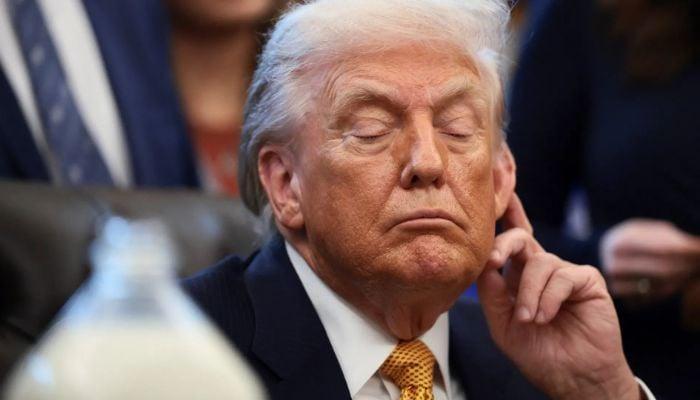
Newsweek’s account of the judge’s reasoning directly challenged that framing by describing the court’s rejection of the government’s argument that courts lack authority to review the freeze.
Newsweek said the judge rejected the government’s argument that courts lack authority to review the freeze, explaining that while immigration officials have discretion in how they decide cases, they do not have the power to indefinitely refuse to decide them.
The judge ordered USCIS to restart work on the plaintiffs’ green card applications, but declined to require decisions within 30 days, noting that the cases were at “very different stages.”
Geo News similarly described the judge’s conclusion that agencies can’t simply “decide not to adjudicate at all,” and said the ruling was issued on Friday, April 24, and published on Monday, April 27.
In parallel, CNN en Español reported that the State Department justified an immigrant visa processing pause for citizens of 75 countries by citing an “exhaustive review of all policies, regulations, and guidelines” and a “public charge” concern, while attorney Carlos Colombo told CNN that the “public charge” argument “doesn’t make sense.”
What Comes Next
The ruling’s immediate effect is described as a restart of adjudication for the 83 plaintiffs, but the reporting also shows that the broader immigration restrictions continue to affect other categories and other country lists.
“A sweeping executive pause on visa processing and renewals by the Trump administration has sent shockwaves through the corporate world leaving millions of high-skilled professionals in a race against the clock”
Newsweek said the ruling “effectively rolls back the policy to the way things worked before the freeze, allowing applications to proceed normally,” while also stating it “does not guarantee that any applicant will be approved or denied—it only requires that USCIS make a decision.”
NPR described the pause as affecting “visa, green card, work permit and citizenship applications,” and said people fear “adverse consequences” if they speak publicly, with NPR using first initials for interviewees.
Chicago Sun-Times reported that in Illinois, immigrant rights advocates estimate “at least 300,000 people in Illinois” are affected by the Trump administration’s “Jan. 21 pause on immigrant visas for nationals from 75 countries,” and said the list includes “26 countries in Africa as well as Brazil, Haiti, Afghanistan, Iraq, Pakistan and Cuba.”
Telemundo reported that the administration’s changes also reached citizenship steps, describing “abrupt cancellation of their naturalization ceremonies” after an “indefinite pause of applications and immigration processes for immigrants from certain countries,” and said the pauses affect citizenship and green card applications filed by people from “19 countries” designated as high risk.
Migrationpolicy.org argued that the administration’s actions suggest a “comprehensive strategy to reduce legal immigration across much of the spectrum,” pointing to “Pauses in permanent visa issuance affecting 75 countries” and “A $100,000 application fee for H-1B high-skilled workers.”
Across these reports, the stakes are framed as legal status, family reunification, and the ability to work or study, with NPR describing “sudden financial insecurity” and “months of unemployment” and Chicago Sun-Times describing families “caught in legal limbo” that “can also cost them thousands of dollars.”
More on USA

Trump Says U.S.-Iran Memorandum Will Be Signed Sunday, Strait of Hormuz Reopens
10 sources compared

Donald Trump Says U.S.-Iran Deal Will Sign Sunday, Reopen Strait of Hormuz Immediately
23 sources compared

Judge Angel Kelley Orders Trump Administration To Restore National Park Signs By July 3
24 sources compared

Trump Says US Killed Tren de Aragua Leader Niño Guerrero in Joint Strike With Venezuela
34 sources compared