USA31 October, 20253 min read
Federal Judges Force Trump Administration to Continue SNAP Food Aid Amid Government Shutdown
This article is an automated aggregation of coverage from news outlets. Our editorials offer in-depth analysis curated by the NewsCord team.
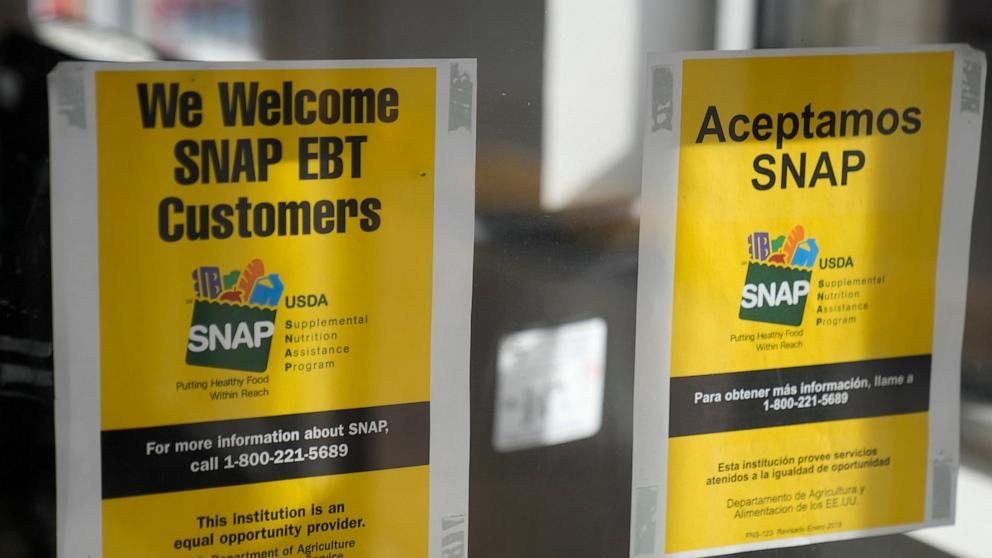
Two federal judges ruled the Trump administration must use emergency funds to continue SNAP benefits. The rulings prevent suspension of food aid to about 42 million low-income Americans during shutdown.

80 outlets told this the same way.
Outlets did split on Trump Interrupted by Protesters at San Antonio Rally for Ken Paxton →
Court Orders SNAP Funding Continuation
Two federal judges — McConnell Jr. in Rhode Island and Indira Talwani in Massachusetts — ordered the Trump administration to keep Supplemental Nutrition Assistance Program (SNAP) payments flowing during the government shutdown by tapping emergency or contingency funds. The judges blocked a planned suspension of SNAP payments set for Saturday and required a compliance plan by Monday. The rulings cover aid that supports about one in eight Americans.
“Two federal judges in Massachusetts and Rhode Island ordered the Trump administration to continue funding the Supplemental Nutrition Assistance Program (SNAP) using emergency reserve funds during the government shutdown.”
One court emphasized the need for immediate distribution of benefits. Another court noted that the government may choose partial or full funding for November, preventing an abrupt cutoff for tens of millions of people. Together, these decisions forced the USDA to maintain benefits while legal and funding questions are resolved.

Legal Dispute Over SNAP Funding
In court, the administration argued it lacked legal authority to fund SNAP without new appropriations and that contingency reserves were discretionary or reserved for disasters. Judges rejected those positions as unlawful or arbitrary and said Congress intended emergency funds to bridge lapses. Massachusetts Judge Talwani suggested using emergency funds and, if necessary, reducing benefits equitably rather than halting them entirely.
Rhode Island’s Judge McConnell characterized the suspension as violating administrative law and ordered a plan by Monday. Sources differ on the size and nature of the available reserves — cited as roughly $5 billion, $5.25 billion, or even $6 billion — and whether an additional $23 billion could help sustain payments.
Challenges in Benefit Distribution
Even with court orders, implementation is fraught with difficulties. If only contingency funds are used, benefits could be reduced and states may need weeks to reprogram systems, creating delays and errors.
“SNAP benefits restoration may take one to two weeks due to processing delays.”
Multiple judges demanded written plans by Monday, but administrators and vendors face staffing shortages and shutdown-related disruptions. Local outlets and civic groups spotlighted stopgap efforts, such as restocking neighborhood pantries and private companies offering discounted deliveries, to bridge gaps for recipients during the rollout.
Political Dispute Over Shutdown
Politics sharpened the fight over the government shutdown. President Trump publicly said he would comply with court rulings while blaming Democrats for the shutdown and asking recipients to pressure Senate Democrats. He also sought legal clarity after advisers said the government lacked authority to pay after November 1.
Democrats and allies blasted the attempted cutoff, with Schumer calling it “vindictive and heartless.” Some coverage diverged on which administration was responsible for the shutdown.

One judge criticized the notion of using a full cutoff as a political tactic. Meanwhile, some outlets noted the administration’s intent to appeal.
Emergency Food Aid Responses
States and cities moved to cushion the blow while the courts and USDA sorted logistics. New Mexico announced a $30 million emergency food program. New York allocated $65 million to food banks.
“In response to the funding uncertainty, New Mexico announced a $30 million emergency food assistance program to temporarily support SNAP recipients.”
D.C. tapped $29 million in reserves for SNAP and $1.5 million for WIC. Illinois and Pennsylvania rolled out state aid as food banks strained.

Local organizers from Minneapolis to Seattle stepped in with donations and pantries. Some local reporting labeled the halt unprecedented, while others stressed these measures cannot match SNAP’s scale.
SNAP Payment Uncertainty
What comes next is uncertain. Judges ordered continued payments now, but appeals are likely and USDA still argues contingency reserves are insufficient against SNAP’s roughly $8 billion monthly cost. This means partial payments, delays, and retroactive make-ups are plausible until the government reopens.
Some rulings explicitly allow administrative discretion on benefit levels for November. The core questions — how long reserves last and how quickly systems can adapt — remain unsettled.