Full Analysis Summary
Displacement of Sudanese nomads
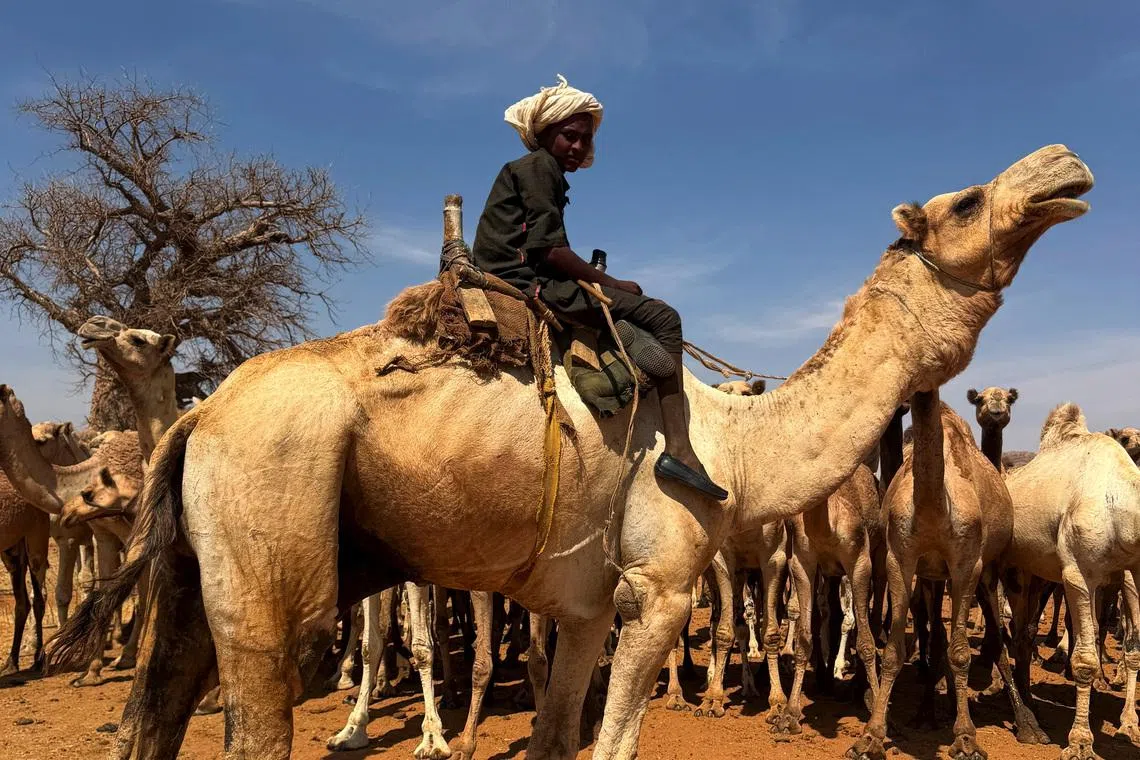
Fighting between the Sudanese Armed Forces (SAF) and the Rapid Support Forces (RSF), which began in 2023, has upended centuries-old nomadic life.
The conflict has left families stranded in the desert outside al-Obeid (Al-Ubayyid).
Reports say nomads who once moved freely with camels and livestock now stay near towns like al-Obeid because they fear venturing deep into the desert.
Remaining close to towns exposes them to banditry and escalating ethnic tensions.
The Straits Times describes nomadic Arab families such as Gubara al-Basheer’s as stranded outside al-Obeid and threatened by bandits and rising ethnic tensions.
Al-Jazeera Net similarly reports that nomads such as Jubara al-Bashir are stranded near Al-Ubayyid in North Kordofan and vulnerable to banditry and tensions amplified on social media.
Coverage Differences
Tone/Narrative framing
Both pieces describe stranded nomads and banditry, but the Straits Times (Asian) frames the story mainly in terms of displacement and ethnic tensions, describing families stranded and threatened; Al‑Jazeera Net (West Asian) emphasizes the break with a centuries‑long pastoral lifestyle and highlights vulnerability specifically tied to social media amplification. Each source reports on the same events but emphasizes slightly different aspects—the human displacement and local threats in The Straits Times, and the historical disruption to Bedouin movement and social media’s role in Al‑Jazeera’s coverage.
Humanitarian impact of conflict
Both outlets report severe humanitarian consequences.
They say the wider conflict has displaced roughly 14 million people and contributed to famine, disease and waves of ethno-sectarian violence.
Both sources link the increase in banditry and local violence to the breakdown of security as SAF and RSF fight across regions including North Kordofan.
Heavy recent fighting in North Kordofan has intensified risks for civilians and pastoralists who can no longer access grazing routes.
Coverage Differences
Emphasis
Both sources report mass displacement and humanitarian collapse, but The Straits Times (Asian) succinctly lists displacement, ethnic violence, famine and disease as concurrent outcomes, while Al‑Jazeera Net (West Asian) similarly lists these impacts but pairs them more explicitly with the loss of centuries‑old mobility and livelihood for Bedouin groups. The Straits Times foregrounds the scale and immediate threats; Al‑Jazeera foregrounds cultural disruption and the need for social remedies reported from local experts.
Land use and insecurity
Local researchers cited by both outlets link the collapse of customary land-use arrangements and livestock routes to rising insecurity.
They say the fighting has displaced people and altered land ownership and grazing systems that once sustained communal relations.
That disruption, amplified by online and social media spread of ethnic hatred, is trapping and endangering communities and rendering nomadic livelihoods untenable.
Coverage Differences
Attribution/Quotes
The Straits Times (Asian) reports 'local researchers' broadly and mentions ethnic hatred 'amplified largely online,' while Al‑Jazeera Net (West Asian) specifically names a local researcher, Ibrahim Jumaa, and quotes his calls for social programs, rule‑of‑law strengthening and reconciliation. Thus The Straits Times uses general reporting language and Al‑Jazeera directly reports the researcher’s recommendations.
Pastoral displacement in Sudan
Taken together, the two accounts present a consistent picture of armed conflict turning long-standing pastoral mobility into stationary vulnerability.
They describe nomads stranded near al-Obeid, increased banditry, disrupted land and grazing systems, and a broader humanitarian collapse across Sudan.
There are small but important differences in emphasis between the pieces.
The Straits Times frames the story around displacement and online-amplified ethnic hatred.
Al-Jazeera Net emphasizes the historical rupture to Bedouin life and cites a named researcher urging concrete social and legal remedies.
Coverage Differences
Overall emphasis
Both sources agree on core facts (stranded nomads, banditry, nearly 14 million displaced) but differ in which aspect they foreground: The Straits Times (Asian) foregrounds displacement, ethnic hatred and immediate threats; Al‑Jazeera Net (West Asian) foregrounds historical disruption of pastoralism and includes a named expert (Ibrahim Jumaa) urging reconciliation and social programs. Both report social‑media or online amplification of tensions, but Al‑Jazeera explicitly quotes the researcher’s policy suggestions while The Straits Times summarizes researchers’ findings without naming an individual.