Asia20 March, 20263 min read
Fire at Daejeon car-parts plant kills at least 10, injuring dozens
This article is an automated aggregation of coverage from news outlets. Our editorials offer in-depth analysis curated by the NewsCord team.
Ten people killed in a Daejeon auto parts plant fire. Dozens injured; missing numbers vary (4 or 14 unaccounted).
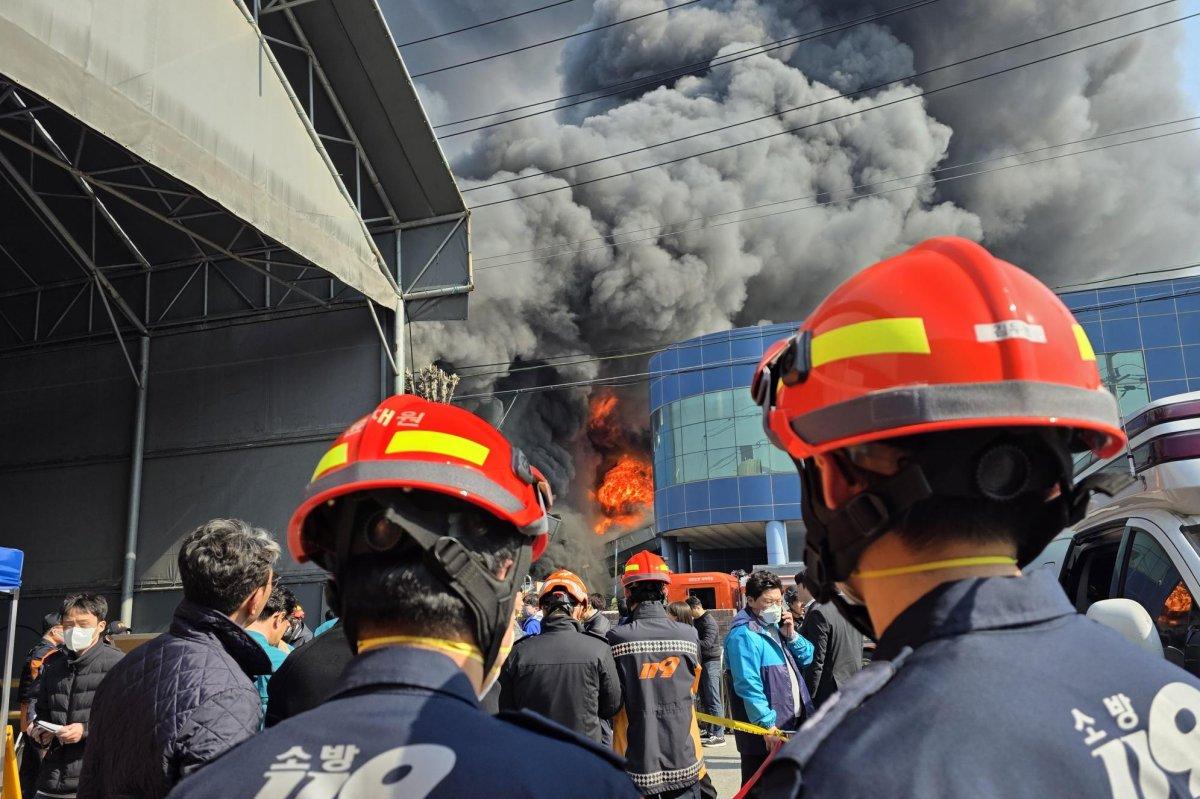
Daejeon Plant Fire Overview
A devastating fire broke out at a car parts plant in the central South Korean city of Daejeon on Friday afternoon, resulting in significant casualties and creating a major emergency situation. The blaze was reported at approximately 1:17 p.m. local time according to authorities, prompting the National Fire Agency to issue a national firefighting mobilization order due to the scale of the disaster exceeding local firefighting capacity.
“A fire broke out at a car parts plant in the central city of Daejeon on Friday, injuring at least 53 people, with 14 others unaccounted for, authorities said.”
At the time of the fire's outbreak, approximately 170 workers were present inside the plant, with many subsequently becoming trapped or injured as the situation rapidly escalated. The fire quickly spread through the facility, completely destroying one of the two buildings while leaving the other still burning at the time of reporting, creating a complex and dangerous rescue environment for emergency responders.
Casualty Details
The incident resulted in substantial human casualties, with conflicting but concerning reports from multiple sources documenting the extent of injuries and fatalities. Officials confirmed that at least 10 people were killed in the blaze, with rescue workers recovering bodies from the charred wreckage according to the Ministry of the Interior and Safety. The death toll represents a tragic outcome for what began as a workplace incident, with workers having inhaled toxic fumes or fallen from the building in their attempts to escape.
A total of 59 people suffered injuries, with 25 reported to be in serious or critical condition, though officials did not immediately confirm whether any were in life-threatening situations. Despite extensive rescue efforts, four workers remained unaccounted for as of the latest reports, leaving families and communities in anxious uncertainty about their fate.
Emergency Response
Emergency services mounted a large-scale response to contain the blaze and rescue trapped workers, deploying over 200 firefighters and 90 pieces of specialized equipment to the disaster site. The scale of the operation warranted significant resources, including helicopters from the forestry service that were utilized to assist in firefighting efforts from above. However, rescue operations faced immediate challenges as firefighters could not immediately enter the factory due to the risk of structural collapse, forcing them to approach the situation with extreme caution.
The building's compromised structural integrity created dangerous conditions for both rescue workers and any remaining survivors, complicating evacuation and firefighting efforts. National authorities recognized the severity of the incident by issuing a national firefighting mobilization order, which is reserved for disasters that surpass the firefighting capacity of local government resources.
Safety Hazards
The fire at the Daejeon plant raised serious safety concerns due to hazardous materials present in the facility, particularly 200 kilograms of sodium stored in the building. Sodium is known to explode if improperly handled or exposed to water, creating an additional layer of danger for rescue crews attempting to contain the blaze. This dangerous chemical compound significantly complicated firefighting efforts and posed risks to both emergency responders and nearby communities.
The presence of such volatile materials in what appeared to be a standard industrial setting highlighted potential safety violations or inadequate safety protocols at the facility. Workers who survived reported that many had inhaled toxic gases during the fire, suggesting that poor ventilation or improper chemical storage may have contributed to the severity of injuries sustained by employees.
Government Response
South Korean President Lee Jae Myung responded to the disaster by directing officials to mobilize all available resources, including personnel and emergency equipment, for the ongoing rescue operations. The President's intervention underscored the national significance of the incident and the government's commitment to addressing the emergency situation comprehensively. The Ministry of the Interior and Safety took a leading role in coordinating the response, providing regular updates on casualty figures and recovery efforts to the public.
As investigations began into the cause of the fire, which officials had not immediately determined, concerns were raised about workplace safety standards and regulatory oversight that may have contributed to this preventable tragedy. The incident added to a growing list of industrial disasters in South Korea, raising questions about the effectiveness of current safety regulations and enforcement mechanisms in protecting workers' lives.