USA29 April, 20266 min read
Florida Legislature Passes Ron DeSantis’ Redistricting Map, Could Flip Up To Four GOP House Seats
Florida Legislature approved DeSantis' redistricting map that could net four GOP House seats. Map reduces Democratic seats from eight to four in Florida.
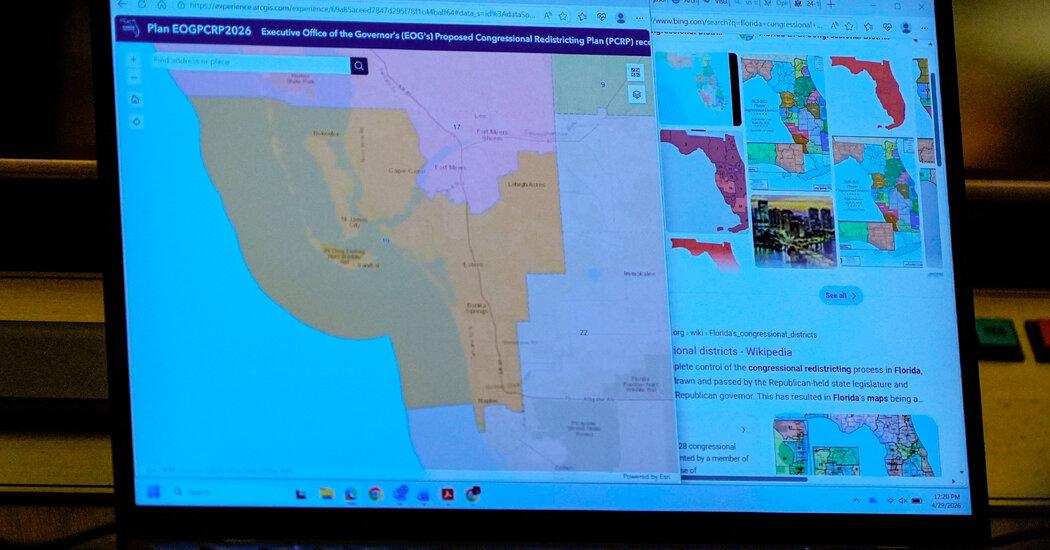
DeSantis map advances
Florida Gov. Ron DeSantis unveiled a proposed congressional map that his office indicated could let Republicans flip up to four seats in the U.S. House of Representatives, with the map designed to leave “just four Democratic-held districts in the state,” according to ABC News.
“The bill now goes to DeSantis' desk for final approval.”
ABC News reported that DeSantis said, “Florida got shortchanged in the 2020 Census, and we've been fighting for fair representation ever since,” and that his “new map for 2026 makes good on my promise to conduct mid-decade redistricting.”

The proposal was tied to a broader mid-decade redistricting scramble, as ABC News described it as “another volley in mid-decade redistricting around the country.”
Within days, Florida’s Republican-controlled Legislature moved quickly: POLITICO reported that the Florida House voted 83-28 in favor of the map and that the Senate followed with a 21-17 vote.
NPR similarly said the Senate’s 21-17 vote came “just hours after the U.S. Supreme Court weakened the Voting Rights Act” in a Louisiana case.
Multiple outlets said the bill was headed to DeSantis for signing, with CBS News stating, “The bill now goes to DeSantis' desk for final approval,” and NBC News saying lawmakers passed the plan “on Wednesday.”
Legal timing and rationale
The Florida redistricting push was framed by DeSantis and his allies as a response to legal developments, while opponents argued the timing was engineered to exploit the Supreme Court’s shift.
ABC News said DeSantis argued the redraw was about representation and that he was “fighting for fair representation,” while also describing the move as “mid-decade redistricting” that could counter Democrats’ “recent redistricting victory in Virginia.”
NBC News described the legal backdrop as a fight over the “Fair Districts” amendment, explaining that the amendment includes “a ban on drawing new political districts that benefit a political party or incumbent” and protections for districts with large minority populations and compactness.
NBC News also reported that DeSantis’ argument rests on the idea that “the Fair Districts provisions protecting minority-performing districts are unconstitutional,” even though “no court has ruled that way yet.”
Several outlets tied the Florida timeline to the U.S. Supreme Court’s Louisiana decision: POLITICO said Florida passed the map “just hours after the U.S. Supreme Court announced a far-reaching ruling,” and WJHG said lawmakers passed the map “the same day the U.S. Supreme Court issued a major redistricting decision in Louisiana.”
NPR said the Senate vote came “just hours after the U.S. Supreme Court weakened the Voting Rights Act,” and CBS News said DeSantis posted that the Supreme Court decision “invalidates the below provisions of the FL Constitution requiring the use of race in redistricting.”
Competing voices in Tallahassee
In the Florida Legislature, Democrats and Republicans offered sharply different interpretations of what the map was doing and why it was adopted.
POLITICO reported that Democrats called it illegal and a power grab, quoting state Rep. Fentrice Driskell saying, “You are destroying democracy with this vote,” and state Sen. Carlos Guillermo Smith saying, “This map is clearly designed to entrench power rather than reflect the will of the people.”
POLITICO also quoted state Sen. Don Gaetz, a Crestview Republican, countering that “I don’t think we should do gerrymandering on the basis of political partisanship, and I don’t think there’s evidence this map does this.”
Tampa Bay Times quoted Sen. Barbara Sharief, D-Miramar, saying, “If it doesn’t scream illegal to you, it ought to just scream unfair and unjust,” and it also reported that no Republican besides sponsors spoke in support during debate.
ABC News brought in national political pressure by quoting House Minority Leader Hakeem Jeffries calling it a “DeSantis dummymander” and saying, “Our message to Florida Republicans is, 'F around and find out,'” while ABC News also quoted DeSantis taunting Jeffries with, “There's nothing that could be better for Republicans in Florida than to see Hakeem Jeffries everywhere around this state ... please, be my guest to come down in Florida. We would love to have you.”
NPR quoted Florida Democratic Party Chair Nikki Fried saying the party will file lawsuits and that “democracy has fallen here in our state.”
How outlets framed the same fight
While the underlying facts of passage and the map’s potential to shift seats were consistent across coverage, outlets emphasized different aspects of the dispute, from process speed to constitutional theory.
POLITICO stressed the immediate legal collision with the Supreme Court, saying the map was “destined to trigger a messy legal battle that could play out in both state and federal courts,” and it described the House vote as happening “even as lawmakers were trying to absorb the Wednesday high court ruling.”

Tampa Bay Times emphasized the rapid timeline and the secrecy allegations, reporting that the proposal came together quickly, that Jason Poreda “said he started his work two weeks ago,” and that Democrats said it was “a partisan map drawn in secret on demand from Washington and shoved through this chamber on a clock designed to keep the public out of the room.”
NPR framed the map as part of President Trump’s midterm strategy, saying the Supreme Court and Florida developments “will assist President Trump's national push to help the GOP in the midterm elections,” and it also described the GOP likely gaining “an advantage of two or three new seats.”
CBS News focused on the mechanics of the vote and the constitutional arguments, stating the Senate voted 21-17 and that Democratic state Rep. Angie Nixon tried to interrupt with a “pink bullhorn,” while CBS also quoted DeSantis’ posted language about the Supreme Court decision invalidating race-related provisions.
Democracy Docket framed the map as a GOP gerrymander and asserted that litigation “is expected to be filed imminently,” while also describing the map drawer’s admission that “he did use partisan data in drawing the map.”
What’s at stake next
The consequences described by the sources extend from immediate litigation to the practical timeline for elections and the possibility that some incumbents could be affected.
NBC News said the issue of the “underlying constitutionality of Fair Districts” is “still almost certain to end up before the Florida Supreme Court,” and it also said DeSantis has appointed six of the court’s seven current members.
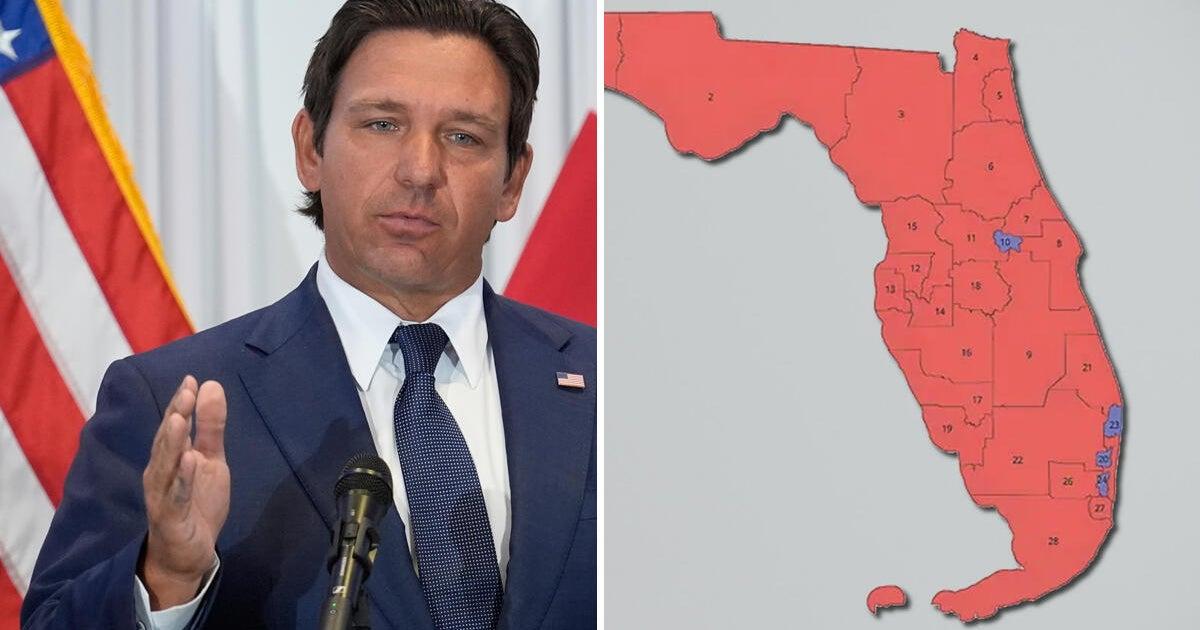
CBS News warned that any potential legal challenges would face an “uphill battle” since DeSantis appointed six of the seven justices on Florida’s Supreme Court.
NPR described the election administration stakes, saying Florida primaries are in August and that “You have to have the primary. You have to have the ballots printed,” adding that “Everybody needs to know what the districts actually are well in advance of both the primary and the general elections.”
Several outlets also tied the map to the possibility of seat changes and the political balance in the U.S. House, with ABC News saying the map could leave “just four Democratic-held districts” and with NPR reporting that the new map could position Republicans to win “four additional U.S. House seats.”
POLITICO reported that the new map could potentially push out “long-serving Rep. Debbie Wasserman Schultz,” and it also said opponents criticized “the way the map shifted minority communities into new districts.”