Full Analysis Summary
Petraeus on Greenland and geopolitics
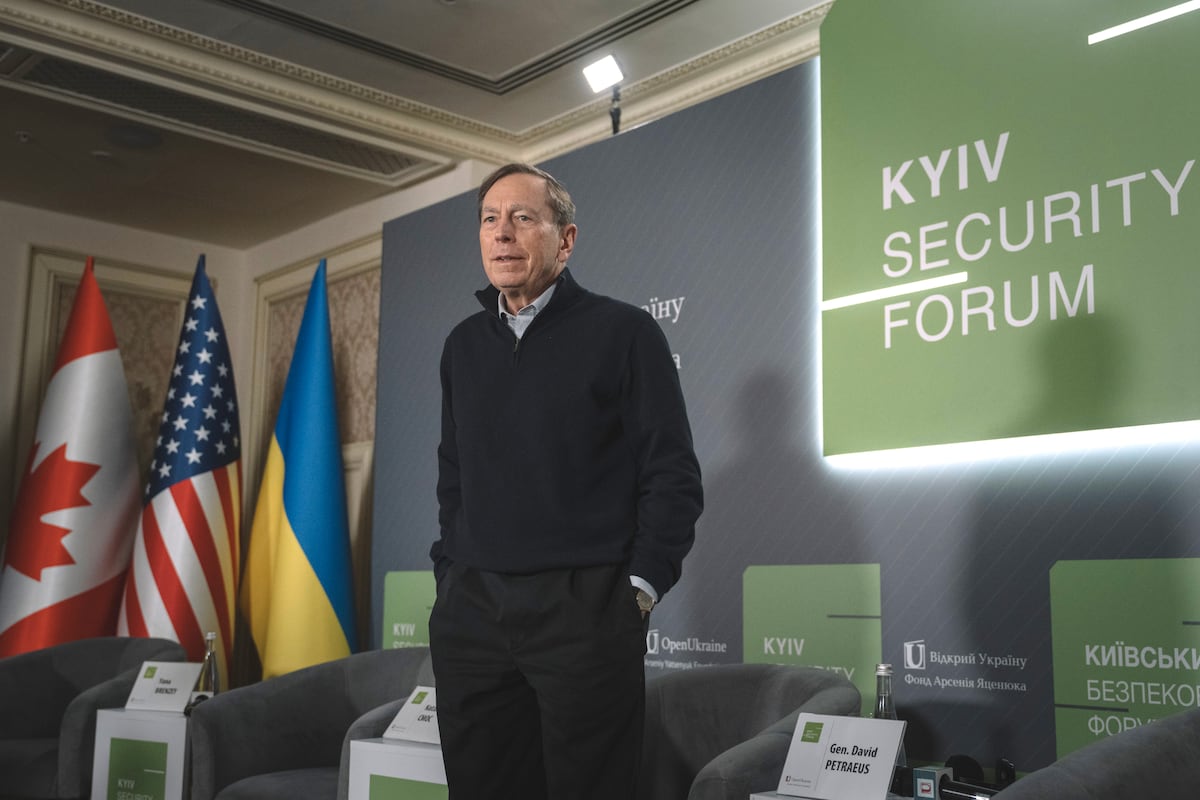
Former CIA director and retired general David Petraeus told EL PAÍS that he hopes President Trump’s repeated threats against Greenland are "just a negotiation strategy."
Both EL PAÍS English and El País report Petraeus welcoming a relative détente between Washington and Beijing, calling that bilateral relationship the world’s most important and placing the Greenland remark in that broader context of U.S. strategic maneuvering.
The interview pieces present Petraeus as cautiously optimistic about several global trends while explicitly noting his hope that the Greenland rhetoric is not a precursor to escalation.
Coverage Differences
Tone
Both EL PAÍS English (Western Alternative) and El País (Western Mainstream) report the same Petraeus quote about Greenland, but EL PAÍS English foregrounds Petraeus’s past as a "one-time Trump Cabinet contender," which frames his comment as coming from someone with closer ties to the Trump political orbit; El País emphasizes his credentials (age and Princeton PhD) and closes with a question about possible U.S. overreach, giving the piece a slightly more measured framing. The difference reflects editorial choices: EL PAÍS English highlights political proximity, while El País stresses institutional stature and caution about policy risks.
Petraeus on U.S.–China ties
Both versions of the EL PAÍS interview highlight Petraeus's view that a U.S.–China détente is the world's most important bilateral relationship and that the relative entente is beneficial, presenting this as a core strategic priority for global stability.
The articles echo Petraeus's cautious endorsement of the broader direction in great-power ties while signalling that such moves should be managed carefully.
The reporting is consistent in portraying Petraeus as valuing the U.S.–China relationship above other bilateral ties, using slightly different descriptive language but conveying the same central assessment.
Coverage Differences
Narrative Framing
Both sources report Petraeus welcoming the U.S.–China entente, but EL PAÍS English frames it as "vital for the world" and links it directly to Petraeus’s biography (noting a potential political link to Trump), whereas El País calls it "the world’s most important" relationship and pairs that line with Petraeus’s age and academic credentials. The two phrasings convey the same substantive position but differ in rhetorical emphasis.
Petraeus on regional conflicts
Both articles report Petraeus’s assessment that Ukraine is stronger vis-à-vis Russia thanks to support from the EU, NATO and the U.S.
They say he advocates increasing sanctions to press Moscow toward negotiations.
The articles present his judgment that Iran is significantly weakened by mass protests, economic pressure and setbacks to its regional influence and nuclear program.
These consistent threads portray Petraeus as seeing Western support as decisive in Ukraine and as believing Iran’s regional standing has been eroded.
Coverage Differences
Missed Information
Both articles agree on Petraeus’s core assessments of Ukraine and Iran, but EL PAÍS English uses the phrase "judges Iran to be much weaker amid mass protests, economic and nuclear strains, and diminished regional influence," while El País lists specific factors including "setbacks to its nuclear program, diminished regional proxies and the loss of Syria as an ally." The two accounts overlap but El País provides slightly more detail on Iran’s geopolitical losses.
Coverage differences on Petraeus
The two pieces diverge slightly in tone and detail when covering Petraeus’s comments about the Americas.
Both report his view that the U.S. operation that captured Nicolás Maduro and brought him before justice is an improvement for the hemisphere.
EL PAÍS English says it "installed a U.S.-backed government led by Delcy Rodríguez".
El País explicitly notes the interview closes with a question about whether such U.S. actions risk overreach.
That closing question introduces a cautionary note not foregrounded in the EL PAÍS English snippet.
Coverage Differences
Contradiction
EL PAÍS English reports that the U.S. operation "captured Nicolás Maduro and installed a U.S.-backed government led by Delcy Rodríguez — and Maduro’s subsequent court appearance — as an improvement for the hemisphere," while El País phrases it as an operation that "captured Nicolás Maduro and brought him before justice" and adds an editorial question about whether U.S. actions risk overreach. The two accounts differ primarily in phrasing and the emphasis on potential U.S. overreach.