Full Analysis Summary
Hamdok's European peace push
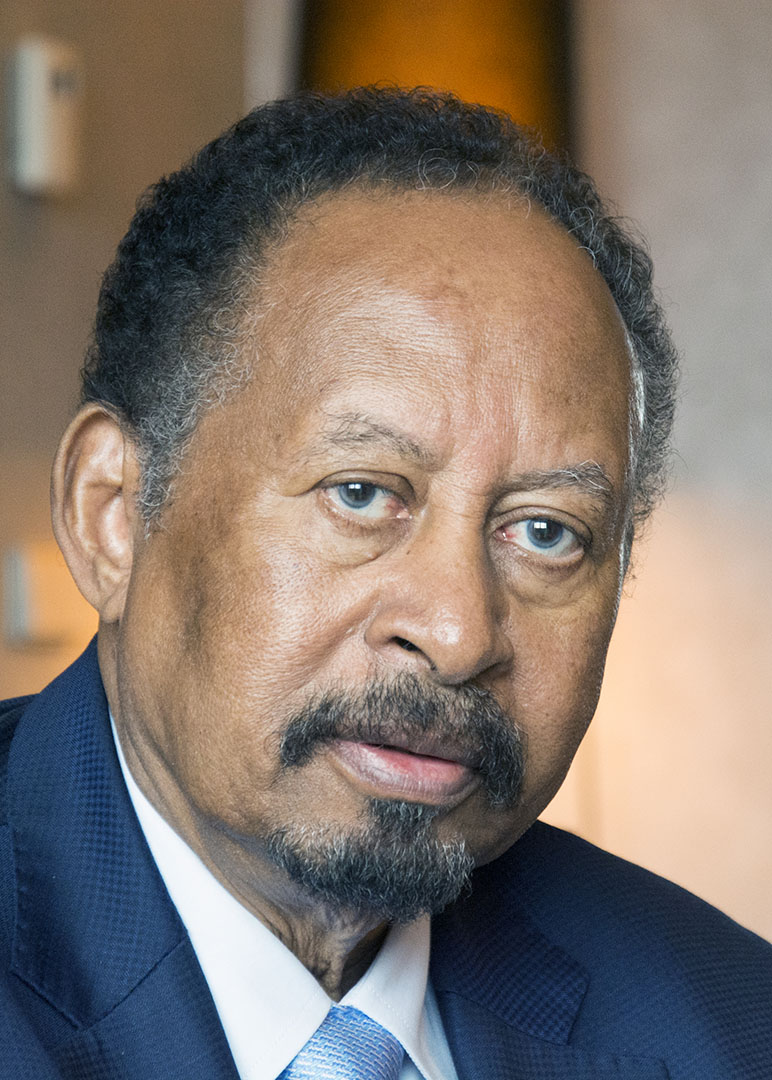
Former Sudanese prime minister Dr. Abdallah Hamdok visited The Hague as part of a European tour of France, the Netherlands, Norway, Germany and the UK to rally international support to end the war in Sudan.
He warned the conflict has produced 'the world's largest humanitarian catastrophe' and urged international bodies and governments to provide more aid and press for a political solution.
He told Radio Dabanga his meetings in Europe involved officials, think tanks, media and civil society to spotlight refugees' plight and press for a credible, civilian-led transition and sustainable peace.
The trip and his calls for immediate international action were framed around a three-track plan he outlined: an immediate ceasefire, prioritized humanitarian relief, and a political track built around a Round Table of diverse civilian forces to draft a peace agreement and organize Sudanese-Sudanese dialogue on transition.
Coverage Differences
Narrative focus / emphasis
Radio Dabanga (Other) emphasizes Hamdok’s immediate European tour, his warnings about a massive humanitarian catastrophe, the countries visited, and the use of meetings with officials and civil society to spotlight refugees and press for action — reporting his quotes about the tour and Round Table. Dabanga Radio TV Online (Other) focuses less on the logistics of the tour and more on long-term institutional reforms and the Quartet’s roadmap; it reports Hamdok praising the Quartet and advocating institutional change rather than foregrounding the tour itinerary. Both sources report Hamdok’s positions but foreground different aspects: one highlights mobilization and humanitarian alarm, the other structural reforms and alignment with the Quartet.
Hamdok's three-track plan
Hamdok's three-track plan calls for an immediate ceasefire and prioritizes humanitarian relief.
It also includes a political track centered on a Round Table preparatory committee of diverse civilian forces tasked with drafting a peace agreement and arranging a Sudanese-led transition.
Hamdok acknowledged that civilian forces are fractured and unarmed but said their leverage comes from popular mobilization in the streets, urging broad coordination, not perfect unity, among civilian groups to agree on core issues as a precondition for an effective political track.
Coverage Differences
Detailing of civilian role and tactics
Radio Dabanga (Other) reports Hamdok’s emphasis on civilian mobilization, acknowledging that civilian forces are fractured and unarmed but have power through popular mobilization and requiring broad coordination. Dabanga Radio TV Online (Other) supplements this by articulating specific institutional reforms and constitutional aims (new social contract, inclusive constitution, a national army representing all Sudanese) that Hamdok argues must underpin a sustainable transition. Radio Dabanga foregrounds the immediate political mechanics (Round Table, coordination), while Dabanga Radio TV Online frames long-term institutional design as essential to avoid a return to failure.
Hamdok on security reform
Hamdok publicly endorsed clearer rules for security institutions and praised the Quartet's roadmap, advocating a professional, apolitical security sector removed from the economy but charged with protecting society and the constitution.
He explicitly welcomed the Quartet's proposals for timelines, a full civilian transition, security and military reform, and the removal of forces that undermine political life, presenting these as aligned with Somoud's agenda for a post-conflict Sudan.
Coverage Differences
Policy detail vs. mobilization narrative
Dabanga Radio TV Online (Other) provides detailed policy prescriptions — e.g., the role of security institutions as professional and apolitical, and praise for the Quartet’s roadmap — framing Hamdok’s visit as endorsement of structural reform proposals. Radio Dabanga (Other) focuses more on the emergency humanitarian framing and on mobilizing international actors, so while both report Hamdok’s positions they emphasize different remedies: institutional reform (Dabanga Radio TV Online) versus immediate humanitarian relief and international pressure (Radio Dabanga).
Hamdok on Sudan's crisis
Hamdok framed the crisis as existential for Sudan.
He argued the old social contract had collapsed after decades of misrule and that Sudan must choose between becoming a new state or persisting in failure.
He and Somoud describe the conflict that began on April 15, 2023, as the deadliest in modern Sudanese history and part of a wider regional crisis.
He used his European engagements to press for both urgent humanitarian relief and a credible civilian-led, constitutional transition that addresses identity, diversity, wealth and power sharing.
Coverage Differences
Severity and historical framing
Dabanga Radio TV Online (Other) explicitly frames the conflict as “the deadliest in modern Sudanese history” and roots Hamdok’s arguments in a broader critique of 70 years of misrule and the need for a new social contract. Radio Dabanga (Other) likewise stresses the humanitarian catastrophe and international appeals but places more immediate emphasis on international mobilization and tangible steps like ceasefires and humanitarian corridors. Both portray severity, but Dabanga Radio TV Online connects it to longer-term state failure and constitutional reform while Radio Dabanga foregrounds current displacement and collapsed services.