Full Analysis Summary
Plans against Pope Francis
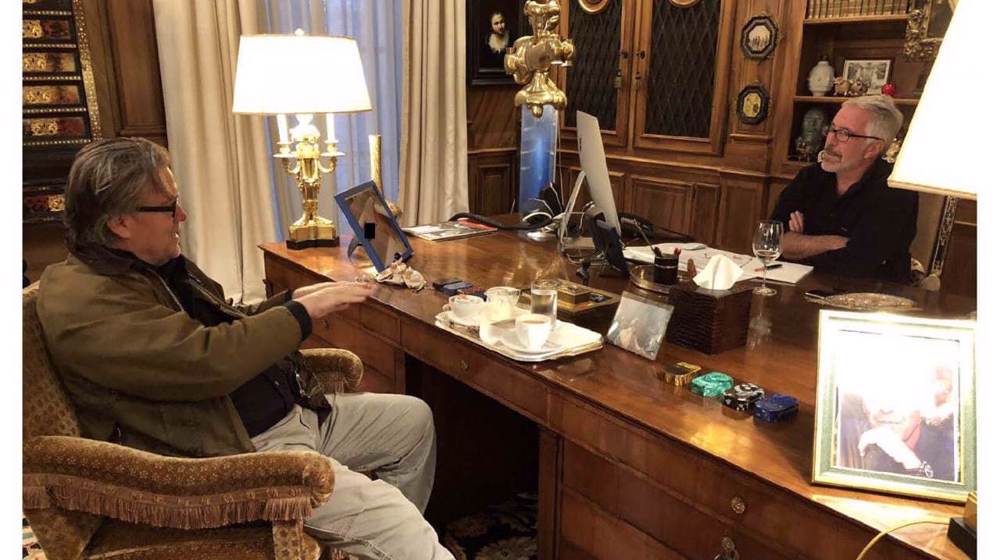
Justice Department records released in February 2026 show that former Trump adviser Steve Bannon privately discussed plans with convicted sex offender Jeffrey Epstein in 2019 to undermine Pope Francis.
The records include a message in which former Trump adviser Steve Bannon said he hoped to "take down (Pope) Francis."
The files report that former Trump adviser Steve Bannon saw Pope Francis as an obstacle to his nationalist-populist, "sovereigntist" agenda and courted convicted sex offender Jeffrey Epstein as a potential backer.
They also describe proposals to turn Frédéric Martel’s 2019 book In the Closet of the Vatican into a film with convicted sex offender Jeffrey Epstein as an executive producer, a proposal Martel says he rejected.
Coverage Differences
Tone
CNN (Western Mainstream) frames the records mainly as evidence that Bannon sought to weaponize faith for political ends and situates the plot within Bannon’s broader Rome projects; PressTV (West Asian) emphasizes the files’ revelation of a plot and repeatedly highlights Epstein’s role and prior convictions; Newser (Western Mainstream) presents a concise, bullet-point summary of the key items in the records, including the explicit Bannon quote. Each source reports the same core claim but emphasizes different aspects: CNN highlights the political-program context and Bannon’s broader Roman initiatives; PressTV foregrounds Epstein’s criminal history when reporting the files; Newser focuses on the direct messages and specific allegations.
Alleged book weaponization efforts
The records say Bannon tried to use Frédéric Martel’s book to embarrass Francis, proposing a film version and suggesting Epstein as an executive producer.
Martel says the film rights were already controlled by his publishers and that he refused the idea because he believed Bannon wanted to weaponize the book.
The files additionally show Epstein circulated anti‑Vatican articles to Bannon and that Epstein and Bannon exchanged content framing a choice between Francis and Bannon.
Coverage Differences
Narrative Framing
CNN reports that Martel’s film rights were already controlled by his publishers and emphasizes Bannon’s intent to “embarrass the pope,” while Newser quotes Martel saying he refused because he believed Bannon wanted to “weaponize the book.” PressTV reports the rejection as well but pairs it with wider reporting on Epstein’s contacts (including seeking Chomsky’s advice). Thus CNN frames the episode in terms of Bannon’s strategic campaign and legal hurdles in Rome; Newser stresses Martel’s refusal and motive; PressTV links the episode to Epstein’s broader network.
Critics' response to Bannon
Vatican observers and commentators quoted in the coverage criticized Bannon’s efforts as an attempt to merge political power and spiritual authority to embarrass or neutralize Pope Francis.
CNN quotes Francis biographers and Vatican observers who called the effort an attempt to weaponize faith for political ends and notes Bannon’s moves alienated some conservative allies in Rome.
Newser cites critics, including Austen Ivereigh and Rev. Antonio Spadaro, making similar points.
Coverage Differences
Source Emphasis
CNN emphasizes institutional and political consequences in Rome — noting alienation of conservative allies and legal/political pushback against Bannon’s Rome projects — while Newser focuses on named critics (Austen Ivereigh, Antonio Spadaro) and their characterization of the plan as merging spiritual authority and political power. PressTV similarly reports criticism but pairs it more explicitly with recounting Epstein’s broader contacts and legal history, linking institutional critique to the gravity of Epstein’s involvement. Each source thus reports critical reactions but selects different details to highlight.
Bannon and Epstein links
The files connect Bannon’s Rome initiatives to Epstein’s extensive contacts.
CNN details Bannon’s Rome projects — a proposed Breitbart bureau and a "political academy" at the Certosa di Trisulti run by Benjamin Harnwell — which faced legal and political pushback from Italian authorities.
PressTV reiterates Epstein’s history, saying he pleaded guilty in 2008, was arrested in 2019, and died in federal custody in 2019 in a death officially ruled a suicide.
Newser reports lewd and mocking messages from Epstein about Francis, including crude jokes and references such as inviting the pope for a "massage" and quoting Paradise Lost.
Coverage Differences
Unique Coverage
CNN uniquely reports on Bannon’s allied Rome infrastructure projects and the legal/political resistance they faced in Italy; PressTV uniquely reiterates Epstein’s full criminal timeline and the official ruling on his death; Newser uniquely highlights the lewd, mocking tone of Epstein’s messages about Francis. Each source thus contributes distinct factual emphasis: institutional projects (CNN), Epstein’s criminal record and death (PressTV), and explicit mocking content (Newser).
2019 outreach against Pope Francis
The Justice Department files, as reported across outlets, present a picture of coordinated outreach between Bannon and Epstein in 2019 aimed at undermining Pope Francis.
The outlets differ on what they stress: CNN underscores political strategy and Rome-based pushback; PressTV stresses Epstein’s criminal history and network, including outreach like seeking Noam Chomsky’s advice and political critiques of official handling of documents; and Newser emphasizes the explicit messages and reactions from named critics.
The records raise questions about the intersection of political strategy, media operations, and the involvement of a convicted sex offender in campaigns against a religious leader.
Coverage Differences
Contradiction
There is no direct factual contradiction among the three sources about the central claims in the released files — all three report that Bannon messaged Epstein saying he intended to “take down” Pope Francis and that Martel declined the film idea — but they differ in emphasis and detail selection. CNN presents the context of Bannon’s Rome ambitions and their legal problems; PressTV frames the story tightly around Epstein’s criminal record and networks and explicitly recounts the official ruling on Epstein’s death; Newser condenses the story into a pointed summary emphasizing the messages and the mocking content. These are differences of emphasis and framing rather than contradictions about the core facts in the files.