Full Analysis Summary
France-US diplomatic spat
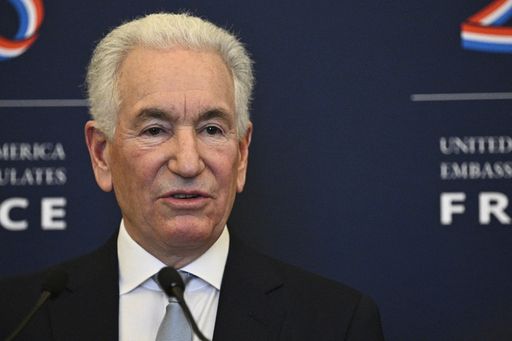
France’s foreign minister, Jean‑Noël Barrot, has barred the U.S. Ambassador to France Charles Kushner from direct access to French government ministers after Kushner failed to attend a formal summons to explain U.S. comments about the death of far‑right activist Quentin Deranque.
The ministry said the decision followed Kushner’s absence at a 7 p.m. meeting and allows only routine exchanges in the meantime.
France 24 reported the ban in a statement issued 23–24 Feb 2026.
The Guardian and The Boston Globe described the summoning and subsequent restriction as a response to U.S. embassy reposts of State Department comments about Deranque’s death, and NPR framed the move as an escalation of a diplomatic spat.
Al‑Jazeera similarly reported that the restriction was imposed after Kushner did not appear for the official summons and that the ministry said it reflected a failure to meet ambassadorial duties.
Coverage Differences
Tone
France 24 frames the decision in restrained diplomatic language and explicitly notes that reconciliation remains possible, while The Guardian and The Boston Globe present the measure as part of a sharper diplomatic dispute and include more context about the embassy reposts; NPR emphasizes an escalation in bilateral relations. These tonal differences reflect France 24’s concise ministry‑statement focus versus the broader news narratives of the Western mainstream outlets.
Detail emphasis
The Guardian and The Boston Globe emphasize the State Department repost and the Bureau of Counterterrorism language about “violent radical leftism,” whereas France 24’s brief summaries focus on the procedural outcome (access barred) and the possibility of reconciliation. This shows different outlets prioritizing either the content that prompted the summons or the diplomatic action itself.
Background detail
Some outlets (The Guardian) include background on Kushner’s personal history and broader international reactions, while others (Al‑Jazeera, France 24) stick closely to the ministry’s statement about protocol and duties. That alters how readers perceive the severity or political context of the sanction.
Summons and no‑show
The summons itself - and Kushner’s failure to attend - was widely reported with matching logistical details.
The meeting was called for Monday at 7 p.m., and Kushner sent a senior embassy official in his place, citing "personal commitments" or "personal reasons," language repeated across several outlets as the embassy’s explanation.
Multiple outlets quote the ministry as treating the no‑show as a breach of ambassadorial duties and diplomatic protocol, prompting the decision to restrict ministerial access until Kushner responds to the summons.
Coverage Differences
Language of excuse
Outlets vary slightly in the phrasing they attribute to the embassy official who attended: France 24 quotes “personal reasons,” Al‑Jazeera and Guardian report “personal commitments,” and The Boston Globe and NPR describe the absence as a failure to attend. The different verbatim phrases—'personal reasons' vs 'personal commitments'—reflect either embassy wording or paraphrase choices by outlets.
Protocol framing
Western mainstream outlets (The Boston Globe, NPR, The Guardian) highlight Foreign Minister Barrot’s language that the absence violated diplomatic protocol and 'will affect his capacity to exercise his mission,' whereas Al‑Jazeera emphasizes the ministry’s statement that the restriction was due to a 'clear lack of understanding' of ambassadorial duties—stronger, more critical phrasing.
Time detail
Several sources explicitly state the summons was for a 7 p.m. Monday meeting (The Guardian, Al‑Jazeera), while others note only that Kushner 'failed to attend' or 'did not attend'—a minor difference in reported specificity tied to editorial choices.
Embassy repost sparks summons
Across outlets, the immediate cause for the summons was the U.S. embassy’s reposting of State Department remarks, including a Counterterrorism Bureau post.
The remarks warned of rising 'violent radical leftism' after the Feb. 12 clashes in Lyon that left Quentin Deranque, 23, with fatal head injuries.
Outlets underscore that the repost and its translated French wording prompted French officials’ protest.
Coverage stresses the reposted language itself and links it to the ministry’s demand for an explanation.
Coverage Differences
Framing of U.S. comments
The Guardian and The Boston Globe explicitly quote the Bureau of Counterterrorism language “violent radical leftism,” while TRT World and Bangkok Post also cite the repost but add context such as social‑media monitoring or election timing; this shows consensus on the repost’s centrality but variation in how much surrounding context each outlet supplies.
Contextual emphasis
Bangkok Post highlights the domestic political context by noting the episode has 'heightened tensions ahead of France’s 2027 presidential election,' whereas The Guardian and Boston Globe focus on the diplomatic fallout and the substance of the repost itself.
Attribution of repost
Most outlets attribute the repost to the U.S. Embassy or State Department; Guardian frames it as 'the U.S. embassy reposting State Department remarks' while TRT World and Boston Globe note a French‑language repost by the embassy, indicating slight variation in emphasis on who first published or translated the remarks.
Diplomatic response to Kushner
France framed the measure as a response to breached protocol and left open the possibility of resuming normal ministerial contact if Kushner answers the summons.
France 24 explicitly noted reconciliation remains possible.
TRT World and Al-Jazeera said the embassy may continue routine work but lose direct ministerial access.
The Boston Globe cited Barrot saying Kushner's absence 'will affect his capacity to exercise his mission.'
The Guardian reported that the incident has provoked broader international criticism, including from Italy's prime minister, underlining the diplomatic sensitivity.
Coverage Differences
Severity of sanction
France 24 and TRT World stress that routine embassy work can continue and reconciliation remains possible, whereas The Boston Globe and The Guardian stress the practical effect—Barrot’s comment that the absence 'will affect his capacity to exercise his mission'—which conveys a stronger operational impact.
Critical phrasing
Al‑Jazeera reproduces the ministry’s particularly critical wording about Kushner’s 'clear lack of understanding of the self‑evident requirements of the duties of an ambassador,' which is stronger in tone than some Western mainstream summaries that concentrate on procedural consequences.
International reaction
The Guardian uniquely highlights that the episode 'has provoked international friction and criticism from French officials and Italy’s prime minister,' a detail not present in every snippet and which broadens the story beyond bilateral Franco‑U.S. ties.
Reporting gaps and angles
Reporting across outlets contains some gaps and unique angles.
Several international outlets focused on the diplomatic mechanics and the reposted 'violent radical leftism' language.
Bangkok Post tied the episode to domestic election stakes ahead of France’s 2027 presidential vote.
At least two bulletin-style sources in the dataset (News18 and Delaware Public Media) only provided meta fragments requesting the full article, indicating missing content or unavailable full texts in those feeds.
Those meta fragments show that not all sources supplied complete articles for this update, which affects how much additional context each could offer.
Coverage Differences
Missed information
News18 and Delaware Public Media supplied only meta fragments asking for the full article text rather than reporting substantive details; this absence is itself a difference in coverage completeness compared with outlets that provided full reporting.
Unique angles
Bangkok Post locates the incident in French domestic politics by noting increased tensions ahead of the 2027 presidential election, an angle absent from many Western outlets that concentrated on diplomatic protocol and the reposted comments.
Narrative focus
Western mainstream outlets tended to foreground diplomatic protocol (summons, breach, access denied), while some non‑Western or regional outlets emphasized the policy language that triggered the summons and the domestic political context; together these differences shape how the story is perceived across audiences.