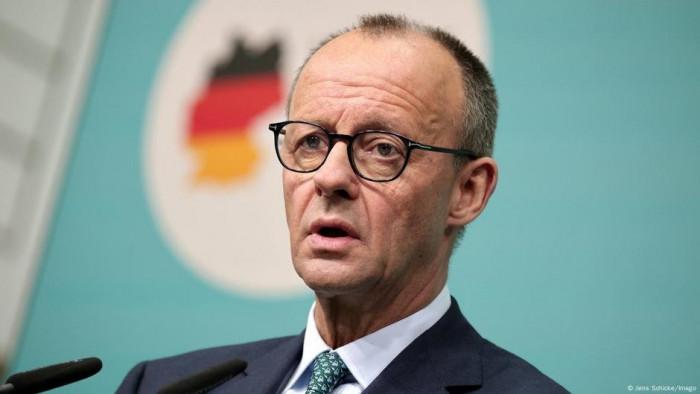
Friedrich Merz Sets Conditions For Sanctions Relief For Iran After Cyprus EU Summit
Key Takeaways
- Merz envisions sanctions relief for Iran only after a comprehensive agreement.
- Merz denounces exemptions on Russian oil sanctions and urges greater Moscow pressure.
- Iran war purportedly gives Russia a lifeline by easing sanctions on oil.
Sanctions, ceasefire, and conditions
A live-ticker account from DIE WELT ties the Iran file to the broader Middle East conflict, describing a “fragile ceasefire between Israel and Hezbollah” that was “on the brink of ending.”
“The fragile ceasefire between Israel and Hezbollah stood on the brink of ending”
In that same account, Chancellor Friedrich Merz is presented as envisioning “sanctions relief for Iran — under certain conditions,” with the timing linked to a “comprehensive agreement” with the United States.
DIE WELT says Merz set out three conditions after an EU summit in Cyprus: “the permanent opening of the Strait of Hormuz,” “the end of Iran's nuclear program,” and that “Israel must no longer be threatened.”
The German chancellor also insisted there must be “a quick, clear understanding for free navigation through the Strait of Hormuz,” and he conceded “But we are not there yet.”
The article further states that EU heads of state and government “had in Cyprus discussed the Iran war with representatives from the Middle East and the Gulf region,” placing the sanctions discussion inside a wider diplomatic frame.
In parallel, DIE WELT reports that “At the end of February, the United States and Israel began attacking Iran,” and that “The regime's leadership figures in Tehran were eliminated,” before noting a leadership succession in Tehran.
It adds that “At the head of state, Modschtaba Chamenei succeeded his killed father Ajatollah Ali Chamenei,” using the names as given in the report.
Diplomacy and travel signals
Alongside the sanctions conditions, DIE WELT reports movement in Iran’s diplomacy, stating that “Iran's foreign minister apparently travels to Pakistan.”
It says “Iran's Foreign Minister Abbas Araghtschi travels to Pakistan for talks,” and that he would be “accompanied by a small government delegation, two Pakistani government officials said.”

The same report adds that “IRNA confirmed Araghtschi's trip,” reporting that the foreign minister would “arrive in Pakistan later on Friday and would also travel to Oman and Russia.”
DIE WELT frames the focus of the trip as “the 'situation related to the war waged by the United States and Israel against Iran.'”
The report also links the diplomatic effort to the state of negotiations, saying “Iran negotiations, according to US insiders, are endangered by Trump's threats.”
In that section, it claims that “the prospect of further personal peace talks between Iran and the United States is being jeopardized” by “threats and provocative social media posts by Donald Trump,” and it says “the president's posts on Truth Social” and “the decision to continue the naval blockade of Iranian ports” harmed talks “with mediators such as Pakistan.”
It further quotes Trump’s statements as relayed in the ticker: “blow up the rest of your country” and “send it back to the Stone Age.”
The report says Iranian negotiators “also view the posts critically,” and it attributes to “an Iranian representative and an Arab diplomat” the view that the statements aimed “to humiliate Tehran's leadership and make them less inclined to reach an agreement.”
Nuclear rhetoric and US posture
DIE WELT also places US messaging about escalation directly into the Iran timeline, reporting that “US President Trump rules out the use of nuclear weapons.”
“The German chancellor, Friedrich Merz, strongly criticized the United States' decision to grant temporary exemptions for buying Russian oil, describing them as a completely wrong step for any reason and stressing the need to increase pressure on Moscow rather than ease it”
The ticker says: “No, I would not use it, Trump told reporters at the White House,” and it adds that “A nuclear bomb should never be used by anyone, the president clarified.”
It frames the exchange as a response to Trump’s earlier warning on April 7, which the report quotes as: “An entire civilization will die tonight and never come back to life,” Trump warned.
The same section says Vice President J.D. Vance stated that “the United States has tools in the toolbox whose use we have not yet decided to employ in the conflict with Iran.”
DIE WELT then notes that “The White House subsequently denied that Vance had threatened the Iran with the use of nuclear weapons,” keeping the record of statements distinct.
The report also includes a separate US diplomatic note about Iran’s participation in sport, saying “Rubio: The Iranian national team is welcome at the World Cup,” and quoting Marco Rubio: “No one from the United States has told them they cannot come.”
Taken together, the report’s juxtaposition of nuclear denial, earlier apocalyptic threats, and a denial of Vance’s alleged nuclear threat is used to show how US rhetoric is moving alongside the sanctions and negotiation track.
European oil exemptions and Iran-linked shipping
While the Iran-focused ticker discusses sanctions relief and negotiations, the other two reports in the source set pivot to how the Iran war is affecting European policy and markets.
Al Jazeera net cites Financial Times reporting that “The Iran war has given Russia a lifeline,” describing how the conflict “diverted the attention of the Trump administration away from talks on stopping the war in Ukraine.”
It says “Russia benefited from the war in Iran by lifting the United States’ sanctions on Russian oil,” and it adds that the newspaper reported “the war in Iran 'provided Russia with an unexpected lifeline' as oil prices rose,” with gains “estimated at about $150 million a day.”
Al Jazeera net also reports that “the U.S. Treasury Department issued on Thursday a temporary 30-day license allowing countries to purchase Russian crude oil and petroleum products stranded at sea,” and it links the move to shipping conditions by saying it was “in a move aimed at easing pressure on global supplies as shipping traffic in the Strait of Hormuz was nearly halted.”
In the same account, German Chancellor Friedrich Merz is quoted criticizing the US decision, saying: “Easing sanctions now, for any reason, is wrong. We believe this is the wrong path.”
The report further says that French President Emmanuel Macron stated that closing the Strait of Hormuz “in no way justifies lifting sanctions on Russia,” and it says Macron confirmed after a virtual meeting of G7 leaders that Western countries should “continue to pressure Moscow to stop the war in Ukraine.”
The second source, Al-Mashhad al-Arabi, adds a separate layer by reporting Merz’s criticism of the lifting of sanctions on Russian oil, describing it as “a completely wrong step for any reason” and emphasizing “the need to increase pressure on Moscow rather than ease it.”
Diverging frames: Iran talks vs. Russia pressure
The sources present overlapping names and policy linkages, but they frame the same geopolitical moment differently—especially around sanctions and pressure.
“Financial Times reports that the war in the Middle East diverted the attention of the Trump administration away from talks on stopping the war in Ukraine, citing four European diplomats involved in those talks”
DIE WELT’s live ticker presents Merz as tying any “sanctions relief for Iran” to a “comprehensive agreement” that requires “the permanent opening of the Strait of Hormuz” and “the end of Iran's nuclear program,” while also insisting “Israel must no longer be threatened.”
In contrast, Al-Mashhad al-Arabi centers Merz’s criticism of US “temporary exemptions for buying Russian oil,” calling them “a completely wrong step for any reason” and stressing “the need to increase pressure on Moscow rather than ease it.”
Al Jazeera net, citing Financial Times, frames the Iran war as producing a “lifeline” for Russia, saying Russia benefited from the US lifting sanctions on Russian oil and that oil gains were “estimated at about $150 million a day.”
That same Al Jazeera net account also quotes Merz saying “Easing sanctions now, for any reason, is wrong. We believe this is the wrong path,” and it reports Macron’s position that closing the Strait of Hormuz “in no way justifies lifting sanctions on Russia.”
Meanwhile, DIE WELT’s ticker says the German government is willing to “gradually ease sanctions against Iran” only if there is “a comprehensive agreement on the reopening of the Strait of Hormuz.”
Across the three sources, the same political actors—Friedrich Merz, Donald Trump, and Emmanuel Macron—are quoted or described in ways that align with either “easing” tied to conditions or “pressure” against Russia, with the Strait of Hormuz functioning as the connective thread.
More on Iran

King Charles III and Queen Camilla Begin Four-Day US State Visit With Trump Tea
10 sources compared

Oil Prices Rise as US-Iran Peace Talks Stall and Strait of Hormuz Remains Constrained
14 sources compared
Abbas Araghchi Arrives in Russia for Talks With Vladimir Putin to End U.S.-Israel War on Iran
33 sources compared

Abbas Araghchi Meets Vladimir Putin in Russia as US-Iran Talks Stall
20 sources compared