
Fusion Startups Debate IPO Timing as TAE Technologies and General Fusion Plan Mergers
Key Takeaways
- Fusion startups pursue IPOs as investor funding rises.
- Disagreements over IPO timing and business focus shape startup strategies.
- Fusion Fest in London highlighted divergence while funding remains buoyant.
Fusion IPOs and splits
Cracks are starting to form on fusion energy’s funding boom, TechCrunch reports from The Economist’s Fusion Fest in London last week, where founders and investors debated two key questions: “When should fusion startups go public?” and “are side businesses a distraction?”
“The Trump universe is now venturing into civilian nuclear fusion”
The article says the overall mood remained “buoyant,” lifted by fusion startups’ fundraising haul of “$1.6 billion in the last 12 months.”
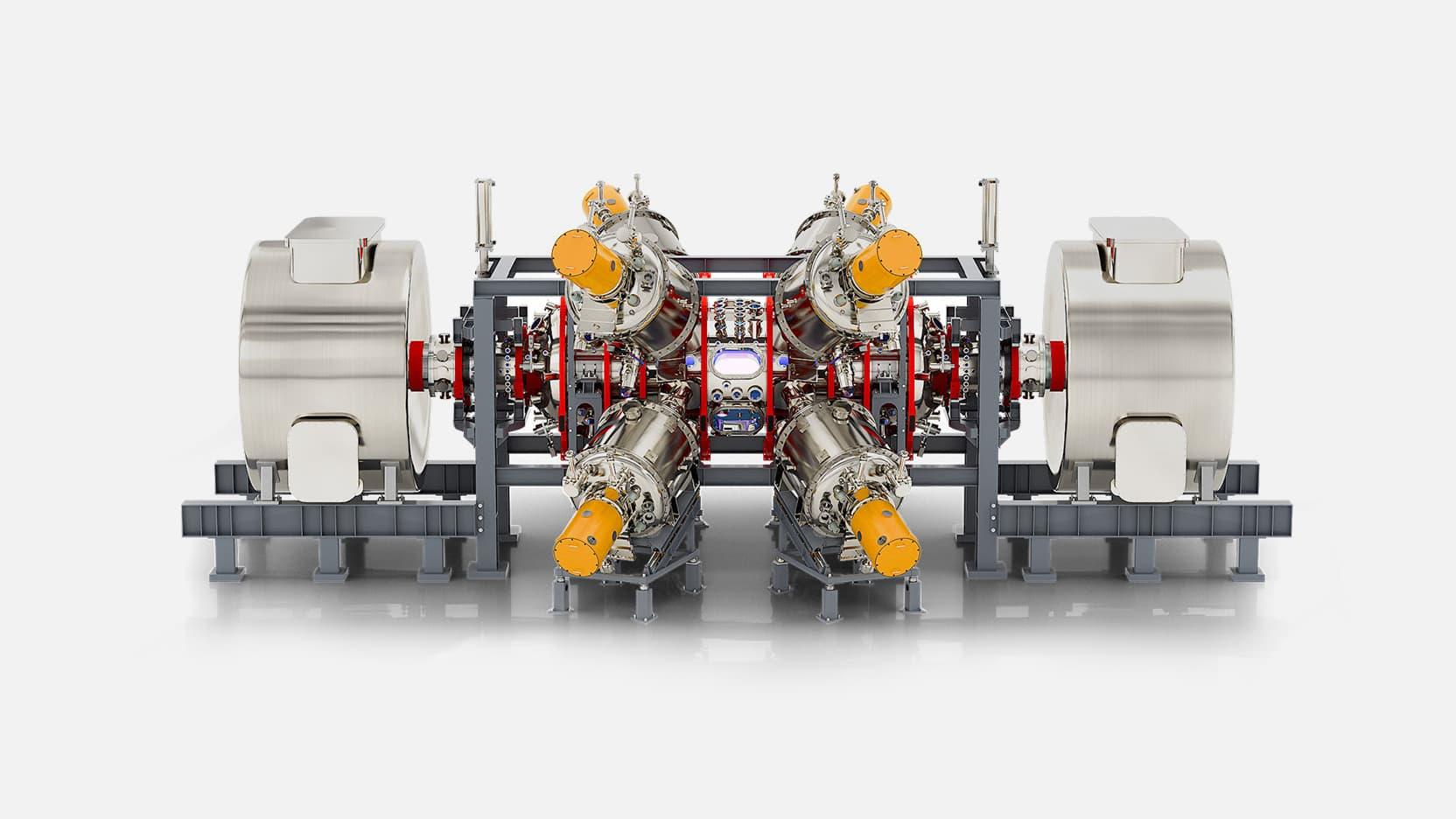
TechCrunch describes how, in the last four months, TAE Technologies and General Fusion announced plans to merge with publicly traded companies, with investors seeing an opportunity to “cash out.”
It adds that not everyone agreed on timing, with many worried these companies were going public “far too early” and had not achieved key milestones that some view as vital.
The mezha.net rewrite, also referencing Techcrunch and Fusion Fest in London, frames the same split as disagreements over IPO timing and the role of side ventures.
In that account, the sector’s investment volume is again given as “about $1.6 billion” in the last 12 months, while the strategic question remains whether the industry can coordinate how it uses that money.
TAE, General Fusion deals
TechCrunch says TAE announced its merger with Trump Media & Technology Group in December, and while the deal is “not yet completed,” it reports that the fusion side of the business has already received “$200 million of a potential $300 million in cash from the deal.”
It adds that the remainder will reportedly land in TAE’s bank account once it files the “S-4 form with the U.S. Securities and Exchange Commission.”

For General Fusion, TechCrunch says it announced in January it would go public via a reverse merger with a special purpose acquisition company, and that the deal “could net the company $335 million and value the combined entity at $1 billion.”
The mezha.net account echoes those figures, saying TAE’s deal would provide “about $200 million from potential $300 million,” and that General Fusion’s reverse merger could bring “around $335 million” with a valuation “approach one billion dollars.”
TechCrunch also ties the funding pressure to General Fusion’s earlier difficulties, saying that before the merger announcement it was struggling to raise funds and “laid off 25% of its staff” as CEO Greg Twinney posted a public letter pleading for investment.
It then says General Fusion received “a $22 million lifeline” in August, but that “sort of money doesn’t last long in the fusion world,” where equipment, experiments, and employees “don’t come cheap.”
Breakeven and revenue bets
Both TechCrunch and mezha.net describe how the industry’s internal disagreements are anchored to scientific and financial milestones that have not yet been reached.
“It happens in every emerging industry: founders and investors push toward a common goal, until the money starts to roll in and that shared vision begins to diverge”
TechCrunch says “Neither company has hit scientific breakeven,” describing it as “a key milestone that shows a reactor design has power plant potential,” and it adds that “Many observers doubt they’ll hit that mark” before other privately held startups do.
It also reports that one executive told it that if they were in those shoes, they “’re not sure how they would fill time on quarterly earnings calls if the companies didn’t hit scientific breakeven soon.”
The mezha.net account similarly says “neither company has yet reached scientific breakeven,” and it frames the milestone as “the moment when energy produced exceeds the costs of starting the reactor.”
On the question of monetization, TechCrunch says TAE has already started marketing other products, including “power electronics and radiation therapy for cancer,” while General Fusion “hasn’t revealed any such plans.”
The mezha.net rewrite adds that some companies choose monetization through byproducts, while others worry that “ancillary assets could distract from the core,” and it quotes an “anonymous investor” warning that fusion startups could be “distracted by profitable, but adjacent, businesses and fall off the lead.”
Trump Media joins TAE
BFM reports that the Trump universe is now venturing into civilian nuclear fusion through a partnership between Trump Media & Technology Group (TMTG) and California-based TAE Technologies.
It says the aim of the collaboration is to create “one of the first publicly traded nuclear fusion companies,” and it describes an aggressive timetable to build “as early as 2026, 'the world's first industrial-scale fusion power plant' with a capacity of 50 megawatts of electrical power.”
BFM adds that at the closing of the deal, announced for mid-2026, the shareholders of TMTG and TAE will each hold “50%” of the new company, valued at “$6 billion.”
It also says the company will be co-led by Devin Nunes, the CEO of TMTG, and Michl Binderbauer, the CEO of TAE.
In the same account, BFM states that TMTG went public in March 2024 and that it owns Truth Social, the Truth+ streaming platform, and Truth.Fi, which offers fintech services.
BFM further quotes the TAE press release that “Fusion power plants should provide affordable, abundant, and reliable electricity that would help America win the AI revolution and maintain its global economic dominance,” tying the fusion pitch to AI-driven demand.
European fusion and de-risking
BFM expands beyond the TAE-TMTG deal to describe other fusion efforts in Europe and the financing logic behind them.
“Big money is pouring into fusion startups, but disagreements over IPO timing and focus on side businesses could determine which companies reach commercial viability”
It says that in Europe, beyond the international ITER research project, startups include Isère-based Renaissance Fusion, which is developing a magnetic confinement reactor of the “stellarator” type alongside the Commissariat à l'énergie atomique (CEA).
BFM says Renaissance Fusion has secured institutional funding via Crédit Mutuel Impact and from the American LowerCarbon Capital, founded by Chris Sacca.
It also describes GenF in Gironde, supported by Thales, Assystem, and Dassault, developing a laser-confinement fusion reactor aimed at replacing by 2050 the “900 MW reactors,” described as the oldest in the French fleet.
The piece says the goal of these companies is first to “de-risk” fusion technologies, and it adds that many are building expertise in materials chemistry they hope to commercialize in the shorter term.
It also notes that for now these reactor projects are not yet mature, and it says “a tighter market is anticipated in the coming years.”
More on Other

Israel Intensifies Ceasefire Violations, Establishing ‘Yellow Line’ in Southern Lebanon
37 sources compared

Pope Leo XIV Leads Open-Air Mass in Douala as 120,000 Attend
15 sources compared

Israel And Lebanon Hold Historic Talks In Washington To Disarm Hezbollah
18 sources compared

NASA Artemis II Crew Returns Safely After Record-Breaking Moon Voyage
16 sources compared