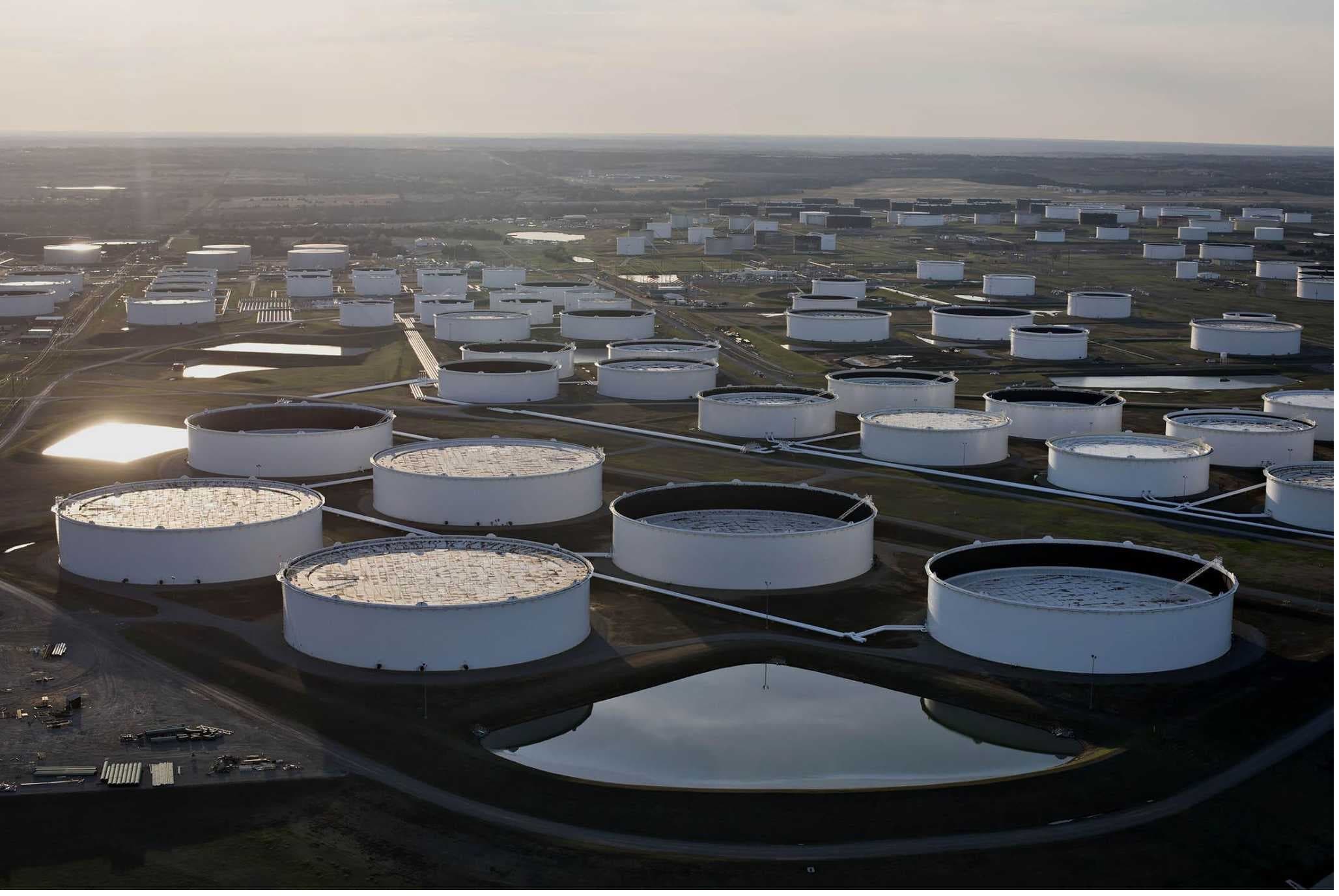
G7 Backs Release Of Strategic Oil Reserves To Ease Strait Of Hormuz Supply Choke
Key Takeaways
- G7 countries back a joint release of strategic petroleum reserves.
- Planned release intends to ease oil market strain and calm prices.
- Disruptions to Middle East oil flows at the Strait of Hormuz prompted action.
G7 support and meeting
G-7 energy ministers signalled support in principle for using strategic petroleum reserves to calm markets after supply through the Strait of Hormuz was disrupted, and the IEA convened ministers in Paris to discuss the option.
“The G-7 group of the world’s most advanced economies support in principle the idea to release strategic petroleum reserves to calm the market as supply from the Middle East is choked at the Strait of Hormuz”
OilPrice reported that “The G-7 group of the world’s most advanced economies support in principle the idea to release strategic petroleum reserves to calm the market as supply from the Middle East is choked at the Strait of Hormuz,” and noted the meeting hosted by the IEA where “IEA Executive Director Fatih Birol said that the group discussed all available options to stabilize the market, including the possible release of emergency stockpiles held by IEA member countries.”
Tekedia framed this as a coordinated, IEA-linked response that could be among the largest such actions in history if approved, describing the prospect as an IEA-coordinated action by member nations and noting its historic scale.
Size of reserves considered
Officials and analysts cited the large scale of the IEA’s emergency stocks and the potential size of any coordinated release: the agency’s member governments hold “more than 1.2 billion barrels of public emergency oil stocks, in addition to roughly 600 million barrels of industry inventories,”
while reporting on discussions suggested a coordinated G7/IEA release could be about 300–400 million barrels, roughly 25–35% of the IEA’s collective reserves.
OilPrice provided the aggregate IEA stock figures, and Tekedia estimated the possible G-7/IEA joint release at “Around 300 million to 400 million barrels roughly 25-35% of the IEA’s collective ~1.2 billion barrels in reserves held by its 32 members,” which market commentators said would exceed the 2022 emergency release.
Conflicting price signals
Market reaction was rapid but the reported price movements differ between accounts: OilPrice said reports of an IEA-proposed largest-ever release helped push Brent “to settle below $90 per barrel,”
“The G-7 group of the world’s most advanced economies support in principle the idea to release strategic petroleum reserves to calm the market as supply from the Middle East is choked at the Strait of Hormuz”
while Tekedia recorded a much higher intraday spike and subsequent pullback—Brent “spiked as much as 25–29% earlier today, peaking near $119–120 per barrel” before retreating to the low-$100s after news of talks.
OilPrice also linked market moves to political remarks, noting the pullback was “also helped by the market apparently believing U.S. President Donald Trump’s comments that the war in Iran ‘is very complete, pretty much’,” whereas Tekedia highlighted the sensitivity of markets to the mere prospect of coordinated releases, reporting Brent around $102–107 after the initial moves.
Rationale and limits
Proponents argue the coordinated release would stabilize prices and ease inflationary pressures while critics and analysts warn it is a temporary measure that does not resolve the underlying geopolitical disruptions.
Tekedia summarised the policy goals: the action aims to “stabilize markets, curb inflation risks from high energy costs, and mitigate supply shocks,” and cautioned it is a “one-time” buffer that “doesn’t fix underlying supply issues” and could leave reserves depleted.
OilPrice’s account of G-7 ministers emphasised vigilant monitoring and coordination with the IEA and partners as they consider “implementation of proactive measures to address the situation, including the use of strategic reserves.”
Political uncertainty persists
Key political dynamics and the final decision remain unresolved: Tekedia reported there was strong support from the US and some other members but that “No final decision has been publicly confirmed yet — reports indicate strong support at least from the US and two others, but others are still assessing,”
“The G-7 group of the world’s most advanced economies support in principle the idea to release strategic petroleum reserves to calm the market as supply from the Middle East is choked at the Strait of Hormuz”
while France explicitly described reserves use as “an option being considered,” according to officials including President Emmanuel Macron.
OilPrice likewise described G-7 ministers as “coordinating within the G-7 and with our international partners, IEA member countries, and beyond,” signalling active diplomatic engagement as ministers monitor the evolving supply disruption at the Strait of Hormuz.
More on Iran
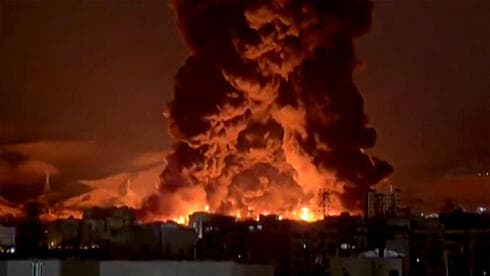
US obliterates military targets on Iran’s Kharg Island, Trump warns
13 sources compared
US Deploys About 2,500 Marines to Middle East After Iran Attacks Gulf Shipping
33 sources compared
FBI Warns of Iranian Drone Plot Based on Unverified Tip; California Says No Credible Threat
10 sources compared

White House Demands ABC Retract Report Claiming Iran Sought To Launch Drone Attacks On California
11 sources compared