Africa06 February, 20262 min read
Gaddafi Loyalists Pack Bani Walid for Funeral of Assassinated Saif al-Islam Gaddafi
This article is an automated aggregation of coverage from news outlets. Our editorials offer in-depth analysis curated by the NewsCord team.
Thousands packed Bani Walid to attend Saif al-Islam Gaddafi's funeral. Saif al-Islam Gaddafi was shot dead at his Zintan home by unidentified masked gunmen.

7 outlets told this the same way.
Burial in Bani Walid
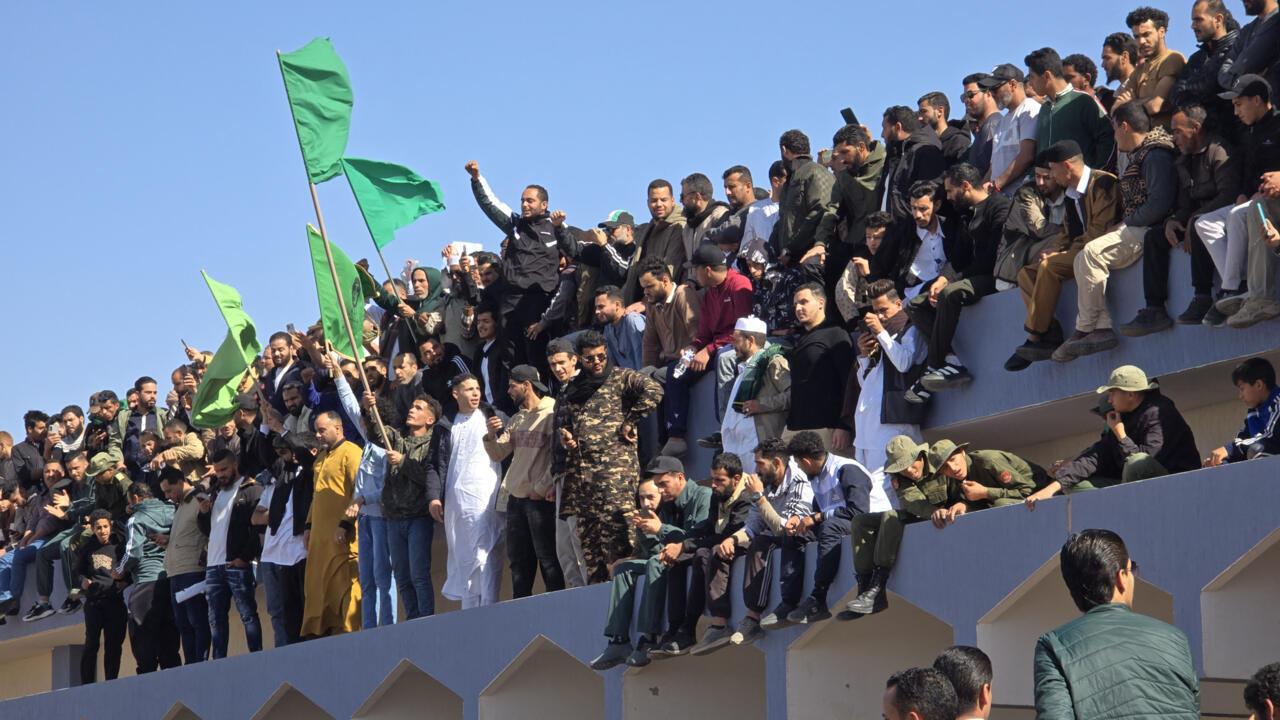
Thousands of loyalists gathered in the southern coastal town of Bani Walid on Friday for the burial of Saif al‑Islam Gaddafi, who was shot dead in Zintan earlier in the week. Reports described a large, tightly secured funeral in the longtime Gaddafi stronghold, with mourners carrying his coffin and waving plain green flags associated with his father’s rule. The turnout and visible displays of loyalty underscored the emotional resonance of his death among supporters, many of whom traveled from across Libya to attend the ceremony.
“Thousands of mourners gathered in the western Libyan town of Bani Walid on Friday for the funeral of Saif al-Islam Gaddafi...”
Funeral amid Libya divisions
The funeral unfolded against the backdrop of Libya's prolonged post-2011 fragmentation. The country remained split between a UN-backed government in Tripoli and an eastern administration aligned with military commander Khalifa Haftar. Political leaders and attendees used the ceremony to press competing narratives.
Some mourners blamed rival eastern and western powers for Saif's killing, citing recent diplomacy in Paris. Official representatives from either rival government were conspicuously absent.

Contested political legacy
Saif al-Islam's personal history and contested political role were frequently invoked during the ceremony. Reporters recalled his capture in 2011 and his release in 2017 under an amnesty.
“Saif al-Islam was captured in 2011, released in 2017 after an amnesty, and had been subject to U.N. sanctions and ICC charges for actions during the 2011 uprising.”
They also noted previous ICC charges, U.N. sanctions, and his twice-shifting public image, once presented as a possible reformer and later as a staunch defender of his father's rule. Supporters reminded attendees of his aborted political ambitions, including a disqualified 2021 presidential bid, while critics at the funeral and elsewhere recalled regime-era abuses and long grievances.
Conflicting accounts of killing
Accounts of the killing itself remained fragmentary and contested. Saif's political team told reporters that 'four masked men' stormed his house, disabled security cameras and killed him, while authorities were reported to have confirmed he was shot but provided few details. Various sources recorded attendees' allegations that foreign-backed rival factions were responsible, a claim cited at the funeral and linked by some to recent diplomatic meetings, but there is no unified, independently confirmed account of the assailants or motive in the available reporting.
Political fallout in Libya
Leaders and commentators warned that the assassination could deepen Libya's instability and complicate any future efforts at national reconciliation. Prime Minister Abdelhamid Dbeibah condemned the killing and urged rule of law and dialogue.
“Dbeibah condemned the killing, saying assassinations only deepen division.”
Observers noted that Saif's death removes a polarizing figure from the country's clogged political landscape, even as it risks inflaming loyalists and opponents alike. The funeral - part vigil, part political rally - underlined how Libya's unresolved divisions continue to be mobilized at moments of crisis.