Gaza Families Search for 11,000 Missing After Israeli War, UN Says
Key Takeaways
- Gaza families actively search for missing relatives amid ongoing uncertainty.
- Missing figures cited range from about 4,000 to 11,000.
- Regional and international media coverage emphasizes the missing persons crisis.
Missing in Gaza
In Gaza, families of the missing are consumed by uncertainty as they search for information about loved ones whose fates remain unknown after the Israeli war.
“As the suffering of Palestinian prisoners in the Israeli occupation's prisons deepens due to the torture they endure, families live in constant anxiety in the absence of information about their loved ones”
Al Jazeera Net reports that a report by Hani Al-Shaer recorded testimonies from families in the Gaza Strip who have been searching for months and years “without success.”

Iyad Al-Masri, a prisoner released from the occupation’s prisons, told Al Jazeera that he searched “in hospitals, in mass graves, and in every place in the Gaza Strip,” but found no information confirming whether his missing children are alive or martyred.
Al Jazeera Net also describes Badriya, the wife of a rescue officer who was martyred inside the occupation’s prisons, saying he was arrested at the Netzarim checkpoint and that after a long search she was informed he was martyred on the day of his arrest.
Badriya says the prison administration told her they would dissect her husband’s body, and she agreed, but “the Red Cross, as Badriya confirms, still knows nothing about her husband to this day.”
The same Al Jazeera Net account says Badriya “clings to hope” while scrolling through pictures of her missing husband on her phone, insisting she will not give up “as long as she has not received his body and has not received any notification about him.”
In parallel, franceinfo reports that “more than 11,000 people remain unaccounted for, according to the UN,” and that since the ceasefire families have been conducting intensive searches and combing through the rubble to exhume bodies, while identifying victims remains difficult.
Prisons, torture, and enforced disappearance
The uncertainty surrounding the missing is intertwined with accounts of suffering in Israeli prisons and enforced disappearance, as Al Jazeera Net describes the deepening plight of Palestinian prisoners in “the Israeli occupation’s prisons.”
It says the suffering of Palestinian prisoners “deepens due to the torture they endure,” and that families live in constant anxiety “in the absence of information about their loved ones.”
Released prisoner Gabriel Al-Safdi told Al Jazeera that “his leg was amputated as a result of torture,” and that he was “beaten by occupation soldiers across his body, especially the kidneys,” describing how they “made him into a ball on which they took turns beating him.”
The same Al Jazeera Net account says Al-Safdi “also confirmed cases of rape of prisoners,” and it frames Hamas’s response as condemning international silence while holding the Israeli occupation responsible for “the life and safety of prisoners and thousands of abductees in Gaza in their places of detention and enforced disappearance.”
Hamas’s statement, as quoted in the Al Jazeera Net report, denounced “the international silence in the face of execution crimes and deliberate killings suffered by prisoners.”
The report also situates the issue within Palestinian Prisoner Day commemorations in “the West Bank and the Gaza Strip,” describing conditions as “the hardest in decades” and citing “escalating violations inside the Israeli occupation’s prisons.”
It adds that the Israeli Knesset on March 30, 2026 “enacted a law imposing the death penalty by hanging on Palestinians convicted of killing Israelis,” and it provides figures from the Palestinian Prisoners Club, including “9,600 prisoners in the occupation’s prisons” and “89 prisoners have been martyred since 2023,” alongside “3,532 detainees” held administratively “without charges or trial.”
Searches in rubble and mass graves
While some families search for people missing after arrests, others comb through destroyed areas where bodies may be buried under debris, and franceinfo describes the practical obstacles that slow identification.
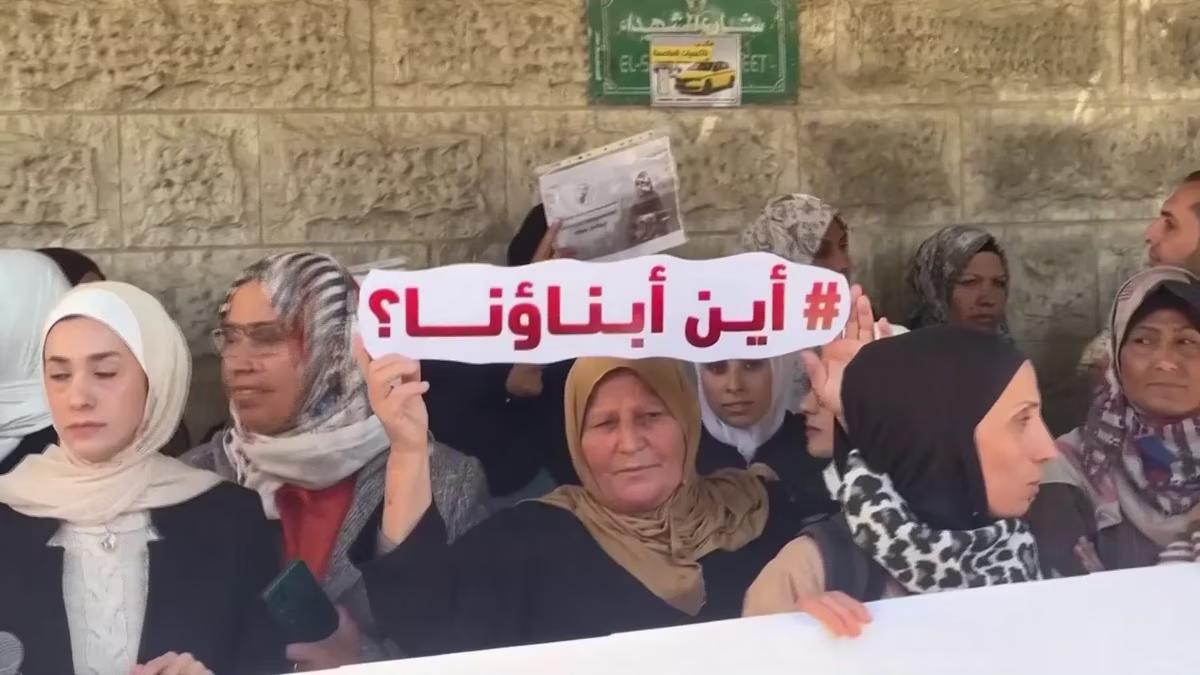
“Alaa Al-Helo A group of Palestinian missing persons' mothers launched today, Sunday, the Movement of Mothers of the Missing in Gaza, during a solidarity vigil in front of the International Committee of the Red Cross headquarters, coinciding with International Women's Day, with the aim of highlighting the issue of Palestinian missing persons and demanding that their fate be revealed”
The report says that “identifying the victims remains difficult,” and that “Due to a lack of sufficient clear-up equipment and detection devices to locate the victims, the searches are difficult and time-consuming.”
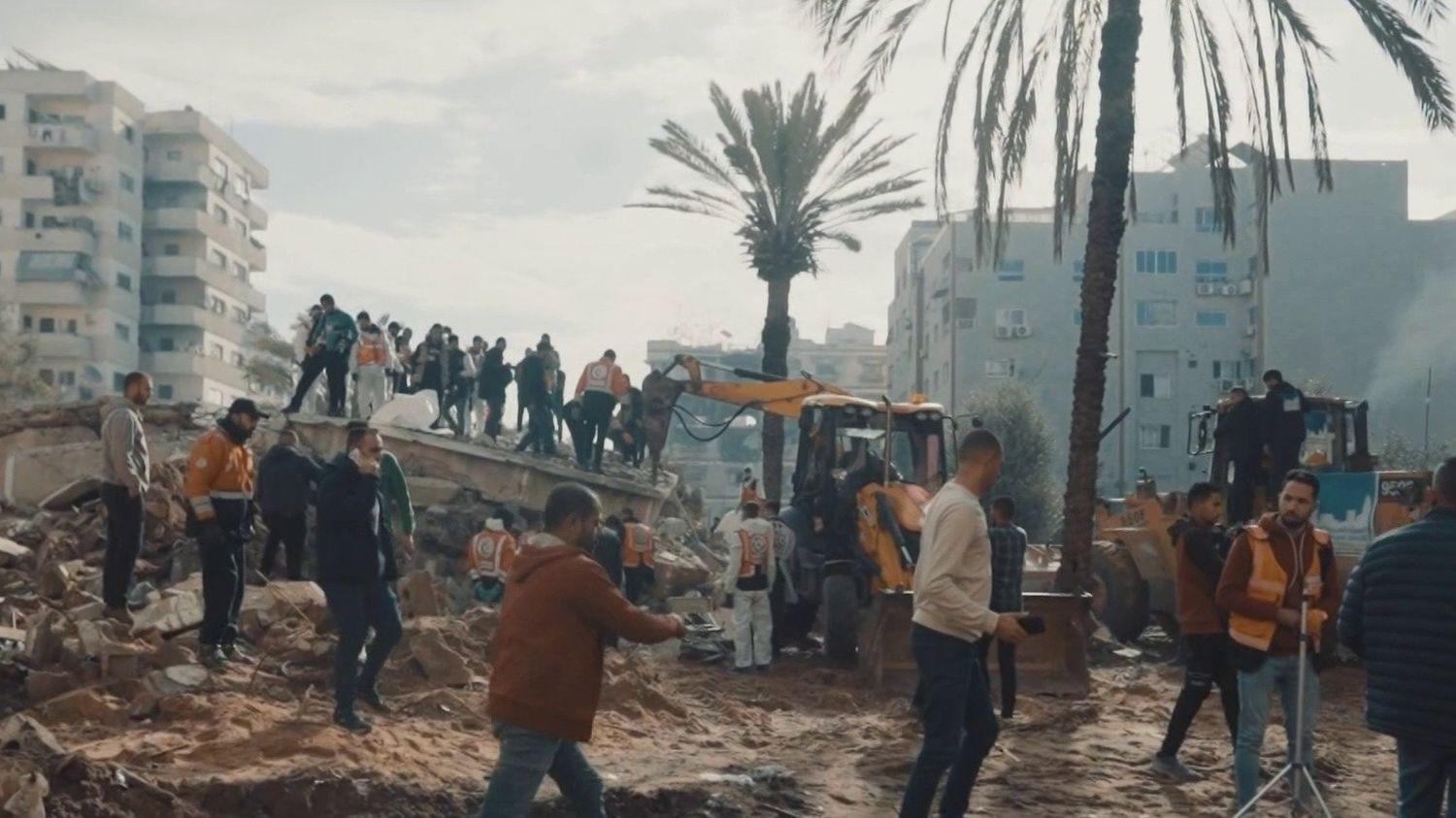
It describes excavations beginning “in the morning of Thursday, December 18” at the site of a building in Gaza that “was destroyed, bombed by the Israeli army on December 19, 2023.”
Under “piles of concrete, buried bodies,” the civil defense, “controlled by Hamas,” is said to be active and to manage to exhume “the first human remains enclosed in white bags to be identified.”
franceinfo adds that “For two years, families have waited,” and that on Thursday, December 18 “some relatives try to recognize a piece of clothing, a clue,” with sadness for some who say they want to find their daughter “even a piece of her.”
The report states that “In these ruins there are at least 70 corpses,” and it says that “In the Gaza Strip, there are about 11,000 Palestinians reported missing according to the United Nations.”
It also describes how recovered and unidentified remains are buried “in mass graves laid out on vacant lots,” with graves marked by “a number, a date, and the note: do not remove the panel for future identification.”
Mothers demand answers
On International Women’s Day, Palestinian mothers of the missing launched a movement to uncover the fate of their sons, turning private grief into a public demand for information.
Al-Arabiya Al-Jadeed reports that Alaa Al-Helo and other Palestinian missing persons’ mothers launched “the Movement of Mothers of the Missing in Gaza” during a solidarity vigil in front of the International Committee of the Red Cross headquarters, coinciding with International Women’s Day.
The vigil included participants raising pictures of missing sons and husbands and banners with phrases calling on the international community to take urgent action, while stressing that “hundreds of Palestinian families live in constant anxiety and painful waiting in the absence of clear information.”
The main banner quoted in the report reads: “On International Women's Day, Gaza's mothers ask the world where our missing sons are,” and another banner says “Mothers are still waiting for news” and “Our sons are not numbers in the news” and “Where are our sons?”
The report quotes Faten Abu Al-Kas, mother of the missing Ahmed Abu Al-Kas, saying: “The issue of the missing has become one of the most urgent humanitarian issues in the Gaza Strip, where hundreds of families are still searching for any thread that could lead them to know the fate of their children.”
She added: “Depriving families of knowing the fate of their children constitutes a clear violation of basic human rights and the international laws protecting civilians and the rights of prisoners and the missing.”
Al-Arabiya Al-Jadeed also quotes Amjad Al-Shawa, head of the Network of Civil Society Organizations, calling for the International Committee of the Red Cross and international and rights organizations to “shoulder their legal and humanitarian responsibilities,” and he said: “The Palestinian people will not lose hope, and efforts will continue across all political and diplomatic channels and international actors until the return of all the missing to their families.”
Legal limbo and competing counts
The crisis of missing persons in Gaza is also described as a legal and administrative problem for wives and families, with some sources presenting different figures and categories of missing.
“As the suffering of Palestinian prisoners in the Israeli occupation's prisons deepens due to the torture they endure, families live in constant anxiety in the absence of information about their loved ones”
جريدة القدس reports that official data in the Gaza Strip indicate “the loss of about 4,000 people” whose fate remains unknown more than “two and a half years” after the outbreak of the Israeli war, and it says the figures are spread between those who died “beneath the rubble of destroyed homes,” those subjected to “enforced disappearance in the occupier's prisons,” and those whose traces were lost during forced displacement journeys between the north and south of the Strip.
The same report says local sources confirm that “a shortage of heavy equipment and the ongoing ban on entry of advanced machinery prevented the retrieval of thousands' bodies,” turning homes into “unofficial mass graves” that families refuse to accept without a proper farewell.
It describes a parallel track in which occupation authorities refuse to disclose “the locations of these detainees or their health status,” leaving families in “bitter anticipation and constant worry.”
On the legal front, the report says wives of the missing face “complex challenges” because they are “not officially widows in courts or relief institutions,” which it says deprives them of “financial allocations designated for orphans and widows” and hinders their ability “to dispose of property or complete the required documents for their children.”
The report gives a personal example through “Ghada,” a “24-year-old young woman,” who awaits the fate of her husband who disappeared before he could see his infant child.
Across the broader reporting, the numbers vary: Al Jazeera Net cites “9,600 prisoners in the occupation's prisons” and “89 prisoners have been martyred since 2023,” while franceinfo says “more than 11,000 people remain unaccounted for, according to the UN,” and جريدة القدس frames the missing at “about 4,000 people.”
More on Gaza Genocide
Israeli Attacks Push Gaza Death Toll to 72,551, Injuries Reach 172,274
10 sources compared

EU Foreign Ministers Postpone Sanctions Against Israel Over Gaza and West Bank
11 sources compared
UNICEF Outraged After Israeli Forces Kill Two Water Truck Drivers in Northern Gaza
19 sources compared
Trump’s Gaza Peace Council Talks Paused After US-Iran War Breaks Out
10 sources compared