Full Analysis Summary
Great Omari Mosque salvage
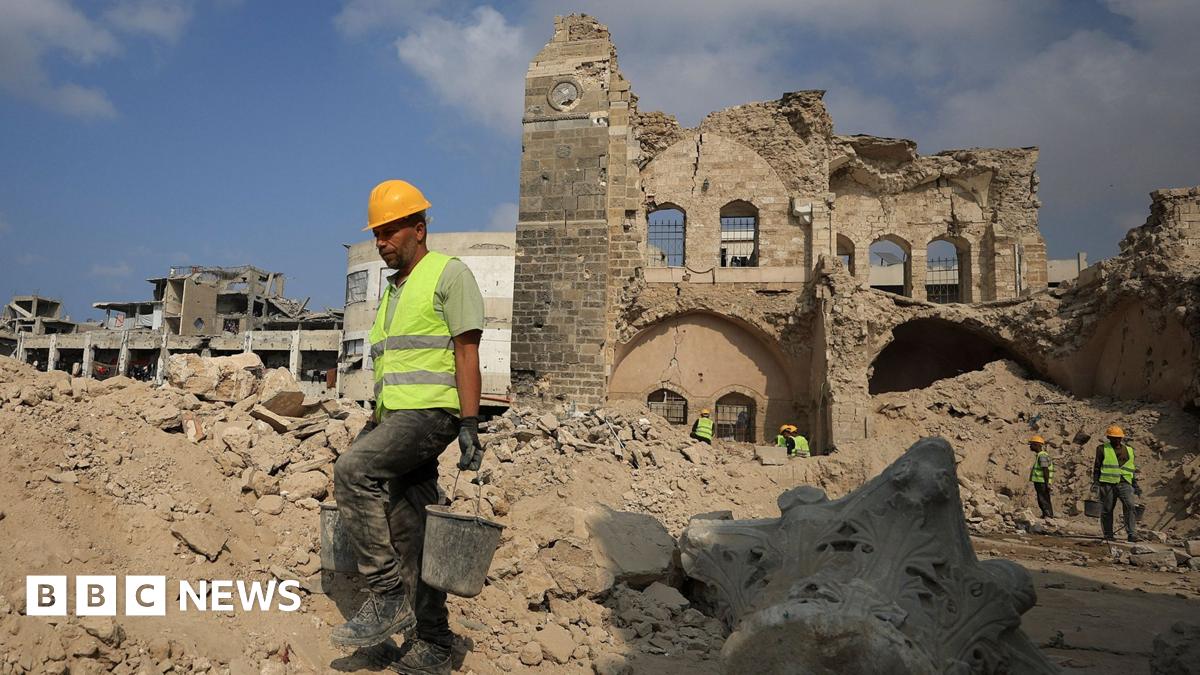
Dozens of Palestinian workers are manually clearing rubble at the ruins of Gaza City's medieval Great Omari Mosque after it was hit by Israel's military, leaving its distinctive octagonal minaret reduced to a broken stump and only a few exterior walls, BBC reports.
Since a US-brokered ceasefire began nearly eight weeks ago, teams have been sorting and salvaging stones and artifacts, but full restoration cannot start because Israel is not allowing construction materials through the crossings, forcing crews to work with primitive tools, Riwaq's Hosni al‑Mazloum told the BBC.
The salvage work is hands-on and dangerous, and is focused on preserving what remains of the mosque's structure and movable heritage under extremely constrained conditions.
Coverage Differences
No comparative sources / single-source coverage
Only the BBC article is provided. Because no other sources were supplied, I cannot compare narratives, tone, or factual claims across different source_types. The BBC report attributes direct actions to Israel (e.g., that Israel is not allowing construction materials through the crossings) and quotes local heritage workers describing the primitive methods used to salvage artifacts. No alternative or contrasting perspectives are available to identify contradictions, omissions, or different framings.
Mosque manuscript rescue
Conservationists are prioritising the mosque's 13th-century library collection.
The BBC names conservationist Hanin al-Amsi as recovering and stabilising fragments.
It reports a colleague risked his life to pull out some manuscripts during heavy fighting.
Pre-war preservation and digitisation work, in partnership with the British Library and funded by the British Council, was vital: 148 of 228 manuscripts survived.
The salvage effort is shaped by both the physical danger posed by Israel's military operations during the two years of war with Hamas and by earlier preservation work that made rescue possible.
Coverage Differences
No comparative sources / single-source coverage
Only BBC coverage is available for the manuscripts and recovery efforts. The BBC reports firsthand claims and attributions (for example, naming Hanin al‑Amsi and citing the British Library partnership). Without other sources, I cannot identify contrasting claims about the number of manuscripts saved, alternative explanations for survival, or differing descriptions of risk to conservators.
Cultural heritage under threat
The BBC highlights the fragile survival of cultural heritage and the practical barriers to restoration.
UNESCO has verified damage to 145 religious, historic and cultural locations during the war.
Local teams are left to salvage and stabilise what they can without construction materials entering Gaza.
The report directly attributes the closure of crossings for construction materials to Israel, which prevents full restoration.
This forces workers to rely on makeshift conservation methods.
This framing emphasises material obstruction by Israel and the resulting ongoing threat to Gaza's cultural sites.
Coverage Differences
No comparative sources / single-source coverage
With only the BBC source provided, there is no opportunity to contrast the BBC's attribution of crossing closures to Israel with other outlets that might offer different attributions or qualifying context. The BBC states UNESCO's verification and links the blockade of materials to Israel; no other provided sources confirm or dispute these points.
Preserving cultural heritage
The BBC credits pre-war digitisation projects with the British Library and funding from the British Council for enabling the survival of many manuscripts.
Local organizations such as Riwaq are leading on-site recovery efforts.
The article states that without those international partnerships and the risky work of Palestinian conservators during active fighting, many more items would have been lost.
It frames the salvage work as an urgent act of cultural rescue against the backdrop of direct Israeli military strikes that heavily damaged the mosque.
Coverage Differences
No comparative sources / single-source coverage
Only BBC's framing of international partnerships and the role of local conservators is available. I cannot compare how other source_types (e.g., West Asian, Western Alternative) would characterise international involvement, nor can I identify whether other outlets might emphasise different actors or critique the international response.
Single-source coverage limitation
Only one article (BBC) was supplied for this task, so coverage is necessarily single-sourced.
Therefore I cannot demonstrate differences across source types or offer alternative framings.
The BBC's language — saying the mosque was "hit by Israel's military" and that Israel is "not allowing construction materials through the crossings" — is the sole basis for attributing actions to Israel in this summary.
If you provide additional articles from other outlets or source types, I will identify contradictions, omissions, tonal differences, and will attribute quotes versus reporting as required.
Coverage Differences
Single-source limitation
Because only BBC was provided, no cross-source differences can be shown. The BBC text is used verbatim where necessary; other perspectives (West Asian, Western Alternative, etc.) are not available to compare tone or claims.