Mexico16 November, 20252 min read
Gen Z Protesters Storm Mexico City's National Palace Fencing, Seize Police Shields
Thousands, led by Generation Z, marched in Mexico City protesting crime and corruption Protesters breached National Palace fencing and seized police riot shields during clashes
56 outlets told this the same way.
Outlets did split on Pentagon Lifts Lockdown After Air Quality Issue Tests Find No Hazard →
Mexico City protests summary
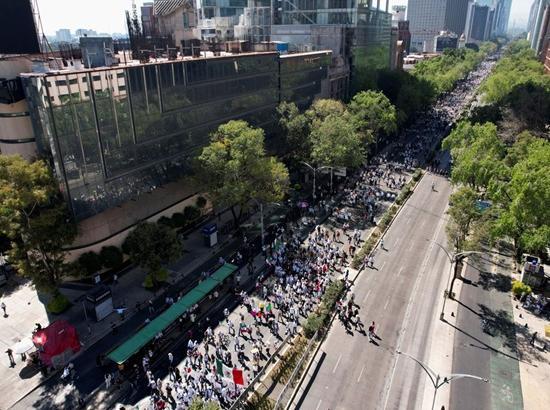
Thousands of demonstrators organized under the banner Generation Z marched to Mexico City's Zócalo on Nov. 15–16 to protest rising crime, corruption and impunity.
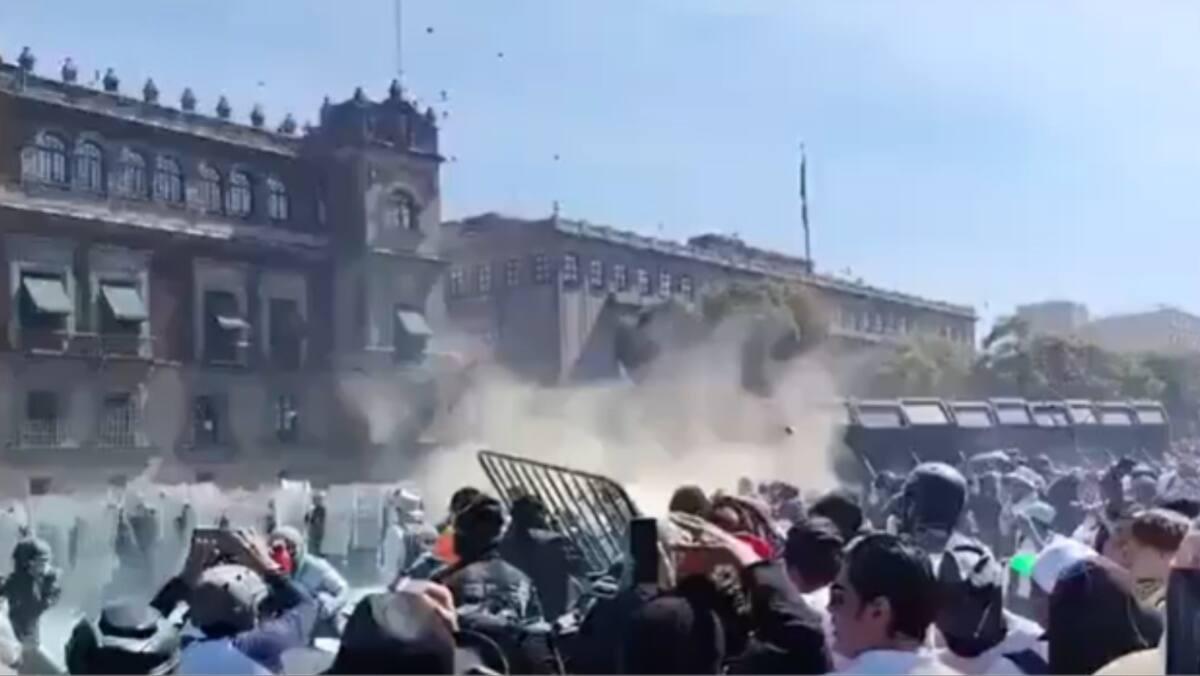
“The protest was mostly peaceful, centered around the Zócalo, but toward the end groups of masked youths clashed with police — tearing down fencing and attacking officers with stones, fireworks, sticks and chains, and seizing shields and other equipment.”
The rally swelled as older opposition supporters joined and later fractured when a smaller group tore down fencing around the National Palace, prompting clashes with riot police and the use of tear gas.
Several outlets describe the protest as beginning largely peaceful and then turning violent when hooded or masked individuals pushed the palace perimeter and confronted officers, creating chaotic scenes in the capital's main square.
The unrest was framed both as a youth-led outcry over high-profile killings, notably the Nov. 1 assassination of Uruapan mayor Carlos Manzo, and as an event that drew broader political actors and critics of President Claudia Sheinbaum.
Clashes at presidential palace
Multiple outlets report that a subset of demonstrators attacked officers with rocks, fireworks, sticks and chains. Some protesters seized police shields and equipment, and riot police responded with tear gas and other crowd-control measures.
Eyewitnesses and official statements described officers being dragged into crowds and fences and barricades being torn down around the presidential palace, prompting a forceful security response that left dozens hurt and resulted in arrests. Video and eyewitness accounts circulated widely on social media, amplifying images of property damage and close, sometimes violent encounters between police and small groups of masked participants.

Casualty and arrest tallies
A commonly cited official tally says about 120 people were injured, roughly 100 of them police officers, and around 20 people were arrested, with about 20 additional administrative citations. Other reports put the number of injured police at about 100, with 40 hospitalized.
“At least 120 people — about 100 of them police officers — were injured in clashes during anti-government protests in Mexico City.”
These differences reflect divergent local statements and early, evolving tallies from officials and agencies covering the scene. Some outlets emphasize whether the majority of casualties were police or civilians.
Origins of the protests
Media coverage differed over who drove the protests and whether the movement was organic, with many outlets saying Generation Z activists organized the initial call and noting visible symbols like One Piece pirate flags and straw hats honoring slain mayor Carlos Manzo. At the same time, governments and some commentators suggested there was outside political influence. Reports also noted that prominent figures including former president Vicente Fox and businessman Ricardo Salinas Pliego publicly backed the marches even as some Gen Z influencers withdrew support, fueling debate over the movement's nonpartisan claims.
Reactions and policing debate
Official and political reactions were polarized. President Claudia Sheinbaum’s administration accused right‑wing opponents and social‑media bots of amplifying and infiltrating the protests. Opposition figures framed the demonstrations as a justified public outcry over security failures after Manzo’s killing.
“President Claudia Sheinbaum ... accused right‑wing opponents of trying to infiltrate the movement and using bots to boost attendance.”
Observers and some media debated police conduct and whether the force used was proportionate. Al Jazeera and several eyewitness reports explicitly referenced claims that police used force to disperse demonstrators. Government statements focused on crimes committed by a violent minority.