Full Analysis Summary
Gen Z's Global Digital Activism
Generation Z is driving a transnational wave of dissent that originates on social media and now spans from Asia to South America.
This movement challenges corruption and entrenched power structures while demanding structural reforms and a future they can trust.
Young activists are overturning stereotypes of being self-absorbed or superficial by using digital platforms as powerful tools for political action.
What began as local unrest has transformed into a broader regional and global challenge.
Their organizing is explicitly digital-first, using platforms to mobilize, express grievances, and maintain pressure across borders.
Coverage Differences
missed information
Only El Mundo (Western Mainstream) is provided. Without West Asian or Western Alternative sources to compare, cross-source differences in narrative, emphasis, or terminology (e.g., whether protests are framed as reformist vs. revolutionary) cannot be established from the given material.
tone
El Mundo (Western Mainstream) adopts an assertive, movement-level framing that emphasizes both scale (spanning regions) and purpose (structural reforms), presenting Gen Z as politically serious rather than frivolous—contrasting with the stereotypes it references.
Protests and Digital Activism
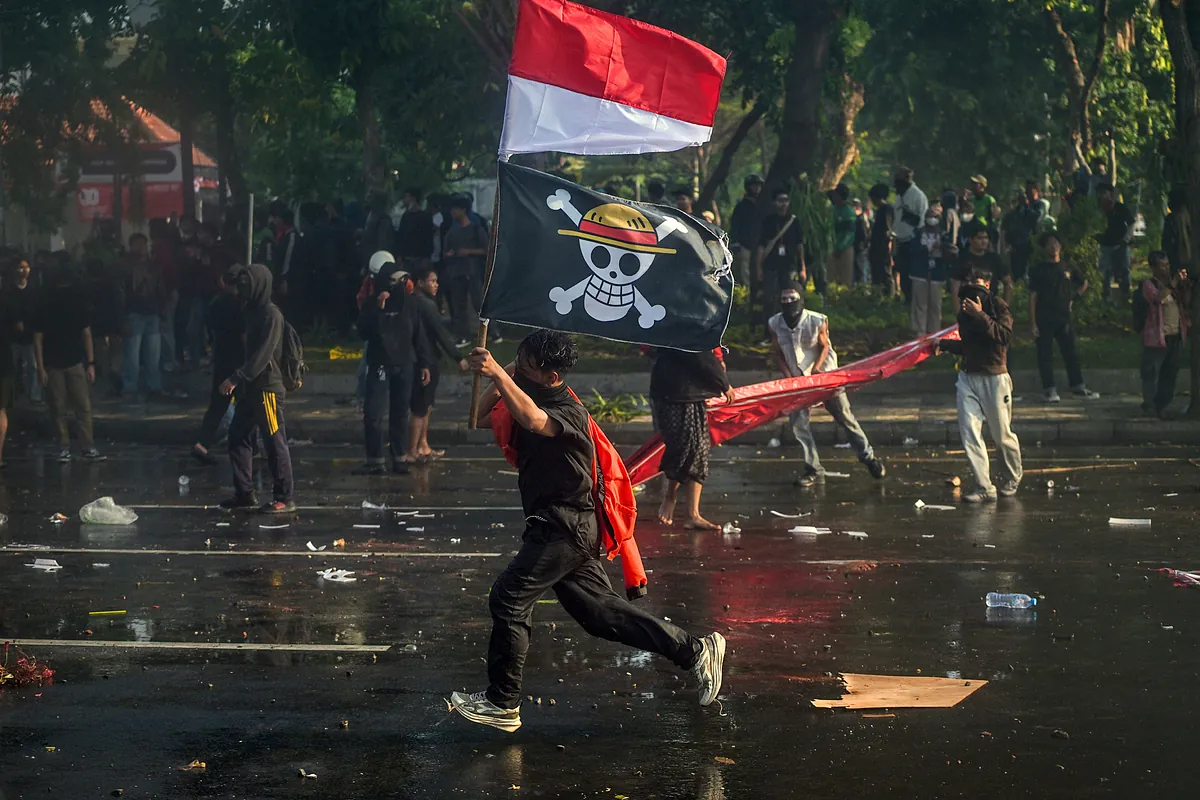
The movement’s recent arc is traced to Southeast Asia, where significant demonstrations in Jakarta demanded an end to government privileges and called for police reform after a protester’s death.
Youth organizers leveraged social media to mobilize and counter official narratives, turning city-level outrage into sustained action.
Authorities’ attempts to curb momentum through digital controls did not halt organizing; instead, activists adapted online tactics to keep coordination alive and publicize abuses beyond national borders.
Coverage Differences
missed information
With only El Mundo (Western Mainstream) available, we cannot compare how West Asian, Western Alternative, or regional Indonesian outlets characterize the Jakarta protests (e.g., whether they foreground state violence, economic grievances, or youth culture dynamics).
narrative
El Mundo (Western Mainstream) frames Jakarta as a pivotal starting point—linking a protester’s death to calls for police reform and broader anti‑privilege demands—thereby positioning the episode as catalytic for a regional-to-global trend.
Youth Protests and Digital Repression
In Nepal, youth anger focused on corruption and efforts to limit online speech.
This unrest led to violent clashes with many casualties and eventually the prime minister’s resignation.
The situation highlights how digital repression, including social media bans and internet blackouts, can backfire.
Such measures pushed organizers to use alternative tools and helped spread their message internationally.
The Nepal case illustrates a common pattern: when authorities try to silence young people, tech-savvy activists find new ways to share their story globally.
Coverage Differences
missed information
Only El Mundo (Western Mainstream) is provided, so we cannot assess how Nepali, West Asian, or Western Alternative sources apportion responsibility for the violence, document casualty counts, or characterize the resignation (as accountability vs. political crisis).
tone
El Mundo (Western Mainstream) uses direct language that highlights severity—'violent clashes' and 'numerous casualties'—while tying events to state censorship efforts, emphasizing the costs of repression and the resilience of digital organizing.
Digital Strategies in Protests
Across these flashpoints, the through line is a digitally native strategy that flips repression into reach.
When authorities impose blackouts, organizers pivot to alternative tools.
When dismissed as superficial, they show disciplined, issue-driven mobilization.
As local campaigns interlink and circulate online, the protests evolve from city-specific grievances into a coordinated challenge to entrenched power structures across regions.
Social media acts as the connective tissue for rapid narrative spread and solidarity.
Coverage Differences
missed information
Given only El Mundo (Western Mainstream), we cannot examine whether other outlets dispute the breadth of the movement, highlight different geographies, or question the extent to which online coordination translates into durable political change.
narrative
El Mundo (Western Mainstream) frames social media as the backbone of cross-border solidarity and organizing, emphasizing globalization of protest rather than isolated national episodes.