
Genetic Study Reveals Ancient Northwest European Population Replacement Near Paris
Key Takeaways
- Bréviandes tomb genome analysis reveals the final major admixture shaping modern European ancestry.
- Genomic data indicate population turnover in Northwest Europe during late prehistoric period.
- Bréviandes and Paris tombs highlight France's central role in forming European genetics.
Population Replacement in Ancient France
A genetic study of remains from a tomb near Paris revealed a sudden mass extinction and complete population replacement about 3,000 years ago.
“Bones found in the Charterhouse Warren Cave in England testify to a massacre followed by ritual cannibalism that occurred more than 2,000 years before the Common Era”
The grave site contained remains from two distinct time periods separated by about 200 years, with no genetic relation between the two groups.
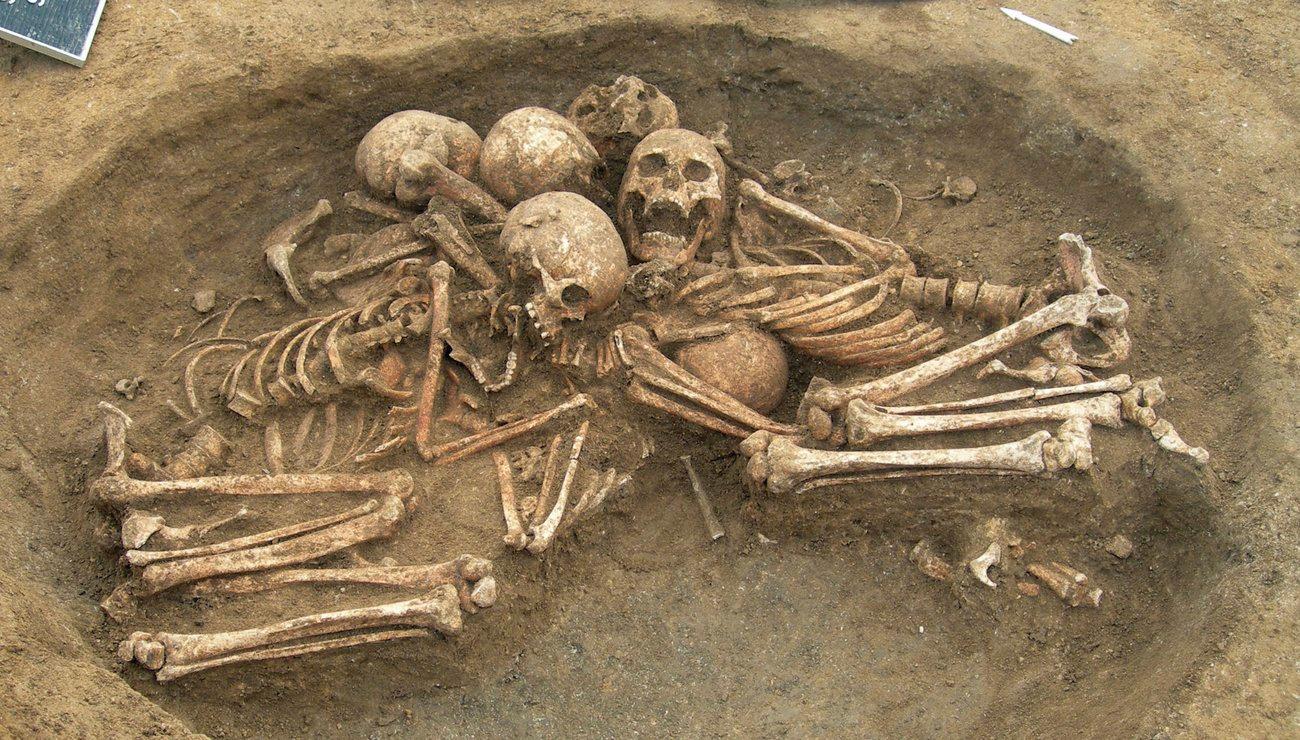
The earlier population vanished entirely and was replaced by a new community with entirely different genetic characteristics.
Environmental evidence showed that farmland had been deserted and forests regrew during the population gap.
Causes for the collapse may have included deadly diseases and environmental stress.
The Bréviandes Tomb and European Genomic Formation
Genome analysis of seven individuals from the Bréviandes tomb revealed the final stage in the formation of the European genome.
The adult man carried a genome half from the French Neolithic population and half from nomadic steppe peoples.

This tomb testified to a meeting in the Paris Basin between individuals migrating from the north and the south.
Two major waves of admixture were identified during the third millennium BCE.
The first wave occurred about 4,900 years ago between steppe nomads and Neolithic farmers.
Ancient Violence and Cultural Shifts
Bones found in England testify to a massacre followed by ritual cannibalism more than 2,000 years before the Common Era.
“There are records of whole human groups disappearing mysteriously from parts of northwest Europe, particularly what is now known as France, thousands of years ago, leaving behind deserted sites and unexplained phenomena”
In Morocco, archaeologists identified the Maghreb's oldest Neolithic culture active as early as the 4th millennium BCE.
Advantageous mutations for resistance to infections were massively selected about 4,500 years ago.
Two Neolithic enclosures excavated on the Elbe River were sites of cruel rites.
The Ust'-Ishim genome revealed Neanderthal-Sapiens admixture had already occurred 45,000 years ago.
More on Europe

Bus With British Tourists Crashes Into Ravine In Canary Islands Killing One
11 sources compared

European Airports Warn of Jet Fuel Shortages Within Three Weeks If Hormuz Strait Remains Closed
13 sources compared

EU Launches Biometric Entry/Exit System Across 29 Countries Ending Passport Stamps
15 sources compared

NATO Chief Mark Rutte Explains Calling Donald Trump 'Daddy' As Translation Error
11 sources compared